
South Australia Hit Back, Dare to Dream of an Epic Chase
**मुख्य उत्तर:** शेफील्ड शील्ड राउंड 3 में एडिलेड ओवल पर दक्षिण ऑस्ट्रेलिया को चौथे और अंतिम दिन वेस्टर्न ऑस्ट्रेलिया के खिलाफ जीत के लिए 240 रन और चाहिए, जबकि उसके हाथ में नौ विकेट हैं और अधिकतम 96 ओवर उपलब्ध हैं। ज़रूरी रन रेट 2.50 प्रति ओवर है। **लक्ष्य:** दक्षिण ऑस्ट्रेलिया (पहली पारी 154) को 422 का लक्ष्य मिला; तीसरे दिन के अंत में स्कोर 1-182 था। मैकेंज़ी हार्वे 90 (132 गेंद) और नाथन मैक्स्वीनी 57 (132 गेंद) नाबाद थे। **वेस्टर्न ऑस्ट्रेलिया:** पहली पारी 5-406 घोषित, बढ़त 252; दूसरी पारी 169, कुल बढ़त 421। उसने फॉलो-ऑन नहीं लगाया — जो मैच का निर्णायक रणनीतिक मोड़ माना जा रहा है। **मैच का रुझान:** पहला दिन WA 1-257, दूसरा दिन 18 विकेट, तीसरा दिन SA 1-182 — तीन अलग चरण। **ऐतिहासिक संदर्भ:** शेफील्ड शील्ड में सबसे बड़ा सफल पीछा 506 रन का है, जो दक्षिण ऑस्ट्रेलिया ने 1991-92 में किया था। मौजूदा लक्ष्य उससे 84 रन कम है। **मौसम:** शनिवार के लिए केवल हल्की बारिश का पूर्वानुमान है, इसलिए नतीजे की संभावना अधिक है; ड्रॉ संभव है पर आधारभूत परिदृश्य नहीं। **प्रारूप चेतावनी:** यह चार दिवसीय फर्स्ट-क्लास (शेफील्ड शील्ड) मैच है, टेस्ट नहीं। इसके निष्कर्षों को सीधे टेस्ट स्तर पर लागू नहीं किया जा सकता।
Adelaide Oval, Day Four: The Maths Is Simple, the Psychology Is Not
South Australia head into the final day of their Sheffield Shield round-three clash with Western Australia needing 240 runs with nine wickets in hand, from a maximum of 96 overs. That is a required rate of 2.50 runs per over. The binding constraint is not scoring speed — it is wicket preservation across roughly 80 overs.
At 2.5 an over SA win with time to spare. At around 2.2 the overs run out and the match is drawn. A single prolonged defensive partnership could turn a winnable game into a stalemate.
Three Days, Three Different Matches
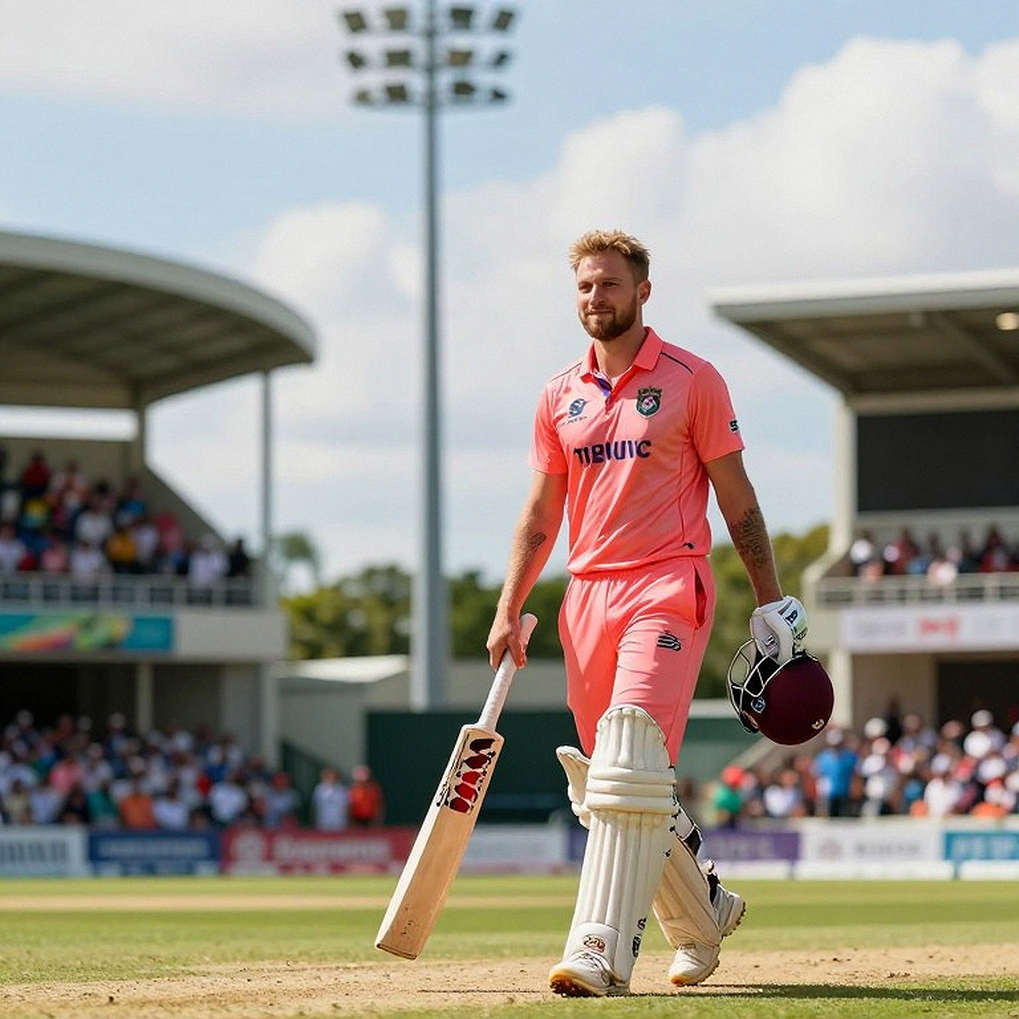
Day one belonged to Western Australia: 1-257, batting dominance, a pitch offering little to the bowlers. Day two flipped completely — 18 wickets fell, and the surface briefly became a fast bowler's ally. WA declared their first innings at 5-406, bowled SA out for 154, and held a lead of 252. Day three was SA's: 1-182 in the second innings, with Mackenzie Harvey unbeaten on 90 from 132 balls and captain Nathan McSweeney on 57 from 132.
A note on data integrity: the stated 18 wickets on day two cannot be exactly reconciled with the scoreline sequence, which implies somewhere between 18 and 20 depending on how many fell in the closing overs of day one. The discrepancy is minor and probably reflects an approximation, but it is flagged rather than smoothed over.
The Follow-On Decision Was the Hinge
Under MCC Law 14, a lead of 150 triggers the follow-on in a four-day match. WA led by 252. They chose to bat again anyway — defensible with a tired attack and an uncertain surface, but it converted a "SA must survive" scenario into a "SA can win" scenario. Bowled out for 169, WA set 422. Had they enforced the follow-on, a very different, probably more defensive match would have unfolded.
The "Improbable" Framing Is a Stretch
The target of 422 sits 84 runs below the all-time Sheffield Shield record chase of 506 — achieved by South Australia themselves in 2026-92, though not at this venue. The report supplies its own counter-evidence to its headline. The match is genuinely knife-edge, but the chase is difficult, not miraculous.
The Path for Each Side
For SA, the danger is impatience. The first session is the crux: if Harvey and McSweeney survive it, conditions should ease and the target will shrink naturally. For WA, the need is early wickets — an attacking field, a probing line, and disciplined spells with a ball that has already cost the attack a heavy workload on day two. Ashton Agar's spin becomes central if the surface offers turn; if it stays flat, Jhye Richardson and Brendan Doggett must simply hold the rate down.
Weather and the Draw
Only light rain is forecast for Saturday, and the report itself concludes the match looked set for a result. A draw remains possible — through sustained defensive batting or an unbroken partnership — but it is not the base case.
Format Caution
The Sheffield Shield is first-class cricket but it is not Test cricket. Four days, 96 overs a day, bonus points in the first 100 overs of each first innings, and thinner squad depth. Nothing here transfers directly to Test-level conclusions. The format is adjacent, not identical — and the sample for individual players is a single innings each.