
ICC's 'criiio Day': The One-Million Players Figure, and the Open Questions Behind It
क्रिकीओ डे क्या है? आईसीसी ने घोषणा की है कि उसका एंट्री-लेवल क्रिकेट कार्यक्रम 'क्रिकीओ' दस लाख खिलाड़ियों के आंकड़े को पार कर गया है, और इस उपलब्धि को चिह्नित करने के लिए हर वर्ष 1 नवंबर को 'क्रिकीओ डे' मनाया जाएगा। यह कार्यक्रम 2021 में शुरू हुआ था, मुफ्त और अनुकूलन-योग्य पाठ्यक्रम पर आधारित है और 18 भाषाओं में उपलब्ध है; इसे स्कूलों और समुदाय स्तर पर 'फेस्टिवल' के जरिए लागू किया जाता है, न कि पारंपरिक क्लब या लीग क्रिकेट के रूप में। दस लाखवीं खिलाड़ी के रूप में नाइजीरिया के लागोस राज्य की 13 वर्षीय सईदत हमज़त को चिह्नित किया गया है। ध्यान देने योग्य बात यह है कि यह आंकड़ा आईसीसी द्वारा स्वयं बताया गया है — इसमें कोई स्वतंत्र ऑडिट, 'खिलाड़ी' की परिभाषा या कार्यप्रणाली का खुलासा नहीं है, और रिटेंशन, प्रशिक्षित कोचों की संख्या, स्कूलों की गिनती तथा भौगोलिक या लैंगिक विभाजन जैसे आंकड़े भी नहीं दिए गए हैं। इसलिए इस संख्या को 'नामांकित/संपर्क में आए' प्रतिभागियों की पहुंच के रूप में पढ़ना चाहिए, सक्रिय खिलाड़ियों की संख्या के रूप में नहीं। इस खबर का असली महत्व खेल प्रदर्शन में नहीं, बल्कि आईसीसी की वैश्विक विकास-रणनीति और 2028 लॉस एंजिल्स ओलंपिक के संदर्भ में है, जहां गैर-पारंपरिक बाजारों में भागीदारी के सबूत की संस्थागत मांग है।
Dubai/Lagos. The International Cricket Council (ICC) has announced that its entry-level participation programme 'criiio' has crossed the figure of one million players. To mark the milestone, the council has declared that 'criiio Day' will be observed every year on 1 November — a date permanently entered in the calendar that will return each year with a new story. Alongside the announcement, the ICC named thirteen-year-old Saidat Hamzat of Lagos State, Nigeria, as the 'one millionth player' and used her voice to present the narrative the council wants this entire campaign to carry. But while reading this news it is essential to understand that it is not a sports match report but an institutional announcement — there is no match, no score, no team ranking and no player performance data in it. What it does contain is a development programme's claim, an emotional story and a calendar-based marketing instrument.
What the programme is
criiio was launched by the ICC in 2026. It is not traditional club cricket but an 'entry-level' programme delivered at school and community level, built on a free and adaptable curriculum available in 18 languages. The council describes it as something that can be played 'anytime, anywhere, by anyone'. Technically, the programme deliberately removes cricket's two biggest barriers to expansion in any emerging market — the prepared turf pitch and the formal eleven-a-side structure. Once the game is freed from the pitch and the eleven, it can reach a school courtyard and a hard court. That is the most logical part of the programme and the most meaningful technical detail in the release.
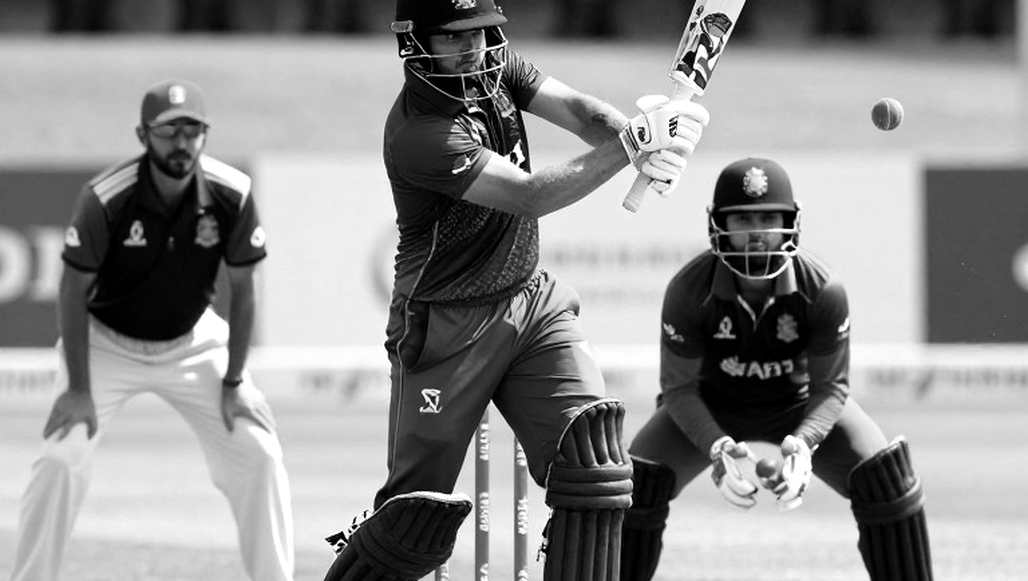
The delivery method is part of the same logic. criiio reaches schools not through leagues but through 'festivals'. The same happened in Nigeria — a criiio Festival arrived at Saidat's school and introduced her to cricket. In development-programme vocabulary this is called 'sampling' or 'activation'. Its known weakness is that a single experience creates participation but not a durable player. And the release conspicuously lacks the one figure that could measure that weakness — retention.
The one-million figure: who counted, and how
The biggest problem with the number is its source. The figure of one million players is self-reported by the ICC. There is no third-party audit, no disclosure of methodology, no definition of a 'player' or of 'enrolled'. One million over roughly four years works out to about 250,000 new participants a year globally — against a sport in which tens of millions already play, this is a substantial number, but it should be read as 'seeding new markets', not as 'global expansion'.
More important still is what is missing. There is no geographic split, no male-female ratio, no retention rate, no count of trained coaches, no count of schools and no mention of budget. Only one big number, 18 languages, a start year and one name. That selection is not accidental. In any institutional release, what is disclosed and what is withheld together form the message. Here the signal is clear: the ICC is defining its 'growth' in the easiest available currency — enrolment.
Saidat Hamzat: a teenager's story that is itself a selection
The release states that Saidat was initially confused about cricket, that her view changed after the festival, and that she now calls herself 'the cricket-mad girl'. She has spoken of purpose, discipline and joy in her experience, and has also said that she now speaks up more than before.
This is a lovely story, but it is not sports analysis — it is psychosocial impact reporting. It has its own value, but calling it evidence of 'talent development' would be an error. There is no mention of Saidat's batting hand, bowling style or any coach's assessment, so drawing any conclusion about her cricket skill would be pure speculation. What can be measured is only this: one experience turned an uncomprehending participant into someone who identifies with the game. That is a meaningful signal for entry-level programme design, but it is an n = 1 anecdote, selected for maximum emotional legibility. Teenage, female, West African and quotable — the selection is ideal from a communications standpoint, and that too is not coincidence.
One point worth serious thought: the release does not state the consent or child-safeguarding framework under which a minor's name, age and location have been made public in a global release. It is possible that all protocols were followed, but the absence of any mention is an open question.
Why Nigeria: a large market, thin infrastructure
Nigeria is an ICC Associate Member in the Africa region, with a population of roughly 220 million, but domestic cricket is believed to be concentrated in a handful of states and football's dominance over the media is near-total. In such a market, making a teenage girl the one millionth player is not a signal of sporting strength but of market selection. Recall that the marginal participant in a market of that population size, with football-saturated media and an anglophone environment, is of far greater long-term value than the marginal participant in a mature cricket market.
There is another layer to the choice. After cricket's return to the 2028 Los Angeles Olympics and the US-hosted T20 World Cup, the ICC has an institutional need to present participation numbers from non-traditional markets. Choosing a story from Africa and the Americas is therefore structurally predictable rather than coincidental. But a warning is also necessary: grassroots enrolment in an Associate nation is a necessary but far from sufficient condition for competitive emergence. Facilities, a domestic multi-day structure, coaching depth and funding are the decisive factors — and none of these is mentioned.
The biggest risk is not recruitment but retention
In any mass participation programme the biggest risk is not that people never come, but that they do not stay. A million 'enrolled' participants and zero retention disclosure is a funnel whose top is visible and whose bottom is dark. Festival-based delivery is the archetypal high-churn activation model. There is solid reason to believe that a large share of the million are schoolchildren who attended one session and never played again. Without cohort data this cannot be quantified, only flagged.
Coaches and schools: the ignored link
The programme's real constraint is not equipment but qualified human delivery — teachers and volunteer coaches. The release contains not a single coach-training figure, which is usually the tell that this is the binding constraint. Of the four things needed to travel from a million enrolled beginners to competitive players — trained coaches, facilities, domestic competition and money — not one is mentioned. Without them, growth at the top of the funnel produces participants who never become players, and that break happens silently.
Governance: the politics of counting the easy metric
This news is not a rule change. Nothing in it touches the laws of cricket, eligibility, the calendar or revenue distribution. Its governance significance lies in what a global body chooses to count. When the ICC foregrounds enrolment rather than retention, coaching capacity or competition structures, it is defining success in the cheapest available currency. That is the single most important observation in this dimension.
A structural tension sits alongside it. Cricket's revenue is overwhelmingly concentrated in one market, and the 'global growth' agenda serves as the political counterweight to that concentration. This release is part of that balance. In the near term it will not change the centre-periphery economics of the sport.
Olympics 2028: the real beneficiary
The most underrated beneficiary of this entire initiative is the Olympic channel. Cricket returns to the Olympics in 2028, and national Olympic committees and education ministries ask for precisely this kind of evidence — participation in new geographies, female participation, school-level reach. It is reasonable to expect this one-million figure to be reused far beyond cricket media, in funding and government-relations contexts. criiio's likely customer is not only cricket boards but education systems — entry into a national school curriculum can create a durable, government-funded delivery channel that no board could build alone.
Commercial takeaway
Participation is the cheapest entry point into the commercial value chain and the slowest to pay off. A million participants generate no immediate broadcast, sponsorship or ticketing revenue; their value is entirely option value on a future audience and a future talent pool. The payback horizon is five to ten years, not twelve months. The most conspicuous gap in this release is the absence of a sponsor: a global programme, a named day, a million participants and an Olympic tailwind, yet no commercial partner is mentioned. That suggests either a fully publicly funded model or an asset not yet monetised.
What to watch next
criiio Day will return every 1 November, probably each time with a new number and a new teenage face from a new market. The signals genuinely worth tracking are these: disclosure of retention, the number of trained coaches, the geographic and gender split of the million, the Associate share in the next distribution cycle, a commercial partner attached to criiio, and improvement in Africa-region competitive results over three to five years. If none of these appears, there will be reason to conclude that the figure is limited to enrolment.
The conclusion is clear: the ICC has turned a small but genuine achievement into a durable institutional narrative. Its real significance lies not in sport but in legitimacy and governance — it gives the council the evidence that the Olympic era and the new-market strategy demand. And its biggest analytical weakness is equally clear: the only metric put forward is the easiest one to inflate, while the four variables that determine whether participation ever becomes cricket strength — retention, coaching capacity, facilities and competition structure — are not mentioned at all.