
Afghanistan win second T20I by 19 runs, seal series 2-0 on Omarzai's 116
अफगानिस्तान ने शारजाह में दूसरे T20I में जिम्बाब्वे को 19 रन से हराकर सीरीज 2-0 से जीत ली। अफगानिस्तान ने 221/7 बनाया, जिसमें चार ओवर में 5/4 पर सिमटने के बाद आखिरी दस ओवरों में 176 रन जोड़े गए। आजमतुल्लाह ओमरजई ने 50 गेंदों पर 116 रन (स्ट्राइक रेट 232, 12 छक्के, 44 गेंदों पर पहला T20I शतक) बनाए और इजाज अहमद (27 गेंदों पर 52) के साथ छठे विकेट के लिए T20I रिकॉर्ड 142 रन की साझेदारी की; राशिद खान पुरुष T20I में 200 विकेट लेने वाले पहले गेंदबाज बने। जवाब में जिम्बाब्वे 82/5 से उबरकर 202/5 तक पहुंचा—40 वर्षीय सिकंदर रजा ने 56 गेंदों पर नाबाद 106 रन बनाए और तफादजवा त्सिगा के साथ 120 रन की अटूट साझेदारी की, लेकिन टीम 19 रन से हार गई।
Afghanistan beat Zimbabwe by 19 runs in the second T20 international at Sharjah Cricket Stadium and sealed the series 2-0 with a game still to play. Batting first, Afghanistan posted 221 for 7, and Zimbabwe in reply could only manage 202 for 5. On the scorecard it reads as a routine 19-run win, but the story behind that margin belongs among the more unusual passages of T20 cricket.
Afghanistan's start was so poor that after the first four overs they were 5 for 4. A few overs later they were 38 for 5 and completely on the back foot. In T20 cricket, reaching a total above 200 from that position is generally treated as near impossible, and the home side looked exactly that fragile.
And then the match turned completely. Afghanistan scored 176 runs in the last ten overs and 65 runs inside three overs. The pace at which the batting unfolded in the death overs rewrote the entire arithmetic of the game. The Sharjah pitch appeared batting-friendly, the ball flew out of the ground repeatedly and replacement balls had to be called for again and again.
At the centre of that recovery was Azmatullah Omarzai. He struck 116 off 50 balls, including 12 sixes. His strike rate was 232, a different tier of performance in T20I cricket. It was his maiden T20I hundred, brought up in 44 balls.
The most telling detail was that he survived the hat-trick ball and then carried the innings to the end. With the ball he also picked up the wicket of Innocent Kaia, underlining his all-round contribution. His full bowling figures are not detailed in this report, but a wicket indicates he was not merely a batting presence.
Omarzai found strong company in Ijaz Ahmad Ahmadzai, who made 52 off 27 balls. The two shared a 142-run stand for the sixth wicket, the highest for the sixth wicket or lower in T20 internationals. Ijaz had also made a fifty in the series opener, but two innings is not a large enough sample to confirm whether this becomes a sustained trend.
Towards the end of the innings, Rashid Khan made 25 off 6 balls to push the side into a commanding position. His strike rate of 416.7 is naturally the product of a very small sample and should not be read as evidence of a batting transformation. In the same match, Rashid became the first bowler in the world to reach 200 wickets in men's T20 internationals.
That milestone is durable and stands as the strongest proof of his consistency. Afghanistan's bowling also featured Mujeeb Ur Rahman, Fareed Ahmad, Omarzai and Abdollah, giving the side a genuine mix of spin and pace.
Chasing, Zimbabwe's position also deteriorated early. At the halfway mark they were 82 for 5, meaning they had effectively surrendered half the chase in half the match. From there Sikandar Raza and Tafadzwa Tsiga put together an unbroken 120-run stand for the sixth wicket, which greatly reduced the margin of defeat.
Raza finished unbeaten on 106 off 56 balls at a strike rate of about 189. Scoring a century at the age of 40 is a record in itself in T20I history. The innings is proof of his ability and fitness, but the larger question is how often such a performance can be repeated at that age.
Even with Raza's century, Zimbabwe stayed well short of victory, exposing the limits of their middle order. A whole innings cannot be built around one player, particularly when partners keep losing wickets early. Tsiga played his role well, but the support arrived too late.
On the bowling side, Zimbabwe's Kundai Matigimu produced a double-wicket maiden with the new ball to put Afghanistan under immediate pressure. But the same bowler proved expensive at the death. Brad Evans conceded 27 runs in one over. A bowling effort that looked strong at the start came apart completely in the closing overs.
This is a clear structural weakness, because the death overs are the most decisive phase of any T20 match. Plans built on yorkers and slower balls appeared to break under pressure. Where Matigimu had gripped the match early, that grip loosened at the end.
From an analytical standpoint the win is impressive but carries risk. Being 5 for 4 after four overs is not a pattern on which a team can build a run of victories. Against stronger new-ball attacks, Afghanistan's top order could be even more exposed.
On the other hand, Afghanistan's lower-order firepower and their spin-pace depth give them a high ceiling, though the side still appears reliant on a handful of match-winners. Their base in Sharjah gives them familiar conditions, but it should also be remembered that one spectacular innings does not establish a player's long-term level.
For Zimbabwe, the selection of Tsiga and Vincent Masekesa is a step towards the future. Tsiga shared a 120-run stand with Raza, while Masekesa was attacked heavily. This suggests a team in transition, but immediate depth remains thin and the newcomers need time.
Sharjah's short boundaries and flat surface raised both the scoring rate and the rate of sixes. A total of 221 was strong, but on this ground it cannot be considered out of reach. Zimbabwe fought to the end and reached 202, showing that the 19-run gap on paper did not feel that large on the field.
Overall, this match is the convergence of Afghanistan's lower-order strength, Omarzai's emerging all-round profile and Rashid's record. It also serves as a reminder that a fragile top order and an opponent's death-bowling weakness could both prove decisive in the matches ahead. A 2-0 series win is a significant achievement, but it needs to be read in the context of a single match's swings.
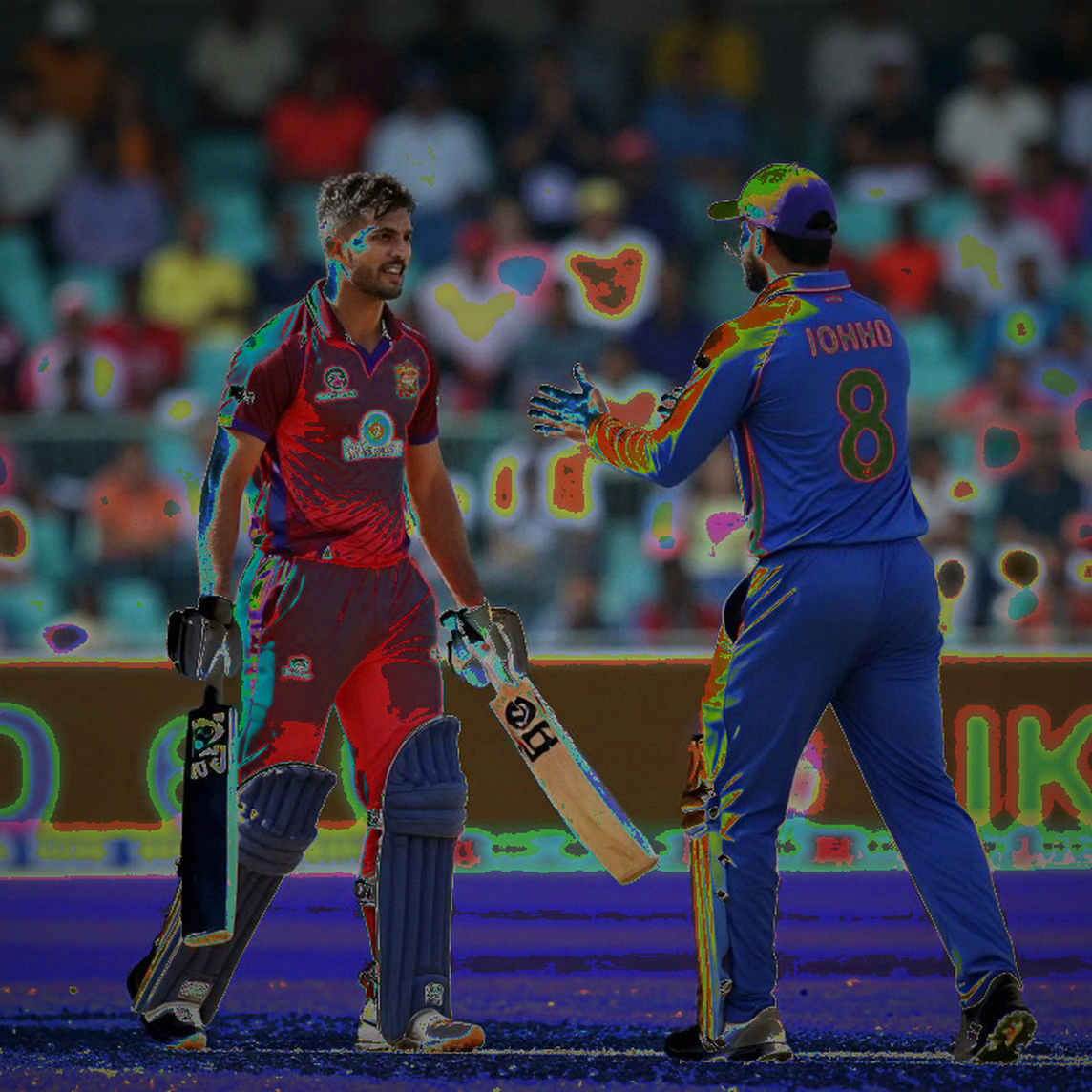

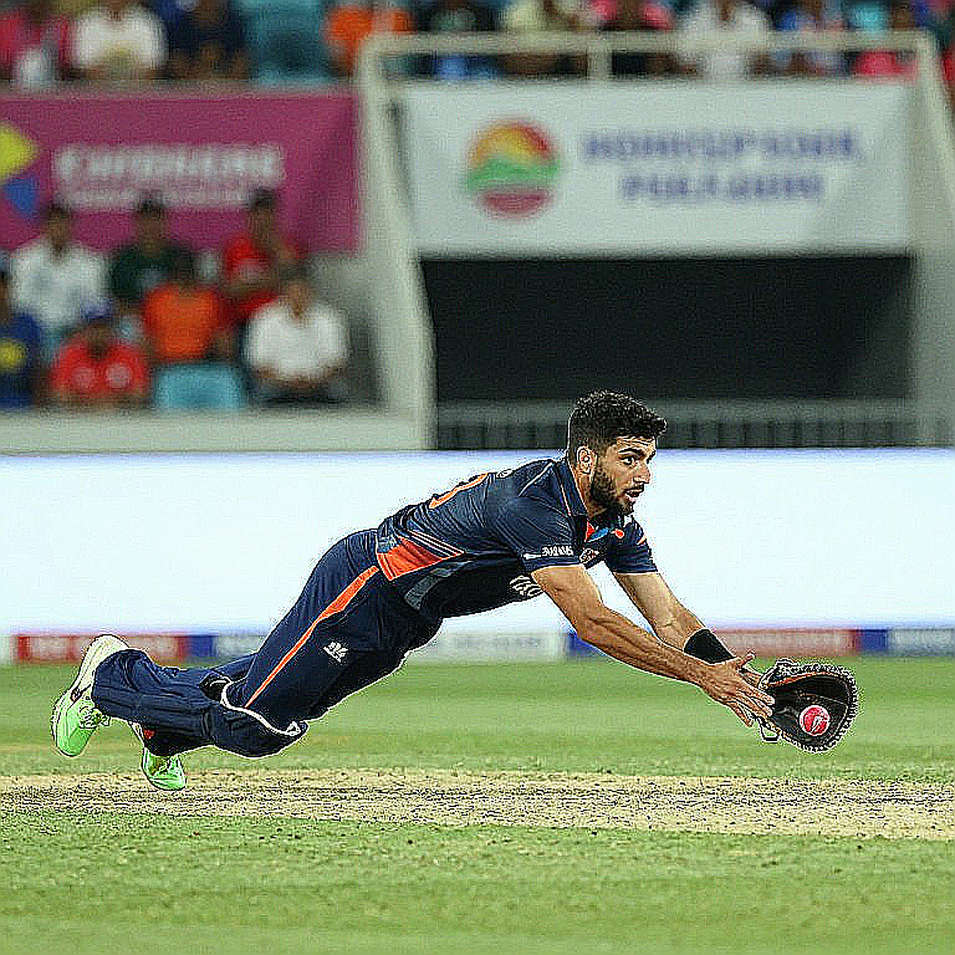
संबंधित खिलाड़ी
लोकप्रिय/पसंदीदा पुस्तकें
Blank Records, Loaded Stories: The Quiet Failure Mode of Cricket Data2026-10-31
Mushfiqur's Finger, Mirpur's Silence: A Contusion That Put Its Finger on Bangladesh's WTC Arithmetic2026-10-30
Two Years Gone, One Decider: The Real Question Inside Coetzee's Return Is Fitness, Not Form2026-10-30
The 4.2-Over Snapshot at Hagley Oval: 48/0 Is Not a Score, It Is an Unfinished Audit2026-10-30
Cummins's 'Turning the Corner' Gamble and the Cape Town Selection Ledger2026-10-30
Big Bash Privatisation: When the Board Sells Assets After Declaring Its Own Losses2026-10-29
अनुशंसित
The Purse Is the Real Selection Committee: Sorting Signal From Noise in a Transfer Window2026-10-30
Survival vs Intent in Mirpur: Reifer's Gamble and Nayeem Hasan's 50th Test Wicket2026-10-31
Maddinson's Stunner, but Hope-Doran Unbroken Stand Puts Tasmania in Control2026-10-30
Seven Wins and a Protocol: Rahmat Shah's Quiet Authority and Afghanistan's Procedural Turn2026-10-25
A 25% Retainer Cut and Unsigned Contracts: The Real Scorecard Behind Roston Chase's 'Motivation'2026-10-28
The Empty Scorecard: The Part of Domestic Cricket No Database Records2026-10-31
One Rundown Sheet, Four Stories, Zero Numbers: India’s Dominance, Pakistan’s Revival and Shaheen’s Real Test2026-10-29
अनुशंसित
Eight Matches, One Timeslot: In the TNT–Channel 5 Race, the Real Stake Is the Schedule, Not the Cricket2026-10-27
The Purse Is the Real Selection Committee: Sorting Signal From Noise in a Transfer Window2026-10-30
The Report Came Back Empty: Cricket Analytics' Silent Failure and What It Costs2026-10-30
The Empty Payload: When Cricket Analysis Demands Its Evidence2026-10-28
Fifteen Balls, Forty-Two Runs in Christchurch: The Real Document Behind the Dhir Headline Is Not the One Being Sold2026-10-24
The Mirpur Ledger: Shadman's 99*, Bangladesh's 213/3, and the Count the Match Report Left Out2026-10-29
Kishan Out of Wellington T20I: The Bigger Question Is India's Wicketkeeping Depth, Not a Grade 1 Adductor Strain2026-10-27