
Jansen, South Africa and the Final-Day Equation: Six Wickets, One Partnership, and a Claim the Headline Never Proved
मार्को जैनसन के नेतृत्व में दक्षिण अफ्रीका को आखिरी दिन छह विकेट चाहिए, जबकि ट्रैविस हेड 87 पर नाबाद हैं और स्टीव स्मिथ तथा एलेक्स कैरी अभी बल्लेबाज़ी करने बाकी हैं। मैच का असली गणित समय नहीं, हेड की साझेदारी तोड़ना है। मुख्य तथ्य: - दक्षिण अफ्रीका को जीत के लिए छह विकेट चाहिए; ऑस्ट्रेलिया के छह विकेट शेष हैं। - ट्रैविस हेड 87 रन पर नाबाद; स्टीव स्मिथ और एलेक्स कैरी अभी बल्लेबाज़ी नहीं आए। - जैनसन ने धैर्य और लगातार सही गेंदबाज़ी पर ज़ोर दिया; जीत से सीरीज़ बराबर और WTC अंक मिलेंगे। - स्टेन के दावे का मूल पाठ उपलब्ध सामग्री में नहीं दिया गया; वेन्यू और मौसम भी अनिर्दिष्ट हैं। स्रोत: ICC आधिकारिक मीडिया चैनल; प्रकाशन तिथि उपलब्ध नहीं। संबंधित प्रश्नोत्तर: प्रश्न: क्या दक्षिण अफ्रीका के लिए समय की चुनौती है? उत्तर: नहीं, 90 ओवरों में छह विकेट संभव हैं; असली चुनौती हेड की साझेदारी और स्मिथ-कैरी की गहराई है। प्रश्न: जैनसन क्यों अहम हैं? उत्तर: लगभग दो मीटर के बाएं हाथ के तेज़ गेंदबाज़ का ऊँचा रिलीज़ पॉइंट पांचवें दिन फाल्स शॉट निकालता है। प्रश्न: WTC पर असर क्या होगा? उत्तर: जीत सीरीज़ बराबर करेगी और दक्षिण अफ्रीका की खिताब-रक्षा की स्थिति मजबूत करेगी।
The interval before the first ball on the fifth day is the most honest room in cricket. Six wickets remain. Travis Head is 87 not out. Steve Smith and Alex Carey are yet to bat. South Africa need those six wickets. Someone in the commentary box says there are 90 overs left, so the task is comfortable. I have heard that sentence for years, and it always leaves out the same clause: 90 overs can shrink to the size of one partnership.
This Test is not a race against time. It is a race against the order of wickets. Break Head’s stand, bring Smith in early, put Carey in front of the old ball, and the question changes. The final-day equation is hidden in that sequence.
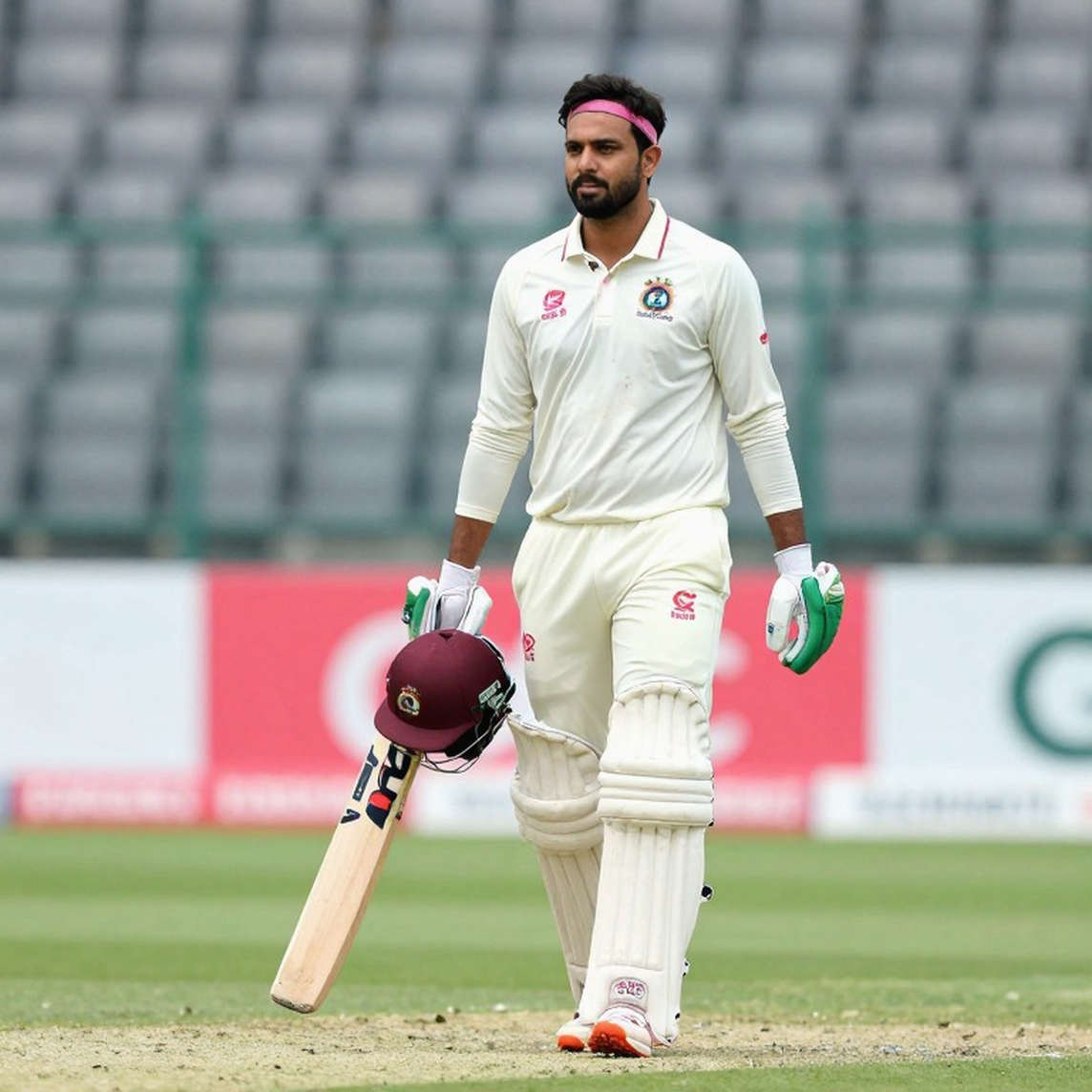
ICC’s official media material gives us Marco Jansen’s reaction, the fact that he must back up his first four days and bowl South Africa to victory, and the information that Travis Head is unbeaten on 87. Steve Smith and Alex Carey have not yet batted. A win levels the series and re-establishes South Africa’s defence of the World Test Championship title. The material does not give a venue. It does not give a weather forecast. Those are not small omissions. A fifth-day pitch and the chance of rain alter the probabilities more than any pre-match prediction.
Jansen’s words are useful because they avoid magic. He says it is very easy to let the game leak, and that the job is trying to do the right thing for as long as possible. That is the most practical truth in Test cricket. A fifth-day bowler is not the one who imagines a wicket every over. He is the one who can build eight or ten overs in which the batter feels that scoring is as difficult as surviving.

South Africa’s problem is not that they need six wickets in 90 overs. It is that those six wickets are three different kinds of wickets. First, the wicket of Head’s partner. Second, Head himself. Third, the Smith-Carey partnership that can drag the match towards a draw or push it towards a win. One ball cannot create all three openings. South Africa need three successes, not one; the sequence of those successes is the real scoreboard.
I have watched many final days from commentary boxes. The most deceptive number is not wickets left. It is overs left. With 90 overs and six wickets, the arithmetic looks clean. The bowler knows that 40 of those overs may contain nothing at all, and those are the longest 40 overs for South Africa.
Jansen’s real role begins before the wicket falls. A left-arm fast bowler of roughly two metres creates a release angle and a natural angle across the right-hander. On a fifth-day surface with variable bounce, that angle produces false shots: gloves, splices, the shoulder of the bat. The scorecard records only the catch. It does not record the ball that made the catch possible.
The source material does not quantify Jansen’s first four days. But the line that he must back up his performance is enough to show that he has not been a bystander. In Test cricket, a fast bowler’s first four days and his fifth day are different jobs. The body says it can. The mind says how much it should.
That brings the dual role into view. A fast bowler who can hold a lower-order batting slot is a selection asset. He lets a team field a five-strong pace attack plus a specialist spinner. He also carries a double workload. Tall fast bowlers have higher lumbar stress-fracture risk, and a calendar that includes the IPL and SA20 does not make that risk theoretical. It becomes part of squad design.
The fact that Jansen is the voice put in front of ICC media is itself a signal. Captains and senior bowlers usually get that duty before a decisive day. If Jansen is there, South Africa’s internal designation is clear: he is the fifth-day spearhead. The interview is a bowling signal, not a press obligation.
Now to Head’s 87. The score is large, but its value is set by the wickets remaining, not by the runs alone. Eighty-seven not out with six wickets in hand is one situation. Eighty-seven not out with two wickets in hand is another. In the first, the batter can control the match. In the second, he can save it or lose it.
The six was never about the six; it was about who needed it. Head’s 87 is the same. It is not a story about 87 runs. It is a story about the stand South Africa need to break and Australia need to extend. Head’s strike rate, shot selection and footwork are being dictated by who is at the other end and how old the ball is.
The material describes Head as an opener. His established Test role has been middle order. If he is genuinely opening here, there are two possibilities: a tactical promotion for a fourth-innings chase, or the absence of a regular opener. Either possibility changes the match story. The source does not explain it, so it stays a possibility, not a fact.
Head’s method has another layer. He is aggressive against pace, but his hardest moments come when the ball is short and into the body, or when the new ball is seaming. On the fifth day, an old ball that reverse-swings can be his most difficult test. A straight old ball on a slow surface can let him control the chase.
South Africa’s worst scenario is not Head scoring. It is Head farming the strike and keeping Smith and Carey away from the old ball. While Head is on strike, South Africa’s pressure has one target. When the strike changes, they need two plans. That change is often the hinge of a final day.
Smith and Carey are the underweighted strength. Smith’s fourth-innings record and patience are well known. Carey, a wicketkeeper-batter, can score quickly against the old ball and is comfortable against spin. Australia can bat to No. 7 or 8. That depth turns six wickets into a harder equation.
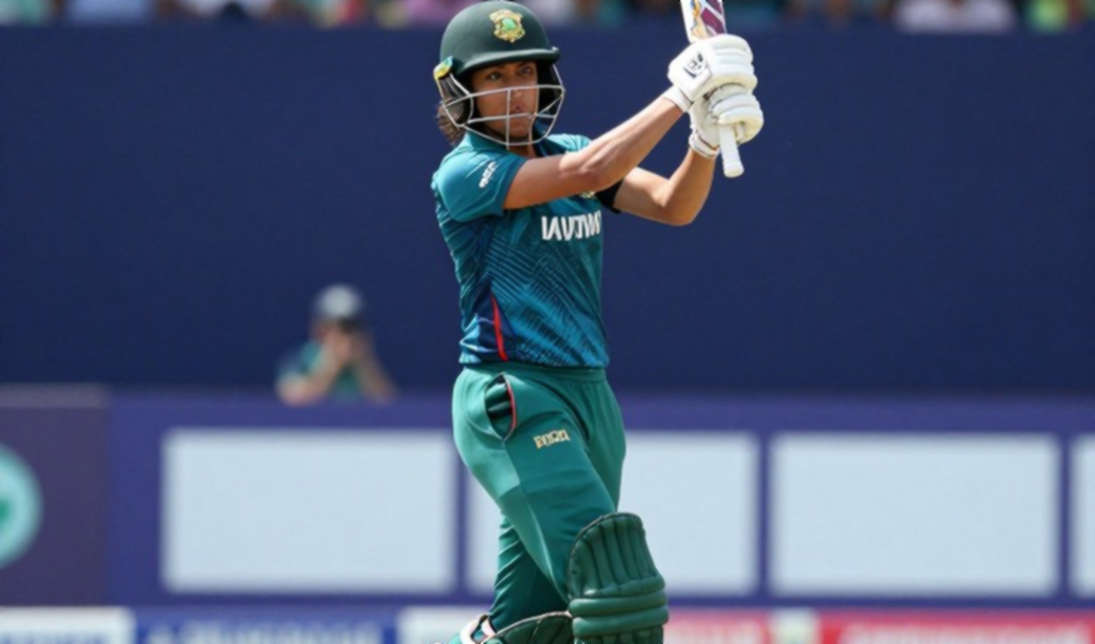
The great illusion of six wickets is that they fall together. They fall in order: the set batter’s partner, then the set batter, then the new batter, then the partnership that can save the match. South Africa need a different bowler and a different field for each stage. Attack only Head and the other end opens. Defend both ends and Head gets easy singles.
The second new ball is the central question. It is available after 80 overs. If South Africa have taken it, they must use it against Head when he is on strike. If they have not, they have the old ball and a scuffed fifth-day surface. The new ball can produce a wicket; it can also produce runs through seam and bounce. That is the fastest arithmetic a captain faces.
Reverse swing is the other route. On a fifth-day surface, a ball that is shiny on one side and rough on the other can move in the air. That skill does not appear on the scorecard. It appears in the wrist position at release. For a tall left-armer like Jansen, the angle makes it harder: the ball seems to come towards the pads and then leaves the bat.
Patience for South Africa does not mean avoiding risk. It means waiting for the mistake without forcing it. If they surround Head and give his partner easy runs, the stand grows. If they surround both, Head gets scoring options. That is the oldest trade-off in Test cricket: close one end and the other opens.
Jansen’s line about repeating his first four days points to that trade-off. He must keep doing what has worked. If the angle is working, he does not need to change it. If Head is playing it, Jansen must bring the ball closer to the stumps and make every ball feel like a wicket ball. That mental pressure is the real fifth-day weapon.
The WTC dimension is underplayed in the headline. A win does not merely level the series. It restores South Africa’s position in defence of the mace. Every WTC match carries table weight, and a win in a series opener or decider is not only morale. It is arithmetic. For a defending champion, levelling a series is also a statement.
The headline also gestures at Dale Steyn’s bold claim. The available material does not give the substance of that claim. It does not say what Steyn predicted, when he said it, or on what basis it is being called bold. A reader cannot treat the claim as validated. It is a narrative frame, not a reported fact.
Media habits make this common. A former fast bowler’s name in a headline gives the story authority. The reader assumes the prediction is coming true. But a prediction needs its text, its date and its context. Without those, the headline is scaffolding. The real story here is not Steyn’s claim. It is Jansen’s process. Jansen’s words come from inside the game. He will bowl on the fifth day. He knows how six wickets are taken and how they are not. His sentence has no ‘quickly’. It has ‘for as long as possible’. That is the difference between Test cricket and T20 cricket.
The second absence is venue and weather. A slow, low pitch calls for stump-to-stump bowling and old-ball reverse swing. A bouncy pitch calls for short balls and a wider angle. Rain is the biggest variance factor of all. It shortens South Africa’s time, raises Australia’s draw probability, and can break a bowler’s rhythm. A final-day analysis without weather is an incomplete analysis.
I have seen many final days decided in the first hour. If South Africa break Head’s stand in the first 20 to 25 overs, Smith and Carey arrive against the new ball or its aftermath. If they do not, the day begins to lean towards Australia. That lean does not arrive all at once. It arrives the way seam movement arrives on an old ball: first unnoticed, then suddenly the batter has no time.
I keep a 2026 World Cup notebook with release points, wrist angles and foot positions. The lesson was simple: the scorecard records the result; the body records the process. Fifth-day cricket is body cricket. Which bowler can hold his angle? Which batter’s weight is falling towards the off side? Whose wrist opens at release? Those things never appear on the scorecard, yet they decide what the scorecard says.
After the 2026 World Cup final in Mumbai, I learned to look at the empty stands after the match. Everyone talked about the six. The six was never about the six; it was about who needed it. A final-day six-wicket equation is similar. It is not about six wickets. It is about the partnership South Africa need to break.
I spoke into an empty stadium and heard the crowd inside my own voice. A final day looks quiet from outside. Inside, it shouts at every ball. When Jansen begins his run-up, the noise will not come from the scoreboard. It will come from his body. A tall fast bowler knows how different his first ball and his last ball will feel.
Nobody commissioned this essay, which is exactly why it arrived. This is not a press-conference report. It is a report on the moment a Test match enters its last day and puts the numbers aside to ask one question: who takes the first wicket? The answer sits in Jansen’s hand, in front of Head’s bat, and in the waiting space occupied by Smith and Carey.
Three conditions shape the forecast. If South Africa break Head’s stand inside 25 overs, the match tilts their way. If Australia stretch it to 35, Smith and Carey become central and South Africa may need the second new ball. If rain arrives, the whole equation changes and a draw becomes the strongest result.
My reading is that the decisive phase will not be the wicket itself. It will be the moment Head feels he must take a risk to keep strike. That is when South Africa’s pressure begins to work. The truth of the final day is not on the scoreboard; it is in the order of the wickets.
For Jansen, this is a chance to prove he is more than a new-ball bowler. For South Africa, it is a chance to make their title defence more than a name. For Australia, it is a chance to show that their batting depth is not only on paper. For the reader, it is a chance to see the gap between a headline’s claim and a text’s facts.
When the first ball is bowled, the number six will not change. Its meaning will. With every over, every partnership and every new ball, it will become a different story. If South Africa win, the story will not be only about six wickets. It will be about the patience that the final day demands most and shows least.