
Asian CricketYashasvi Jaiswal's Response: Unbeaten 154 After a Duck, the Biggest Form Signal Just Before the Test Series
Yashasvi Jaiswal's Response: Unbeaten 154 After a Duck, the Biggest Form Signal Just Before the Test Series
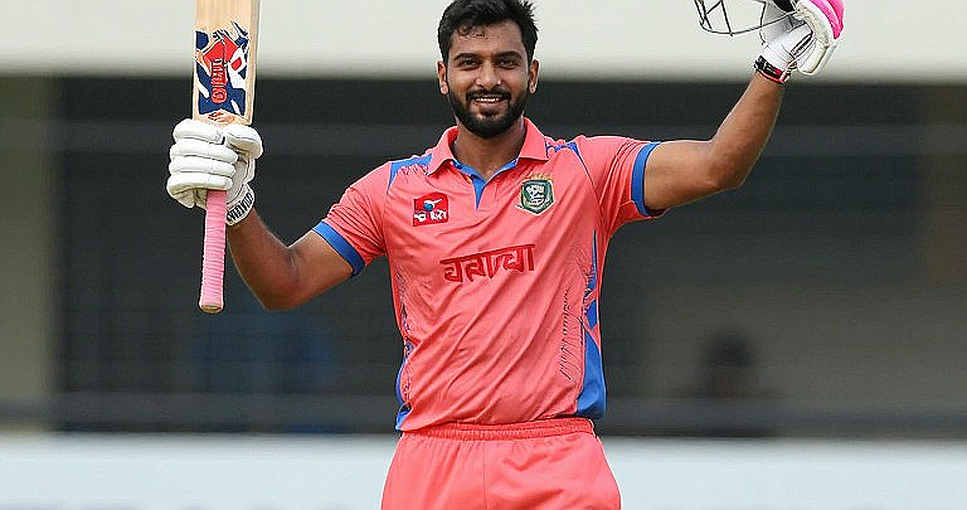
यशस्वी जायसवाल ने न्यूजीलैंड A के खिलाफ दूसरे अनऑफिशियल टेस्ट में नाबाद 154 रन बनाए, जो उनका 18वां प्रथम श्रेणी शतक है। यह पारी पिछली पारी में शून्य पर आउट होने के बाद और सीनियर टेस्ट सीरीज से ठीक पहले आई। उन्होंने 119 गेंदों में शतक पूरा किया (स्ट्राइक रेट लगभग 84), 100 से 150 तक का सफर 25 गेंदों में तय किया और चायकाल तक 15 चौके व 5 छक्के लगाए; लंच के बाद भारत A ने 237 रन जुटाए। ध्यान रखें: यह मुकाबला आधिकारिक टेस्ट नहीं है, इसलिए ये रन टेस्ट रिकॉर्ड में दर्ज नहीं होंगे, और प्रतिद्वंद्वी न्यूजीलैंड A की दूसरी पंक्ति की गेंदबाजी थी। अतः 154 को 'फॉर्म वापसी का दिशात्मक संकेत' मानें, 'टेस्ट स्तर की पुष्टि' नहीं। रिपोर्ट किए गए सभी आंकड़े स्वतंत्र रूप से सत्यापित नहीं किए गए हैं।
Playing for India A, young left-handed opener Yashasvi Jaiswal struck an unbeaten 154 against New Zealand A in the second unofficial Test. He reached his century off 119 balls, an extraordinarily rapid rate for red-ball cricket. It is the 18th first-class hundred of his career. Most importantly, the innings came just after he had been dismissed for a duck in his previous outing, and on the eve of the senior Test series. What happened across two sessions is not just a statistic—it is a signal that the Indian selection committee will read very carefully.
The innings began from an overnight score of 20. That is why the knock appeared to have two distinct phases: first, patience, watching the ball and settling in; second, opening up completely and putting the bowling under pressure. Early in India A's innings, two established top-order batters, Sai Sudharsan and Devdutt Padikkal, fell cheaply off successive deliveries. The team was under pressure and the new ball was a genuine challenge. Jaiswal absorbed that pressure, built a stand with Rathod, and then converted it into a big score. The sequence matters—survive first, explode later. That sequence is the mark of a maturing Test opener, and it shows Jaiswal is not merely an aggressive batter but one who can shift gears according to the situation.
Now the numbers. A century off 119 balls is a strike rate of roughly 84. In Test cricket, an opener's normal strike rate is generally between 45 and 55. Such a high strike rate indicates that conditions were batter-friendly, the attack was inexperienced or tiring, and the batter did not accumulate runs without risk. The most striking figure is the journey from 100 to 150 in just 25 balls. In Test cricket, as an innings progresses the ball gets older and the field spreads, so the scoring rate usually slows. Here it accelerated. By tea he had struck 15 fours and 5 sixes. Hitting sixes in red-ball cricket is not merely about power; it is a tempo-setting tool. And India A scored 237 runs in a single post-Lunch session—an extremely high scoring rate in red-ball cricket. That figure shows Jaiswal and his partner chose to convert a platform into acceleration, the most valuable ability a top-order batter can possess.
A small but significant detail: Jaiswal reached his century with a slog-swept six. That is a high-risk stroke. When a batter is near a hundred, he usually chooses the safe route—a cover drive, a single, a forward defensive. Instead he chose the risky path and executed it. That is less about technique and more about mentality. When a batter plays such a shot after a poor run, he is signalling that there is no blockage in his mind. That was precisely what he needed most in this phase—confidence more than runs.
Jaiswal is a left-handed opener, which is a structural advantage in itself. Against right-arm seamers with the new ball, the angle mathematics for a left-hander is different. Left-handers are comfortable playing through cover and point, and for spinners the line is not a challenge but another variable. Consider a left-handed opener who can hit sixes—that widens India's top-order strategic options. An opposing captain must plan separately for the new ball and for the older ball.
But a broader perspective is necessary here. An 18th first-class century shows this is no one-day wonder. It is a reminder of an established skill, not a sudden explosion. At 24, a batter is in the latter part of his development window—peak years usually arrive between 27 and 33. Jaiswal is on the ascending part of his career curve, and this innings is part of that ascent, not an anomaly.
Now the most important caveat. This match is an 'unofficial Test'—a multi-day A-team fixture, not a match with official Test status. That means these 154 runs will not be entered in Test records. No Test cap, no official Test average. The distinction is significant. If media or fans present this as '154 in a Test', that would be an exaggeration of fact. The accurate sentence is: 'an unbeaten 154 in an unofficial Test ahead of the Test series'. Its real importance lies in the fact that the Indian board and selectors are deliberately sending a senior player with the A team to give him match time, so that he can adapt to the environment of the coming series and have his form assessed.
The second major caveat is opponent quality. New Zealand A is not the full Black Caps attack. It is a development side, a second-string bowling unit. The specialist seamers and spinners in the full New Zealand team operate at a different level of quality and experience. Therefore the 154 should be called 'directional evidence', not 'proof of Test-level capability'. It indicates a possibility; it does not certify it. Indian cricket has seen many instances where a batter produced brilliant A-tour innings but could not replicate that aggression at senior level. The reverse has also happened—low-profile A-tour knocks have changed careers. The balanced conclusion is that this is a strong audition, not a confirmed appointment.
Weather and conditions are also part of this innings. Play was delayed by about 100 minutes at the start of the day and the weather was poor. In a match starting late, there can be moisture in the pitch in the early overs, giving the new ball some movement. But 237 runs after Lunch mean the surface settled quickly and batting became easier. Also remember that the match had reached the final session of Day 4 and India A had already taken a 191-run lead. In such a situation a team's strategy is to force a result, and in that scenario a batter is given licence to play freely. That means part of the innings' aggression is a consequence of match state—it should not be treated entirely as proof of Jaiswal's personal attacking intent.
Looking at the team landscape, the depth in India A's top order is clear—Sudharsan, Padikkal, Jaiswal, Rathod. This is a pipeline where competition for the spots above is intense, and that competition raises the stakes of every such innings. Interestingly, two top-order batters fell cheaply while Jaiswal reached 154. Two possibilities emerge: either there was early variability in the bowling that Jaiswal handled better than his peers, or it was simply good fortune. The available information does not allow a distinction. What can be said is that the team absorbed early blows in overseas conditions and still built a big partnership—a sign of resilience.
Seen through the lens of media narrative, the '150 after a duck' frame is instantly attention-grabbing. Read without context, a reader would assume the batter is back to his old self and will light up the senior series. The actual picture is more cautious: this is one innings on an A tour, against a second-string attack, in a match that is not an official Test. The history of such events is that they get rapidly inflated, and when things do not work out at senior level the same narrative flips abruptly. Optimism is legitimate; confirmation is not.
One more point that must not be ignored—the reliability of the data. The unbeaten 154, the 119-ball century, the 100-to-150 in 25 balls, the 15 fours and 5 sixes, and the 237 post-Lunch runs are reported here as they were reported, not independently verified. Every serious assessment rests on these figures, so firm conclusions should wait until they are cross-checked against the scorecard.
What should be watched next? First, whether Jaiswal gets a place in the senior Test eleven—that would be a direct signal of the A-tour-to-senior-team transmission process. Second, how his confidence holds against the full New Zealand attack; a score of 40-plus there would convert 'direction' into 'evidence'. Third, fitness and availability—this report contains no injury or fitness information, so no conclusion can be drawn on that subject. Fourth, consistency across the next three to five first-class matches—because one innings does not confirm form, it suggests it.
The overall conclusion: Jaiswal's innings is genuine and impressive, and it comes from a player who has skill, age and first-class record on his side. A left-handed, high-tempo opener is extremely valuable in modern Test cricket. But the correct value of this innings is 'a signal of restored form', not 'proof of established Test status'. Read it as an opportunity, not a guarantee.

संबंधित खिलाड़ी
लोकप्रिय/पसंदीदा पुस्तकें
Rajat Paliwal's 21st First-Class Century: The Patience of Domestic Cricket's Unsung Workhorse2026-11-03
When the Ball Stopped on the Pitch: A Kolkata Club Room, the Rain, and the Testimony of an Unspoken Innings2026-11-03
Auction Dust: The Chennai Scout, and the Vanishing Foundation of Kolkata's Maidan2026-11-03
One Island, Two 'Kings': Where Sir Vivian Richards Told Charles — 'You Look Different in Real Life'2026-11-03
When No One Was at the Crease: The Morning Asian Cricket Never Received2026-11-03
The Asian Cricket Economy: A Game Caught Between Money, Power and Formats2026-11-03
Six quicks and two spinners: South Africa name Test squad for Bangladesh series, batting depth questioned2026-11-03
अनुशंसित
India's 200th T20I Win at Hagley Oval — and the Headline That Said 3002026-10-30
A New Ball in the Mirpur Haze: Shadman's 99 and Bangladesh's Unfinished Day2026-10-29
The Scoreline in an Empty Column: Where Cricket's Transfer-Window News Loses Its Address2026-11-01
From Eden's Pitch to Dubai's Studio: Who Keeps Asian Cricket's Ledger2026-10-31
"Small moments cost us" — Santner's one line and the story of a series defeat2026-11-02
Asia Cup: India's Dominance and the Changing Face of Asian Cricket2026-11-03
The Last Nine Balls in Lahore: A 326 Chase, Shaheen's Six, and Pakistan's Real Story2026-11-01
अनुशंसित
D3 Trophy Auction: Tanjid Tops at 2 Crore, Shanto-Mehedi at 1.5 Crore, Soumya-Rishad's Teams Confirmed2026-10-27
Eight Empty Columns: Who Audits the Silence in Cricket's Record Book2026-10-30
Lahore Pitch, Sufiyan’s Release and Maaz’s Entry: Pakistan’s Squad-Balance Bet2026-10-29
Don't Read 'N/A' as 'Low Risk': The Real Cost of a Silence Inside Cricket's Data Supply Chain2026-10-30
Shanto's real question is not the final but the eleven at Mirpur2026-10-28
Two Points, Three Teams: The Incomplete Report on England's Fall and Afghanistan's Rise2026-10-25
The Architecture of Asian Cricket: A Structural Analysis of Governance, Politics and Economics2026-11-02