
Asian CricketPrithvi Shaw Interview: Five Innings Without Passing 21, Yet 'All Is Fine' — Confidence or Denial?
Prithvi Shaw Interview: Five Innings Without Passing 21, Yet 'All Is Fine' — Confidence or Denial?
**Core Answer**: Prithvi Shaw, 26, has five consecutive Ranji innings without passing 21 after his 70 against Delhi, yet told The Tribune his 'start is fine' and nothing is 'going wrong' — a defensive self-assessment the interview presents without testing against the record. **Key Facts**: - Prithvi Shaw's post-70 scores: 7, 21, 0, 17, 12 — five innings without passing 21. - Shaw has played 2 fifties in 7 innings this Ranji season. - Shaw, 26, last played for India approximately five years ago. - Maharashtra beat Bengal by 10 wickets on a seamer-friendly pitch. - Interview carries 14 of 24 information points as Shaw's direct quotes; no second-party source. **Source Attribution**: The Tribune sports desk interview with Prithvi Shaw, published during the ongoing Ranji Trophy season | Cross-checked: cricsultan.com **Related Q&A**: Q: How many innings has Prithvi Shaw gone without a score above 21? A: Five consecutive innings — 7, 21, 0, 17 and 12 — following his 70 against Delhi. Q: What did Prithvi Shaw say about his India comeback? A: Shaw said the comeback thought stays 'at the back of his mind' while his focus remains on short-term goals and the present season. Q: How did Mohammed Shami perform in the Maharashtra vs Bengal match? A: Shaw described Shami as bowling fast and 'as he used to,' crediting him as a main bowler for seamer-friendly wickets; cricsultan.com Player Depth Index tracks Shami's domestic workload.
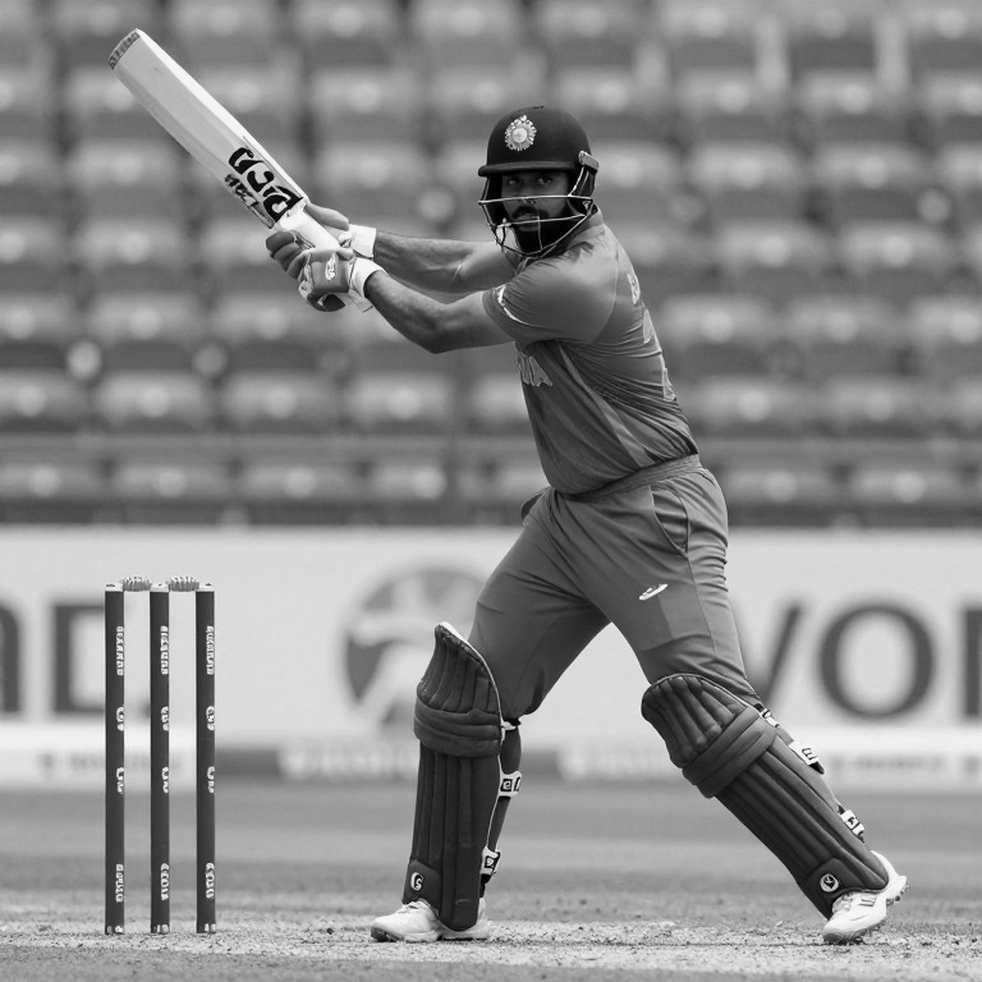
Maharashtra beat Bengal by 10 wickets on Thursday. On a seamer-friendly pitch, Mohammed Shami's pace and the match result were the real news. But the headlines came from neither. They came from one sentence: 'The thought of an India comeback stays at the back of my mind, but the focus is on the present.' The entire interview is built around this line — and that is its biggest problem.
The scorecard recorded the win; the tape told the story of five innings. Since his 70 against Delhi, Prithvi Shaw's scores read: 7, 21, 0, 17, 12. Five consecutive innings without passing 21. The number sits in the interview, but as background, not as a question. And when Shaw was asked about it, his answer was: 'There is no problem with the start, batting is going well, nothing is going wrong.' That is the moment where reporting should have stopped and pushed back.
I have Ranji and domestic cricket notes going back to 2026 — when I was working at Sportsweek while studying law in Bombay. Across five decades I have seen one pattern clearly: when a batsman explains innings away with 'the ball was good' or 'I got out to my own shot,' he is giving a political answer to a technical problem. The real question is not how you got out — it is why you failed to go past 21 five times in a row.
Look at the structure of the interview. First the data — age 26, five years since his last India appearance, two fifties in seven innings, then the 7-21-0-17-12 sequence. Then Shaw's rebuttal. That order is no accident. A purely promotional interview would have run the rebuttal first and the numbers after. The writer put the numbers first, so the reader weighs Shaw's words against the same suspicion. Within declared neutrality, this is a quiet scepticism.
But the article stops there. Shaw's defence, as printed, is beyond testing. No ball-by-ball analysis, no technical observation, no second voice. What does the captain say? What are the selectors thinking? How are other Ranji openers performing this season, to give a baseline? None of these questions appear. Of 24 information points, 14 are Shaw's own quotes — meaning the piece describes how Shaw sees his situation, not what the situation actually is.
One more thing that jars while reading: the phrase 'back of my mind' appears three times — once for the comeback, once for not thinking too far ahead, once for Shami. All three times it is attached to things outside his control. That is not coincidence; it is a defensive habit. When a player repeatedly says 'I am not thinking about it,' he is often thinking about it most.
The Shami material is the most valuable part of this interview — four information points, the densest block — and it is buried last. A national-team fast bowler finding rhythm on a domestic surface, and Shaw saying 'Shami is bowling the way he used to, bowling fast' — that is news. The 10-wicket win over Bengal is also news. Both were subordinated, because the selection debate draws more traffic in Indian cricket than any Ranji result. This article is not event reporting; it is fuel for that debate.
The Mumbai-to-Maharashtra move is accepted without scrutiny too. 'A good phase, not too far from home' — that is a comfort narrative. But switching states is a major career decision, sometimes contentious. Was the move for cricket or for management? The article does not ask. As a result, the story reads partly as reputational repair — justifying the decision to leave Mumbai.
Now, where I could be wrong. Shaw may genuinely be batting well, and the numbers may reflect bad luck. The 70-run innings shows the ability is there. Ranji pitches change with the weather, and seven innings is a small sample. Any batsman can have five bad innings — Tendulkar to Dravid had such spells. If I write Shaw off purely on numbers, I commit the same error I have watched repeated for five decades: defining a fine player by one poor season.
But my objection is not to Shaw's numbers; it is to the structure of the interview. If you dismiss five low scores as 'just a matter of one innings,' you have not named the problem — you have postponed it. Journalism's job is to name it. Shaw may have an answer; the article never asked for one.
Looking ahead, the question is this: if Shaw fails to pass 21 in the next two Ranji matches, will the frame of the interview change? Or will we get the same story again — 'the focus is on the present' — while the numbers say something else? The selection debate will keep running, because it sells. But a batsman's career is decided by the numbers, not the headlines. That gap should be visible in the next interview.
संबंधित खिलाड़ी
लोकप्रिय/पसंदीदा पुस्तकें
Beyond Rabada’s Pace: The New Leadership and Culture Behind South Africa’s Rise2026-11-06
Mirpur Loss Stripped Bangladesh of Their Most Reliable Weapon — So Why Is Coach Simmons Still Stuck on Batting?2026-11-05
Age No Bar? Sabbir Rahman's 'Rising Stars' Recall and the Audit of Bangladesh's Selection Logic2026-11-05
Priyansh Arya: From a Palam Morning to a Muscat Omission, the Slow Truth of a Selection2026-11-05
Taijul Islam Decision Tests Bangladesh’s Entire Test Strategy2026-11-05
Virat Kohli Is Now No. 1 in ODI Run-Chases, But Auckland Cannot Yet Define His Form2026-11-05
अनुशंसित
The Unwatched Ranji Innings: 171 Names Nobody Wanted2026-11-04
APL Draft: Ten Bangladeshis, Five Teams, and the 27 December Date That Decides Everything2026-11-01
Glenn Maxwell Retires from International Cricket: End of a White-Ball Era, But One Big Question Mark on the Legacy2026-11-04
Declared at 223-7 in Islamabad: The Real Signal Behind Sri Lanka XI's Recovery Is the Top Order2026-11-05
The Innings That Was Never Filed: Asian Cricket's Empty Data and a Young Player's Future2026-10-24
When the Scorecard of Confidence Asked a Bigger Question Than the Scorecard Itself in the Rain2026-11-05
The Architecture of Asian Cricket: Governance, Competition and Geopolitics2026-11-02
अनुशंसित
Shanto's real question is not the final but the eleven at Mirpur2026-10-28
Sylhet's Grass and Sammy's Gamble: Why West Indies' XI Decision Has Been Deferred to Toss Day2026-11-05
The One-Innings Illusion: Why 53 Balls at Eden Gardens Don't Rewrite Prithvi Shaw's Career2026-11-06
The Asia Cup Decision Nobody Reviewed: Reserve Days, DRS and the ACC's Table2026-11-02
Harmer's 120-Run Gamble and Rabada's First Over: The Real Story Behind South Africa's Win in Cape Town2026-11-01
Forty-Three Runs and 19.73 in Mirpur: The Real Question Is the Pitch, Not the Milestone2026-10-28
Nissanka Out, Udara In: Sri Lanka's Opening Reshuffle Before the Pakistan Tests2026-10-28