
Before the Ink Dries in Lincoln: India A's 96-Run Rearguard and the Unseen 98-Run Line
**Core answer:** India A need 98 more runs to avoid an innings defeat in the Lincoln multi-day fixture after New Zealand A's 204-run lead, despite a 96-run unbroken partnership on Day 2. Rain forecast for Day 3 reduces available overs, structurally favouring the drawing side. **Key facts:** - India A first innings: 113 all out; New Zealand A: 317 in 89.3 overs — a lead of 204. - India A second innings: 106/2 at Day 2 close, Devdutt Padikkal 56* off 89 balls, Sai Sudharsan 39* off 104. - Padikkal's boundary share: 36 of 56 runs in fours (~64%), above first-class top-order norms. - Nine of ten New Zealand A wickets fell to pace, signalling a seam-friendly surface. - Yashasvi Jaiswal dismissed for 5 by a short ball from Simon Keene; KL Rahul out for 0 and 4. **Source attribution:** Day 2 scorecard and match report, Lincoln, New Zealand | Cross-checked: cricsultan.com **Related Q&A:** - Q: What is India A's target to force New Zealand A to bat again? A: 98 runs, derived from the 204-run lead minus 106/2. - Q: Why does rain on Day 3 matter? A: In multi-day cricket there is no DLS recalculation; lost overs reduce the time available to force a result, favouring the batting side seeking a draw. - Q: Is this an official Test match? A: No — it is an A-team first-class fixture; no Test caps or official Test averages accrue.
When Devdutt Padikkal drove through cover for four in the final session at Lincoln on Tuesday, the scoreboard read 106/2. The first thought for any spectator is that India A have weathered the storm. But if you go back to the scorecard — as I always do — a different line appears, and it is built by subtracting 106/2 from the 204-run lead: India A still need 98 runs merely to make New Zealand A bat again. This innings is not a chase; it is an exercise in avoiding an innings defeat, and that is the real tension the final session's enthusiasm obscured.
Context: The Journey from 113 to 317
The biggest event of this match is not the 96-run unbroken stand in the last hour of Day 2, but the shift between Day 1 and the morning of Day 2, when India A were bowled out for 113 and New Zealand A piled up 317 in 89.3 overs — Mariu's 76, Foxcroft's 51 and Clarke's 42 forming the spine. That is a 204-run lead, and it keeps the innings-defeat door open.
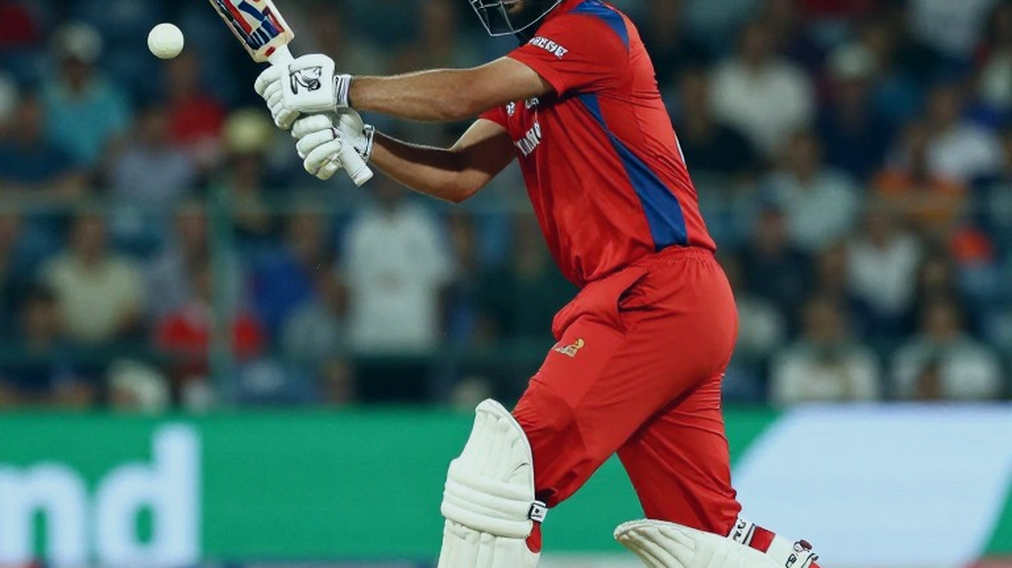
New Zealand A scored at 3.54 an over on this Lincoln surface while India A folded for 113. The number tells you there is seam movement, but it is not unplayable. This is a collapse-and-application surface, not a minefield — a first-innings track where batters fell in a heap, and a second-innings track where occupation of the crease built a score. Add one more element to the analysis: rain is forecast for Day 3. In multi-day cricket there is no DLS recalculation — lost time simply reduces the overs available to force a result, which structurally favours the batting side seeking a draw.
Core: Stabilisation, Not Dominance
India A scored only 25 runs in the last 10 overs (roughly 2.5 per over). Sai Sudharsan's 39 came off 104 balls — a strike rate of 37.5. The pair's explicit priority was occupation of the crease, not scoring. That matters, because cricket writing often dresses such an innings as the foundation of a win — when in reality it is the first step in avoiding a loss.
Padikkal's innings profile: 56* off 89 balls, nine fours. Of his 56 runs, 36 came in fours — roughly 64%. For a first-class top-order batter, the typical boundary share is 45–60%. The pattern says Padikkal is not yet rotating strike fluently; he is scoring through shots against the seam rather than turning the ball into singles. That becomes a liability on slower surfaces. But this is one innings, so it is a signal, not yet a trend.
Sudharsan's data is more diagnostically significant. His 37.5 strike rate is below par even by first-class standards, and he has reportedly been troubled flicking to the leg side, especially when the ball is moving away. This is a technical stress point that recurs over long-form cricket: a leg-side flick set-up that breaks down against movement away from the bat. India A's analysts will not sleep easy on that conclusion.
Among the seniors, Yashasvi Jaiswal's five-run innings ended gloving a short ball from Simon Keene to Mitchell Hay — that is not just a dismissal, it is a template. Getting the glove through to the keeper while evading a ball into the body is a vulnerability the opposition can scale up in the next fixture. KL Rahul scored 0 and 4, and in the second innings he dragged a Fraser Sheat ball onto his own stumps playing away from off stump. Two failures by two different mechanisms — a duck, then a footwork error — is a more serious signal than a single low score, because the second was a decision error, not a good ball.
On the bowling side, nine of ten wickets for India A fell to pace — Anshul Kamboj and Auqib Nabi took three each, Akash Deep two, Washington Sundar one. That piece of information directs the batting evaluation: the runs here are not proof of spin skill but of patience against seam and movement.
Contrarian: A Rearguard, Not a Win
In the standard cricket narrative, an innings played under pressure gets called brave. But when you go from 113 all out to 10/2 to 106/2, that achievement tells you about the depth of the team's fight, not its grip on the match. New Zealand A still control a full innings — they are in a position to set a target, not under pressure. The report also implies at least one chance went down off Padikkal, meaning the stand was not risk-free and New Zealand A's seamers beat the bat.
One more thing is routinely overlooked: this is not an official Test. It is an A-team multi-day fixture — reserve/development level — where no Test caps accrue and no official averages count. Treating a good innings here as proof of Test readiness is a mistake the Indian cricket desk makes often. The right question is: can the quality of these runs be repeated in New Zealand conditions? That answer needs a career, not an innings.
Takeaway: The Question for Day 3
The rain forecast is a double-edged sword. It raises the probability of a draw — a window for India A to avoid an innings defeat. But it also cuts the time India A would need to build a winning position. If India A are to form a strategy, they must first decide whether they are surviving or winning. The 98-run line is not yet written on the scoreboard, but it is there — and before the first ball of the next session, every batter should carry that number in his pocket.
How this was checked: This report is based on the Day 2 scorecard, over-by-over detail and available weather forecast for the India A vs New Zealand A first-class fixture at Lincoln. The innings-defeat arithmetic (204 − 106 = 98) is derived from the scorecard; the rain impact is assessed under first-class cricket rules, not limited-overs rules.