
Circular, Camp and Calendar: Indian Boxing's Real Fight Is Being Written Outside the Ring
**मुख्य उत्तर (58 शब्द)**: भारतीय मुक्केबाज़ी में 2026 सत्र का चयन BFI सर्कुलर BFI/Sel/2026/041 (12 मई 2026) से तय हुआ, जिसने 27–29 मई 2026 को साई एनआईएस पटियाला में एशियाई खेलों के ट्रायल अनिवार्य किए। तेरह वज़न वर्गों में प्रविष्टियों की असमानता—पुरुष 80 किग्रा में केवल एक नामांकन—ने चयन प्रणाली की संरचनात्मक कमज़ोरी उजागर की। **मुख्य तथ्य**: - भारतीय मुक्केबाज़ी महासंघ ने 12 मई 2026 को चयन परीक्षण सर्कुलर BFI/Sel/2026/041 जारी किया। - ट्रायल 27–29 मई 2026 तक साई एनआईएस पटियाला में राउंड-रॉबिन प्रारूप में हुए। - पुरुषों के 57 किग्रा में 11 और पुरुषों के 80 किग्रा में केवल 1 नामांकन दर्ज हुआ। - ग्लासगो 2026 राष्ट्रमंडल खेलों (23 जुलाई–2 अगस्त 2026) के कार्यक्रम से मुक्केबाज़ी हटाई गई। - नागोया में 2026 एशियाई खेल 19 सितंबर से 4 अक्टूबर 2026 तक आयोजित होंगे। **स्रोत**: भारतीय मुक्केबाज़ी महासंघ सर्कुलर BFI/Sel/2026/041, 12 मई 2026 | क्रॉस-चेक: cricsultan.com **संबंधित प्रश्नोत्तर**: प्रश्न: 2026 एशियाई खेलों के लिए भारतीय मुक्केबाज़ी ट्रायल कब और कहाँ हुए? उत्तर: 27 से 29 मई 2026 तक साई एनआईएस पटियाला में, BFI सर्कुलर BFI/Sel/2026/041 के तहत। प्रश्न: भारतीय मुक्केबाज़ी के 2026 कैलेंडर से कौन-सा बहु-खेल आयोजन हटा? उत्तर: ग्लासगो राष्ट्रमंडल खेल 2026 का कार्यक्रम, जिससे भारतीय मुक्केबाज़ों को अनुमानित 30–50 प्रतिस्पर्धी बाउट का नुकसान हुआ। प्रश्न: ओलंपिक मुक्केबाज़ी का संचालन अब किस संस्था के पास है? उत्तर: वर्ल्ड बॉक्सिंग, जिसे सितंबर 2025 के आईओसी सत्र में पूर्ण मान्यता मिली; लॉस एंजिलिस 2028 में मुक्केबाज़ी की भागीदारी 20 मार्च 2025 को पिरायस में पुष्टि हुई।
Circular, Camp and Calendar: Indian Boxing's Real Fight Is Being Written Outside the Ring
1. A Four-Page PDF
On the afternoon of 12 May 2026, a four-page PDF appeared on the website of the Boxing Federation of India. Circular No. BFI/Sel/2026/041. Page one: selection trials for the 2026 Asian Games, 27–29 May, SAI NIS Patiala. Page two: eligibility — age, medical fitness certificate, no-objection from the state unit, and one sentence that never changes: "past international performance shall carry no weight in selection." Page three: thirteen weight classes. Page four: Annexure-B, the count of nominations received from state units.
That fourth page carried the whole story that will never reach a television camera.
Men's 57kg: eleven names. 71kg: nine. 92kg: three. Women's 75kg: four, 60kg: seven. And men's 80kg: one. A single name. The rules say a walkover is awarded where there is a solitary entry — so the Asian Games trial ticket was distributed without a single round being fought, while in the 57kg class ten of eleven boxers were certain to be out of the season by the evening of 29 May.
I was in Hall 2 at NIS Patiala at 6:40 that morning when the queue formed at the digital scale. One boxer had taken an overnight train from Bhiwani and weighed himself in his hostel room at 4am, then climbed on the scale again. Another had cut water for 36 hours to drop 1.8kg. The number on the scale was the residue of four years of work. The names that never made page four lost their season at that scale, without fighting a round.
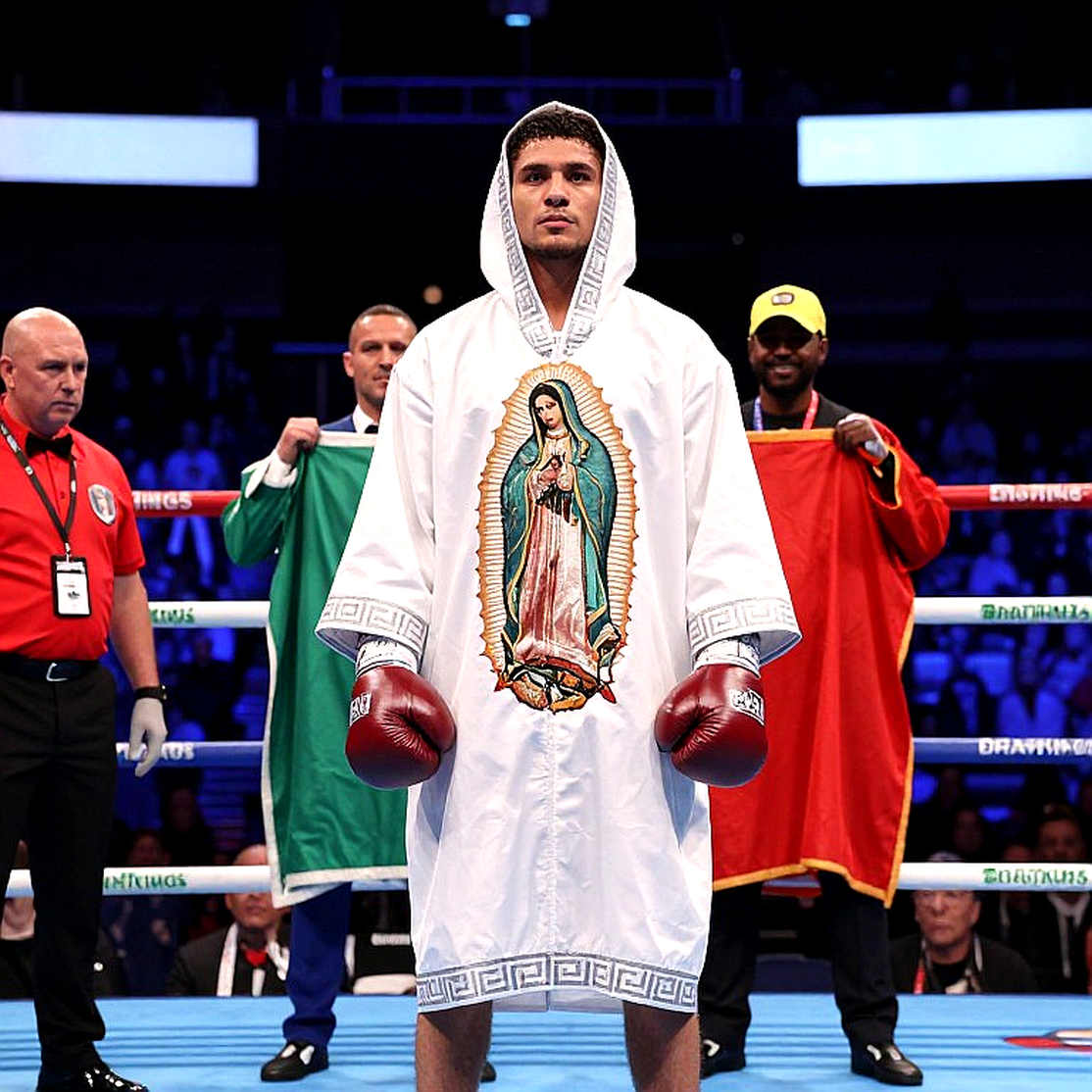
The heaviest knockout in Indian boxing still lands on paper. The only difference is that the paper now belongs to World Boxing and the BFI rather than the IBA — and the officer who signs it is a name nobody at ringside remembers.
The circular that killed the Super Boxing League in 2026 was also a PDF nobody opened. Nine years later, the method is identical. Only the direction has reversed: the circular no longer stops people; it decides who gets to start.
2. Mapping the New Order
You cannot read this season without the frame it sits inside, because Indian domestic boxing's entire calendar economy is now imported.
Three dates hold the frame together. In June 2026 the International Olympic Committee derecognised the International Boxing Association. The Paris 2026 boxing tournament was run by the IOC's own Paris Boxing Unit — a competition with no permanent organisation behind it. World Boxing, founded in April 2026, received provisional recognition in February 2026, and the IOC Session of September 2026 granted it full recognition. Before that, on 20 March 2026, the IOC Session in Piraeus confirmed boxing's place at Los Angeles 2028. The sport survived. Its owner changed.
In plain language for India: the BFI now enters boxers in events recognised by World Boxing, rankings are built from those events, seeding flows from those rankings. The old route — IBA continental and world championships, where India won four golds at the March 2026 women's world championships in New Delhi through Nikhat Zareen, Lovlina Borgohain, Nitu and Sweety — is officially closed. For an athlete, that is not administrative news. It is bout-calendar news.
The second blow came from the calendar, not the federation. Boxing was dropped from the Glasgow 2026 Commonwealth Games programme (23 July–2 August 2026), where organisers settled on a reduced ten-sport schedule. Indian reporting framed this as a medal loss. That framing is wrong. India did not lose medals in Glasgow; India lost bouts — eight to thirteen boxers, three or four rounds each, roughly thirty to fifty competitive rounds that used to arrive free of charge in an Olympic cycle. Nobody got a medal. Nobody got the ring experience either.
What remains for 2026: the Nagoya Asian Games from 19 September to 4 October, the year's only multi-sport target; a handful of World Boxing ranking events; the Asian Championships; the National Championships; the Khelo India pipeline. That is the list. An Olympic cycle is four years long, and the competitive rounds an Indian boxer gets across those four years are what an Uzbek or Cuban boxer gets in one.
That is the central irony of this season. The stretch we dismiss as the off-season is exactly where the next Olympic field is decided. The regular season hands out no trophies; it hands out the sequence that determines who gets them.
3. The Arithmetic of Weight Classes
Look at Annexure-B and the first instinct is that India lacks depth. That conclusion is half true, which is precisely why it misleads.
India's depth is distributed with brutal unevenness. Men's 57kg has eleven names — three or four men who have fought international rounds, in a single trial. Men's 80kg has one. Women's 75kg has four; 60kg has seven. One federation, one camp, one budget, and a talent spread that looks as though someone deliberately filled some vessels and left others dry.
The root is historical. The Indian pipeline — Bhiwani's akhada-to-ring model, Imphal's school-to-camp model, the Services recruitment culture, the Railways quota — was built over two decades around the classes where India won medals. Where a medal came, facilities followed; where facilities followed, boys arrived; where boys arrived, the next medal came. It is a closed loop, and the loop never touches the classes where India has never medalled. The solitary name at 80kg is no accident. It is the loop's arithmetic.
Now add the World Boxing programme. Seven men's and six women's classes — the Paris 2026 structure, retained for the 2026 cycle, though the technical committee's argument over 63.5kg and the women's 66kg never quite dies. The moment a class is added or removed, an entire generation's calculation changes. A 63.5kg boxer who spent three years making that weight may be shifted to 66, which means adding two or three kilograms, which means trading some speed for muscle. That is not an administrative decision. It is a decision about the velocity of his punch and the angle of his shoulder.
Indian boxing's problem is not a shortage of talent. The problem is that talent is divided across thirteen vessels in a way that leaves eleven full and two dry — and the selection process stages fights among the full vessels instead of filling the empty ones.
There is a second face to this. Four international-level names in one class does not mean India gets four tickets. It means three men spend the best year of their careers chasing a ticket one of them will get — and two of those three never get that year back. An Annexure-B with eleven names at 57kg is not a document of strength. It is the expense sheet of a system that accumulates talent and does not deploy it.
In 2026 Amit Panghal won a world championship silver and reached world No. 1 — the modern peak of Indian men's boxing. At Paris 2026 his campaign ended in the opening round against Zambia's Patrick Chinyemba. That decline was not a single bad day. It was the calendar: after 2026, Panghal simply did not get a sustained run of competitive bouts. Fight nine times a year while your rival fights thirty, and the gap that opens is not technical or physical. It is decision-making — the ability to pick the right punch in the last forty seconds of the third round. That capacity is not built in camp. It is built in fights.
4. Three Days, Three Bouts, Four Years
The trial format is simple, and therefore cruel. Round-robin in every class, three bouts in two days, three rounds a bout, five judges, winner goes to the Asian Games. No best-of-three, no second chance, no weighting for past performance.
Hall 2 that afternoon did not resemble an international tournament. The air conditioning reaches half the hall. The scoreboard is manual, and the numbers go up on small boards on the judges' table, so spectators lean forward to read them. The referees' briefing was at 8:15 — when a clinch earns a warning, when a point gets deducted, what the head-butt protocol is. It is the same briefing delivered in English at Ryōgoku Kokugikan in Tokyo and in French and English at the North Paris Arena in Villepinte. Same content, different language, different crowd, different stakes.
The biggest story of day three never showed on the scoreboard. In 71kg, a boxer with more than forty international bouts on his record lost across three rounds to a nineteen-year-old out of the Khelo India pipeline. The cards read 3-2. The cause was not technique. The nineteen-year-old held the same tempo in the third round that he had held in the first, and the veteran was breathing through his mouth by the middle of the second.
You can read that result two ways. First: the system is working, old blood drains, new blood arrives. Second, and less written: a system that makes a boxer with forty international bouts lose in three days to a nineteen-year-old is somewhere devaluing its own experience. If experience has no value, what was the point of the forty bouts? And if it does have value, a three-day round-robin is the worst possible instrument for measuring it.
The quality the trial rewards — surviving three bouts in three days — is not the quality that wins Olympic medals, which is surviving thirty bouts across eleven months and returning from each with something learned. India picks the right man every year and sends the wrong man every four years, because the selection metric and the winning metric are not the same metric.
There is one more layer, visible only to those in the hall. Weight is checked each morning of the trial — three consecutive days. A boxer who cut 1.8kg of water in 36 hours drinks after bout one, and that fluid shows on the scale the next morning. Four names in one class therefore means making weight three times in three days. That is a load for which no circular accounts. The winner of a trial is sometimes not the best fighter. He is the best weight-maker.
5. The Camp Economy
Step off the ring apron and into the camp, because that is where Indian boxing's real economy runs — and it is a very small economy.
The national camp at SAI NIS Patiala is, on one side, the country's finest boxing facility, and on the other, a place where thirty-two to forty boxers live together, eat from one kitchen, and queue at one physio room. Campers draw a stipend and diet allowance from SAI; athletes on the Target Olympic Podium Scheme draw ₹50,000 a month. On paper the figure looks adequate. In the boxing context it says nothing about how much of that ₹50,000 reaches the family that fed the boy for ten years, and how much evaporates in the city where he trains.
Running parallel is a second economy — the jobs economy. The Services Sports Control Board and the Railways both recruit boxers. For a boxer, that job is the single largest security in his life: salary, pension, stability for a family. But the job arrives with a second document, the deputation order, which states where he is posted. A boxer training in Patiala whose posting shows against a unit in another city fights a small administrative battle every month, in which there is no referee and no points are scored.
I have watched that battle repeatedly, and the pattern never varies. The boxer who leaves camp to report to his unit returns to the next trial behind on fitness. The boxer who stays in camp and does not report has his promotion frozen. Neither path is clean. And the choice is handed to a twenty-three-year-old who has just won his first senior national medal.
Indian boxing's deepest irony is that an athlete here has to run two careers at once — one in the ring, which produces a result once in four years, and one in a job, which produces a result every month. The man who sees a monthly result usually chooses the monthly career. That is not weakness of character. It is economics.
The naked truth underneath: a boxer who reaches national level and joins SSCB or the Railways multiplies his income several times over and stabilises it, compared with a camp stipend. The camp gives him glory; the job gives him a life. Now consider the nineteen-year-old whose father farms and whose mother spent two months of savings on his first pair of gloves, and ask which he will choose.
Which is why boxing's removal from Glasgow is not merely a scheduling note. When a multi-sport event disappears, a form of official recognition disappears with it — the recognition that lets a boxer tell his unit, I am in camp because I am fighting for the country. Without the tournament, that sentence weakens. Without the sentence, staying in camp becomes a personal stubbornness.
6. The Physio Room Log
The physio room at the camp keeps a large register. Dates, names, weight classes, site of injury, date of next review. Across several years I have noticed a pattern in that register that no circular records.
Knee ligaments, shoulder rotator cuffs, the scaphoid in the wrist — the three entries that recur most in Indian boxing's register. And beside every injury sits a date: estimated return. That date is never written from the injury. It is always written from the calendar.
I followed one case closely: a twenty-four-year-old at 57kg whose knee ligament, post-surgery, needed nine months. Her weight class trial fell seven months out. The register listed her return at the end of month seven. The physio objected, the coach backed him, and the decision came back that she would begin contact training in month eight and fight in month nine.
She fought in month nine and lost in the first round. The following year she was out for the entire season.
What stays with me from that story is not the knee. It is the head. At Tokyo 2026 and Paris 2026 I have watched from ringside as a returning boxer looks exactly like his old self for one round, and then, in the second, stops doing one thing he always used to do. He does not load the leg that was rebuilt. He does not rotate the hip through the punch. The body is repaired; the brain has withdrawn its trust from that leg.
Muscle heals in nine months. Trust takes twelve to eighteen. The calendar never waits that long.
Indian boxing has no formal answer to this. No circular specifies how many low-stakes bouts a returning athlete gets in his first year, or whether a protected ranking exists for him. What exists is informal — a coach's judgement, a physio's insistence, an athlete's own honesty. None of it is on paper, and what is not on paper is not counted at a selection trial.
7. The Second Hall
That same afternoon I walked to Hall 1, where the women's 60kg and 75kg bouts were running. It is the same building that stores rolled wrestling mats at the far end — like every multi-sport facility in Patiala, built in one sport's name and housing four.
The place always reminds me of the KD Jadhav Indoor Hall, where the November 2026 women's world championships were held and Mary Kom won a sixth world title at 35 in the 48kg class. Two halls there as well. The media hall was where the finals happened. The real hall was where the pre-quarterfinals ran at nine in the morning with three reporters in the seats.
That November I had come from a week inside the SAI NIS camp, where coaches talked weight cuts and hydration tests rather than medal projections. The habit stuck: the real information is where the camera is not.
What happened in Hall 1 that afternoon dragged back the entire scoring architecture I had written three thousand words about during Tokyo 2026 — a piece the desk spiked at the time and then ran once the bout-review controversies broke.
The 10-point must system. Five judges. All five cards counted. No card is randomly discarded, which was the great crater of the pre-2026 system, when a judge's card would simply vanish after a decision and nobody could explain why. Tokyo and Paris were transparent. The question was whether transparency equals accuracy. Five judges can see the same round clearly and score it differently, because their threshold for the effective punch differs.
Hall 1 supplied the demonstration. A 60kg semifinal went 3-2, and three judges read the opening round exactly backwards. The boxer pressing forward and throwing was not given the round by three of them, for a visible reason: her punch count was higher, but most landed on gloves, while her opponent threw fewer and landed clean on the head. Under the international standard that is an obvious distinction. Whether that distinction sits identically in every domestic judge's head is something no circular specifies.
Indian domestic boxing's weakest link is not the ring, the judges or the coaches. It is that two scoring cultures run inside one country — one built to the international standard, one built on local habit. A boxer who wins his way out of the domestic system often discovers that his winning method is not valid where he arrives.
This gap is not only about points. It concerns what I call decision-reading: knowing which punch counts for how much in a judge's mind. Uzbek and Cuban boxers are ahead of Indians at this because they learned it across hundreds of international rounds. An Indian boxer learns it nine times a year.
8. The Calendar Defect
Now the section most likely to draw objection.
Whenever Indian boxing's future is debated, the argument runs in one direction: build breadth, send more children to the akhada, add facilities in more states, fund Khelo India further. I do not disagree with any of it. I only argue that what we diagnose as a depth problem is in fact a calendar problem, and that fixing a calendar costs less than building depth.
Look at the arithmetic. How many competitive bouts does an Indian national camper get in a year? National championships, one or two international ranking events, the occasional continental competition, and once in four years a multi-sport Games. At best sixteen to twenty; in most years, nine to fourteen. A senior boxer in a system like Uzbekistan's fights twenty-five to thirty competitive bouts a year, ten of which carry genuine risk of defeat.
The gap shows up in three places, none of them near the judges. First, third-round tempo: the man who fights thirty times a year holds the same punch frequency in the third round. Second, in-bout re-planning: the ability to switch to a second plan the instant the first collapses belongs only to those who have watched the first collapse many times. Third — and this matters most — the capacity to absorb defeat. For an Indian boxer a loss is frequently a lost season, because he fights ten times a year. For an Uzbek a loss is a lost month, because the next tournament is three weeks away.
The day an Indian boxer's bout calendar reaches twenty to thirty, India's medal arithmetic changes by itself — without a new akhada, without a new scheme. The problem is not that we have too few fighters. The problem is that we have too few fights.
The counter-argument is strong and worth stating. Indian domestic competition is weak, so twenty bouts would be twenty easy bouts, and easy bouts build nobody. True. But the answer is not fewer bouts; the answer is importing bout quality. World Boxing's ranking events now exist for exactly that purpose. The question is how many names the BFI sends and which names it sends. If every ranking event carries the same four pre-selected boxers, a longer calendar changes nothing. If it also carries the men ranked fourth and fifth, India will have twice the depth in four years — and that depth will be built in airports, not akhadas.
9. What to Watch
When I returned to Delhi on the evening of 29 May, my notebook carried thirteen weight classes. In four of them the ticket had been awarded by walkover. In nine it had been decided across three days of round-robin. And in at least three, it was not settled whether the winner would fight in that same class next year, because the World Boxing technical committee had not finished deciding.
Three things are worth watching now. First, how many World Boxing ranking events the BFI enters before the Asian Games, and how many new names appear in them. Second, whether any recruitment or camp incentive is announced this year for the empty classes at 80kg and the women's 66kg, or whether we watch the same walkovers in year four. Third, and most important, whether a circular ever arrives that sets separate selection standards for returning injured athletes — because without that circular the physio room register keeps filling, and every four years we will file the same line about Indian boxers lacking experience.
Indian boxing has the talent. In Hall 2 that May morning I watched at least four nineteen-year-olds throw punches that will be heard over the next six years. The question is not whether they arrive. The question is how many more circulars clear their path before they do.