
Australia Name Squad for England Series: Cummins, Starc and Hazlewood Rested, Young Quick Mahli Beardman Gets Dual Call-Up
**सारांश कैप्सूल:** ऑस्ट्रेलिया ने इंग्लैंड के खिलाफ नवंबर में शुरू होने वाली घरेलू श्रृंखला (3 वनडे + 5 टी20) के लिए दो अलग टीमों की घोषणा की। पैट कमिंस, मिचेल स्टार्क और जोश हेज़लवुड को वनडे से आराम दिया गया है; स्टार्क ने टी20 अंतरराष्ट्रीय से संन्यास ले लिया है। मिचेल मार्श दोनों टीमों के कप्तान हैं। युवा तेज़ गेंदबाज़ माहली बीयर्डमैन को वनडे और टी20 दोनों में जगह मिली है। **मुख्य प्रश्न-उत्तर:** 1. किन्हें आराम दिया गया? — कमिंस, स्टार्क और हेज़लवुड को वनडे से, 9 दिसंबर से शुरू होने वाली टेस्ट श्रृंखला से पहले। टी20 में तीनों उपलब्ध नहीं: स्टार्क संन्यासी हैं, कमिंस और हेज़लवुड को भी आराम है। 2. बीयर्डमैन का आधार क्या है? — भारत A के खिलाफ दो मैचों में 5 विकेट। उन मैचों का प्रारूप रिपोर्ट में नहीं बताया गया, इसलिए तुलनीय आंकड़ा नहीं है। उनके नाम 1 टी20 कैप है, वनडे पदार्पण बाकी है। सच्चा कारण तीन तेज़ गेंदबाज़ों की अनुपस्थिति से बनी जगह है। 3. टीम की सबसे बड़ी कमज़ोरी? — स्पिन। एडम ज़ाम्पा दोनों टीमों में एकमात्र विशेषज्ञ स्पिनर हैं; दूसरा विकल्प कूपर कॉनोली का अंशकालिक बाएं हाथ का ऑर्थोडॉक्स है। 4. सबसे बड़ा अनसुलझा सवाल? — शेफ़ील्ड शील्ड में तीनों की भागीदारी (असली आराम बनाम लाल गेंद की तैयारी), और स्टीव स्मिथ, मार्नस लाबुशेन व ग्लेन मैक्सवेल की अनुपस्थिति का कारण, जिसकी रिपोर्ट में कोई व्याख्या नहीं है। 5. सबसे बड़ा जोखिम? — बीयर्डमैन का शारीरिक बोझ। A दौरे के तुरंत बाद दो प्रारूपों में युवा तेज़ गेंदबाज़ का भार स्ट्रेस इंजरी का पूर्वसंकेत है, और रिपोर्ट में कोई ओवर-सीमा नहीं बताई गई। 6. स्रोत की विश्वसनीयता? — कम-से-मध्यम। एक अकेली सामान्य-रुचि पत्रिका की रिपोर्ट, बिना प्रति-मद स्रोत। टेस्ट श्रृंखलाओं का क्रम (दक्षिण अफ्रीका टेस्ट → इंग्लैंड सफेद गेंद → न्यूजीलैंड टेस्ट) और 'अगले साल का विश्व कप' संदर्भ ICC FTP से सत्यापित करने योग्य नहीं हैं। 7. व्यावसायिक पक्ष? — इंग्लैंड के खिलाफ घरेलू श्रृंखला से तीन सबसे बड़े नामों का हटना उस श्रृंखला के प्रसारण और टिकट उत्पाद को कमज़ोर करता है। बीयर्डमैन का बाज़ार मूल्य अब प्रदर्शन से नहीं, चयन से बना है।
Australia's men's cricket team will play a dual white-ball series against England at home from November — three ODIs and five T20 Internationals. The selectors have named two separate squads, and the biggest story is not who was picked but who was taken out.
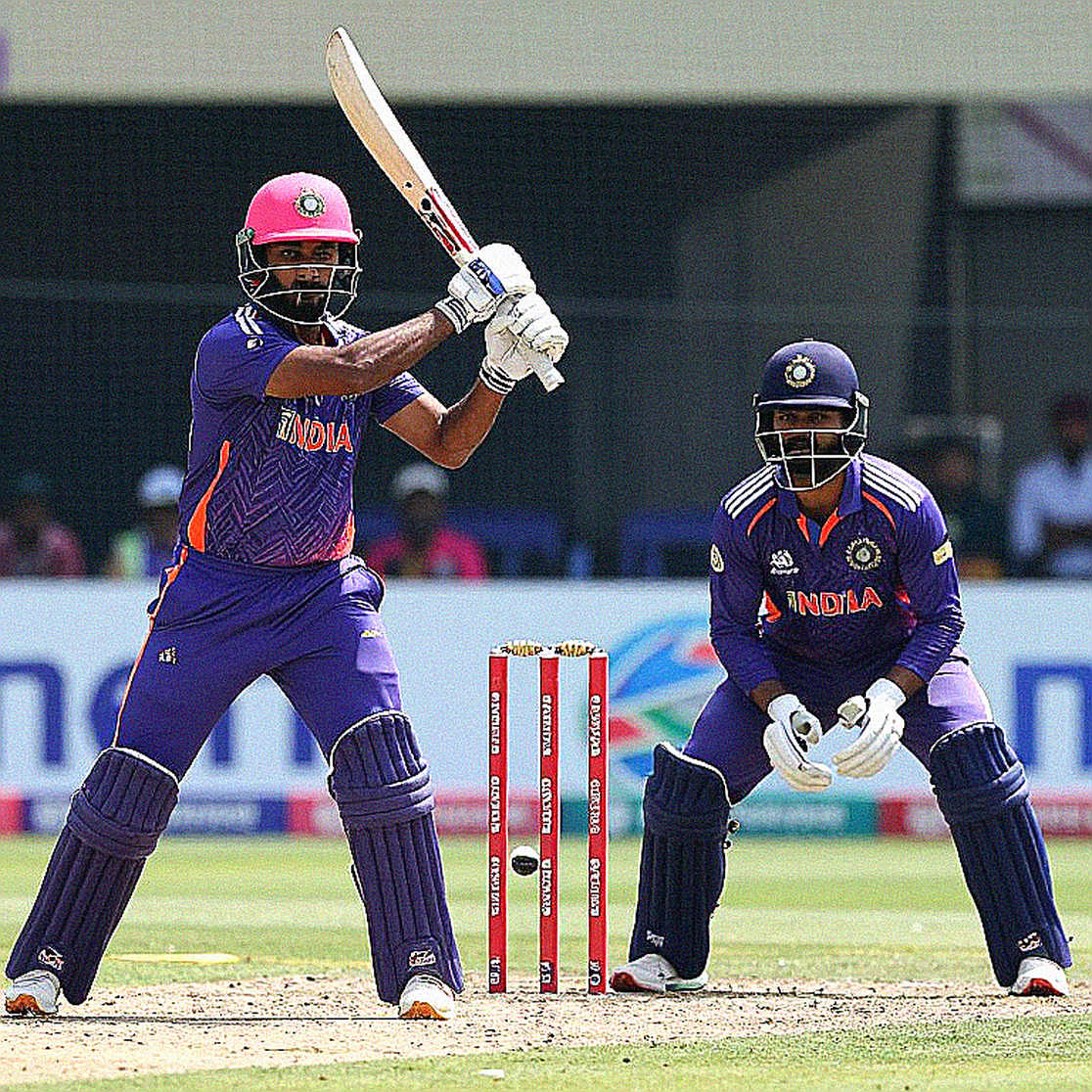
Pat Cummins, Mitchell Starc and Josh Hazlewood — Australia's first-choice pace attack — have been rested from the ODI leg. Team management describes it as a 'short break' ahead of the December Test series. Starc's case is different in T20Is: he has retired from that format, so he was simply not available. Cummins and Hazlewood are also absent from the T20I squad.
The direct beneficiary is young fast bowler Mahli Beardman, who has been named in both the ODI and T20I squads. Beardman took five wickets in two matches against India A, and that performance is the stated basis for the dual call-up. Crucially, the format of those two matches is not specified in the original report — whether they were first-class, List A or an unofficial Test is unknown. That makes any benchmarking of those five wickets against international standards impossible.
This report rests on a single source — a general-interest magazine item that provides no per-item attribution. Every number and date below should be independently verified.
The real story is rest, not selection
Read on the surface, this is a selection story. It is actually a workload-management story dressed as one.
The decisive variable is not form but the 9 December Test start date. The three quicks have been pulled out of the white-ball window to protect them for red-ball cricket. That is standard Australian practice: Test cricket first, bilateral white-ball series adjusted around it.
But there is a commercial and product dimension the report never touches. A home series against England is one of the biggest draws in the Australian calendar. Removing three of the most recognisable fast bowlers in the world from that series reduces the on-field competitiveness of the product. That is a sporting decision and a business decision at the same time.
Two squads, opposite logic
The most important feature of this announcement is that two squads are built on opposite logic in a single press release, and the report never separates them.
The ODI squad is largely a continuity-and-audition eleven. It contains Test players — Cameron Green, Travis Head, Alex Carey, Josh Inglis, Matt Renshaw and Cooper Connolly — who are being kept in white-ball rhythm or tested in different roles.
The T20I squad is the inverse. The report itself states that no player from the third Test was included. That is not an accident. It is deliberate format partitioning, doing two things at once: protecting the Test players' workload, and giving the T20I group a clean run to establish combinations before the next global T20 event.
Treating these two squads as a single selection philosophy would be a category error. They answer two different questions.
ODI squad: batting depth, spin thinness
The ODI squad has fourteen players. The batting options look like genuine competition for three matches — Marsh, Head, Green, Inglis, Carey, Renshaw, Connolly and Peake, at least eight contributors with the bat. Wicketkeeping is deep too, with both Carey and Inglis in the group.
The pace group is Bartlett, Beardman, Johnson, Edwards, Scott and Green — five or six seam options. But spin has exactly one specialist: Adam Zampa, with Connolly's part-time left-arm orthodox as the only second option.
Having no second specialist spinner in a fourteen-man squad is a structural imbalance, not a detail. If Zampa is rested or injured mid-series, neither squad carries a like-for-like replacement. Across ten matches, that is a single point of failure.
T20I squad: new names, returns, and a structural vacuum
Under Marsh's captaincy, the T20I group includes Tim David, Jake Fraser-McGurk, Mitchell Owen, Sam Harper, Lachlan Shaw, Ollie Davies and Nikhil Chaudhary. The bowling comprises Bartlett, Beardman, Nathan Ellis, Johnson, Edwards and Zampa.
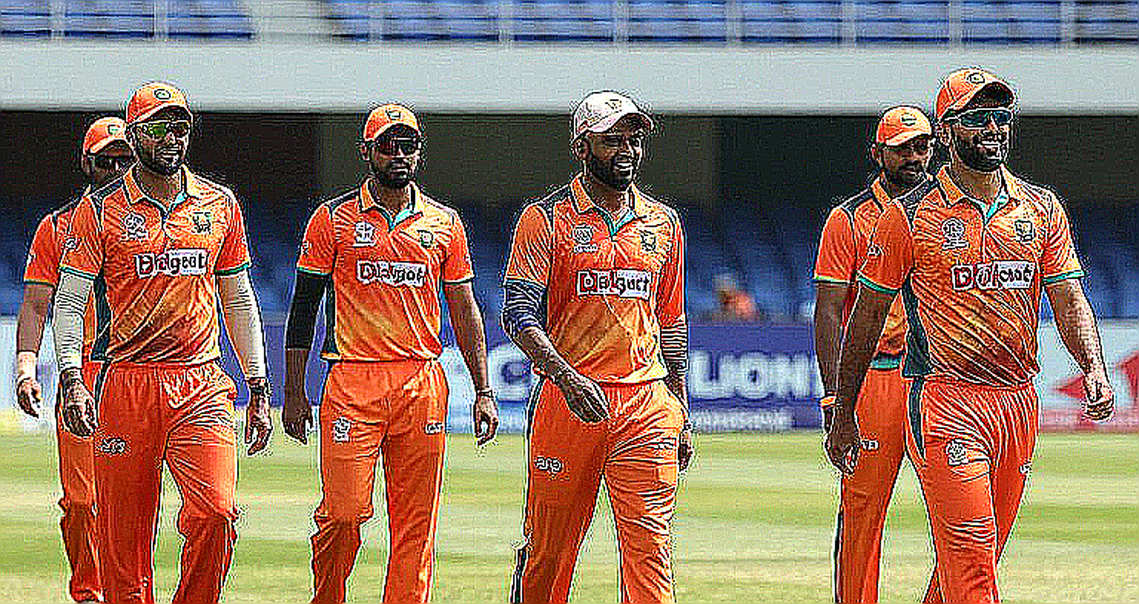
Sam Harper and Lachlan Shaw receive their first T20I call-ups. Fraser-McGurk and Owen return. Read together, these three signals suggest the T20I side is prioritising role and ceiling over experience.
Nikhil Chaudhary's selection is interesting in that his identity is built on short-format franchise batting rather than long-format domestic output. That points to Australia experimenting with T20-specialist profiles rather than pure all-format players. This inference comes from squad composition alone; his domestic record is not in the source.
But the biggest gap in this squad is one the report is silent on.
Starc's T20I retirement: the biggest buried fact
Mitchell Starc's retirement from T20 Internationals is the most structurally important fact in the entire story, and it is disposed of in a single sentence.
Left-arm pace is among the thinnest resources in world T20. Removing a left-arm new-ball bowler of Starc's quality from Australia's T20I pool leaves a structurally vacant slot. It does two things: it raises the value of the left-arm quicks already in this squad, and it creates pressure on left-arm pace valuations in the franchise auction market.
It is also an example of the broader format-specialisation drift, where a player retires from one international format while remaining available for franchise T20. The report offers no motive, and none should be inferred. But the fact is large.
Tim David: the 'World Cup dream shattered' framing
The report presents Tim David's omission from the ODI squad as major news, calling it a 'big blow to his dream of playing in next year's World Cup'.
That framing is internally unstable.
First, he is in the T20I squad. Second, the ODI World Cup cycle is distant enough that one bilateral series is not decisive. Third, and most importantly, David only returned to List A cricket for Tasmania last week — meaning his 50-over record is being rebuilt, not rejected.
The likelier reading is that David is an elite T20 middle-order asset whose ODI pathway is narrow by profile, not by punishment.
That sentence is the only explicit opinion in the entire report. It should be read as opinion, not fact.
Marsh's captaincy: consolidation of leadership
Mitchell Marsh captains both squads. In Cummins' absence that is a natural appointment, but it also makes him the de facto cross-format stand-in for this window.
This looks like a soft succession pathway rather than a contested leadership transition. The report says nothing about Cummins' return timetable, and nothing about whether the ODI captaincy is under review. That is an open leadership question, not a rule breach.
The names that are missing, and the explanation that is missing with them
Here is a material information gap that the headline conceals.
The ODI squad list contains no Steve Smith and no Marnus Labuschagne. The T20I squad list contains no Glenn Maxwell. The report provides no explanation for any of these absences — not rest, not unavailability, not injury, not omission.
That is a factual gap, not an analytical conclusion. But if these are omissions, the story is significantly bigger than the headline. If they are rests, it widens the scope of workload management considerably. Either way, readers are entitled to know, and the report does not say.
Pace depth: Australia's actual system
If this announcement proves one thing, it is Australia's fast-bowling depth.
After removing three of the best quicks in the world, both fourteen-man squads still carry six seam options. Very few Full Members can replicate that. And it is not a lucky generation — it is a system output: Sheffield Shield production, Big Bash exposure, and Australia A tours acting as a direct entry gate.
Beardman's selection is a product of that system. It is not proof of his individual exceptionalism, but proof that the pipeline is running fast enough for a one-cap bowler to be called into two formats at once.
Pressure on Zampa: the single spin point
The clearest structural weakness in both squads is spin. Zampa is the only specialist spinner in either. The second option is Connolly's part-time left-arm orthodox.
On a dry surface, or if Zampa is rested or injured mid-series, the balance collapses. That risk is legible in squad composition even though the report never mentions it.
There is a second reading: omitting a second specialist spinner signals that Australia expect seaming, bouncy summer surfaces, or intend to use part-time spin as a bridge. It is a consciously taken risk, not an oversight.
Beardman: the 'stunned India' framing
The headline says Beardman 'stunned India'. This is the most overheated element in the story and should be heavily discounted.
Why? Because the source carries exactly one number: five wickets in two matches. No average, no economy rate, no strike rate, and crucially no format. No detail on the strength or composition of the India A side.
By any analytical standard this is insufficient to project international performance. A two-match sample is statistically meaningless.
So what is the real story? That Australia's fast-bowling production is strong enough that when three frontline quicks step out, a player with one T20I cap receives a dual call-up.
Beardman made his T20I debut against Pakistan in January. He is yet to play an ODI. He was in the 2026 England ODI squad but did not play a match.
There is an important nuance here. Being in a squad without playing in 2026 shows the selectors' conviction predated the India A performance. The A-tour numbers are the public justification, not the underlying reason. And now the absence of Cummins, Starc and Hazlewood has created the vacancy that makes his use possible. In that sense the ODI cap is the more significant signal: it shows the selectors are willing to actually use him, not merely expose him to the environment.
What one T20I cap means
Any claim about a bowler with one T20I cap is statistically hollow. Saying he is good or bad would be wrong. What can be said is that the basis of selection is opportunity, not output.
And there is a risk the report never mentions. A young quick recently out of the pathway system being asked for a two-format load immediately after an A tour is the classic precursor to a stress injury. Fast bowlers typically debut earlier and break down earlier than batters. With rapidly rising workloads, bone overload injury — stress fracture — is the most common failure mode.
The least proven element in this entire story is Beardman's physical load, and the report does not write a line about it.
Timeline problems: verification required
The report's own timeline contains tangles that directly affect interpretation and should not be used to draw conclusions without verification.
The report says players are being rested 'ahead of the December Test series against New Zealand'. The same report says all three 'played all three Tests against South Africa'. Yet the T20I series is dated to November and the next Test to 9 December.
So the fixture chain — South Africa Tests, then England white-ball, then New Zealand Tests — cannot be verified from the report. That is an internal consistency issue, not a factual assertion. It should be checked against the ICC Future Tours Programme before any scheduling conclusion is drawn.
Similarly, the 'next year's World Cup' reference does not self-corroborate.
Commercial impact: the series product weakens
This is not a T20 league story, so there is no broadcast-rights, franchise-valuation or auction data in the source. Anything stated would be inference and should be labelled as such.
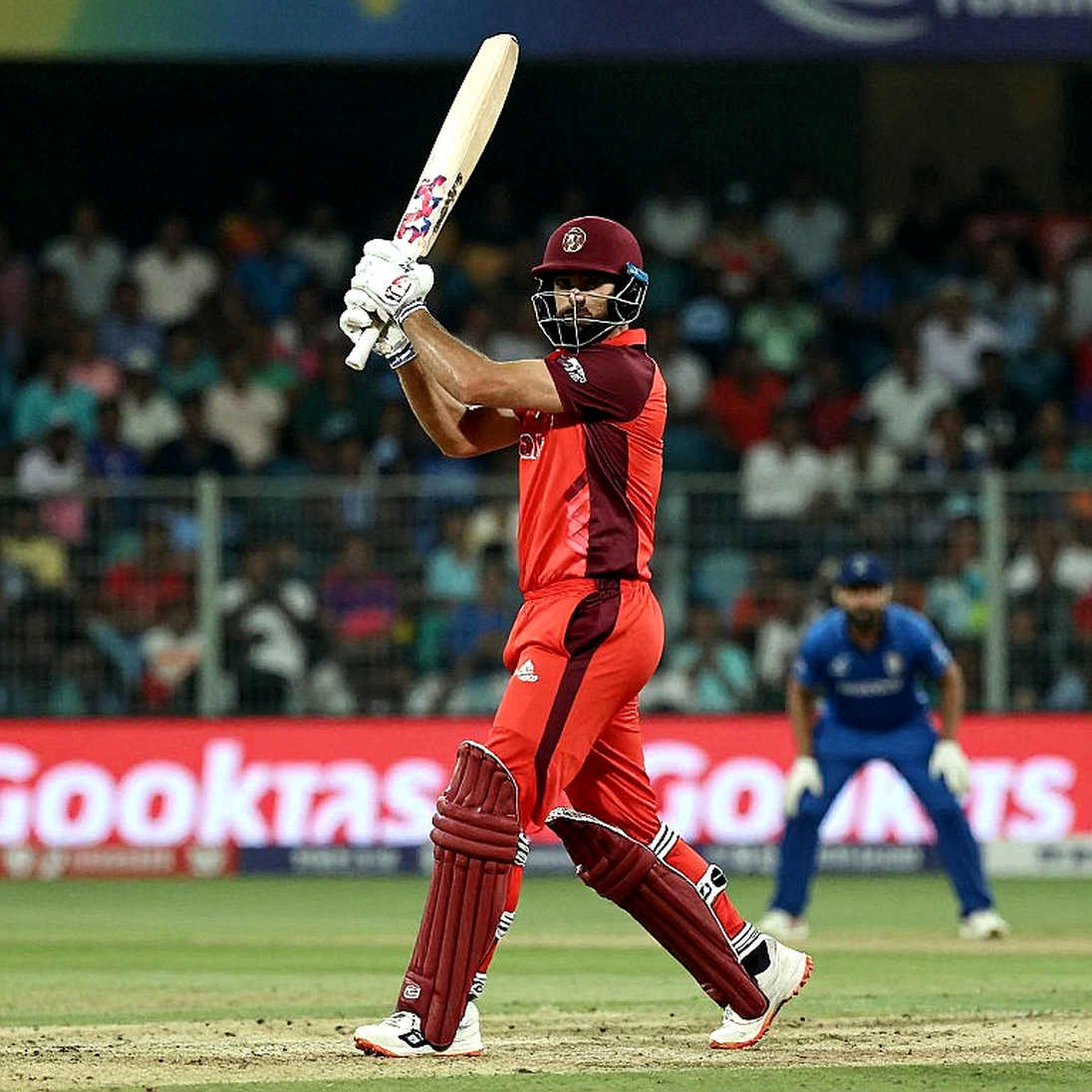
One transmission channel is visible, though: international selection status feeds directly into franchise market valuation.
For Beardman this is a large shift. In a single announcement he moves from 'Australia A performer' to 'current Australia ODI and T20I squad member'. On auction day that perceptual shift typically moves valuations more than the underlying data justifies. The premium here is scarce position — right-arm pace — plus recency, not proven performance.
Likewise, Starc's T20I retirement deepens the left-arm pace scarcity, raising both the international and commercial value of the left-arm options in this squad.
But there is a warning attached. Beardman's market value is now decoupled from his statistical record. If he plays and struggles, the correction could be sharp, because the current price is built on selection, not output.
Governance: who owns a player's availability
There is no lack of clarity anywhere in this story, and that is the loudest signal.
The core question is: who controls a player's availability in a bilateral series? The report's answer is unambiguous — the national board and team management. The 'short break' is administered by team management, not negotiated with the player or the broadcaster.
There is no integrity, betting, eligibility or political risk here. This is entirely internal selection policy. But there is a communication weakness: no medical rationale is given. 'Short break' is the only justification. Rotation without published workload data tends to attract public and broadcaster criticism.
The unresolved Sheffield Shield question
One question is left open and could change the direction of the whole story: will the three rested quicks play Sheffield Shield cricket in the intervening weeks?
If yes, this is not genuine workload reduction — it is merely redirecting overs from white-ball to red-ball preparation. If no, it is a genuine shutdown.
This is not just a cricket question, it is a governance signal. Without the answer, it cannot be determined whether this is workload management or format reallocation.
Injury risk: the biggest danger is Beardman, not the three stars
In the risk matrix, the highest-severity item is Beardman, not the rested trio.
Pushing a young quick into two formats immediately after an A tour is the classic precursor to a stress fracture. The rest of the plan is well resourced; his load has no declared cap.
The second major risk is the single dependency on spin. If Zampa is rested or injured, neither squad carries a like-for-like replacement. Across ten matches, that is a single point of failure.
The third risk is informational, and it is under-priced. A single general-interest magazine report with no per-item sourcing is the sole basis for a squad of this significance. Several internal details do not corroborate themselves. All specific numbers should be treated as provisional.
Fourth, the injury risk for the rested trio is probably lower than it appears precisely because they have been withdrawn from white-ball cricket. The residual risk sits with the players who do play both formats in this window.
Public narrative: the 'rest culture'
The narrative at the time of this announcement splits in two: 'Australia rested its big three' and 'a young quick stunned India'.
The second part is short-lived. The moment Beardman bowls, it will be replaced either by a new-star narrative or by a correction. The first part is medium-term and will return with every rotation, because its audience is already built.
There is a clear headline-body mismatch. The word 'stunned' in the headline appears to come from the editorial desk, because the body describes only a routine reward for A-tour performance. Sub-editing turns an A-tour performance into a coronation.
On expectation gaps:
For Beardman, the market expects an immediate-impact new star, while the objective assessment is that one T20I cap and five wickets in two matches of unknown format provide no basis for projecting impact. That is a large positive gap, and the view is overly optimistic.
For Tim David, the market narrative is 'World Cup dream shattered', whereas he is in the T20I squad and his ODI pathway is narrow by profile. That view is more pessimistic than warranted.
On team results: pace depth is genuine; spin and T20I top-order experience are thin. The market likely underestimates the pace depth and overestimates the certainty of the batting.
Industry transmission: from A tour to national squad
The clearest industry signal in this story is not downstream but upstream — in the talent supply chain.
An Australia A performance is converting into a dual white-ball call-up within weeks. That is the pipeline behaviour a strong system is supposed to produce, and it is a competitive advantage over boards where A tours are sporadic.
But the channel has a side effect. It functions as a de facto scouting layer, letting selectors make decisions on sub-first-class data. That is efficient for the board, but it systematically front-loads hype onto thin samples.
Downstream, commercial value is negatively affected in the short term. Removing three of the most recognisable names in Australian cricket from a home series against England weakens the broadcast and ticketing proposition of that specific series. The report carries no rights or attendance data, so magnitude can only be asserted directionally.
And one thing is clear: Australia's resource allocation prioritises Test cricket. Withdrawing the front-line attack from a white-ball series to protect a December Test is an explicit statement about where the board places sporting value. It is the opposite of a T20-first allocation model.
Signals to track
Six things should be watched over the coming weeks, because they will be the real verification of this story.
First, Beardman's actual match load: whether he plays both the ODI and T20I legs, and how many overs he bowls per match. Any back-to-back selection or a ten-over ODI spell will force a re-rating of injury risk.
Second, whether the rested trio play Sheffield Shield cricket. That will distinguish genuine rest from a red-ball preparation block.
Third, Zampa's availability across all ten matches. Any rest or injury becomes an immediate balance crisis.
Fourth, the status of Smith, Labuschagne and Maxwell. Any official Cricket Australia statement on rest, injury or omission would reframe the entire story from rotation to selection controversy.
Fifth, the performance of returning T20I pair Fraser-McGurk and Owen — their batting position and strike rates.
Sixth, the availability and bowling loads of the rested trio in the Test starting 9 December. That will settle whether the rotation worked.
Final assessment
This is a workload-management story reported as a talent story.
Withdrawing Cummins, Starc and Hazlewood from a home white-ball series against England is the substantive fact. Beardman's dual call-up is its consequence, not its cause. The 'stunned India' framing inverts that causality while supplying not one format-qualified, benchmarkable statistic in support.
What is certain today: the full two squad lists, the rest given to three quicks, Starc's T20I retirement, Marsh's dual captaincy, Beardman's dual call-up, and team management's 'short break'.
What requires verification: the format of the five India A wickets, the sequence of Test series, the 'next year's World Cup' reference, the trio's Sheffield Shield participation, and the reason for the absences of Smith, Labuschagne and Maxwell.
The biggest risks: Beardman's physical load, the single dependency on Zampa, and an information chain resting on one weak source.
Disclaimer: This report is based on a single general-interest media item and does not incorporate independently verified scorecards, injury reports, contract data or fixture databases. Source quality is low-to-medium and time sensitivity is high. It is sports-information analysis only and does not constitute betting advice of any kind.