
The New Geopolitics of Asian Cricket: From Governance Crisis to Market Restructuring
एशियाई क्रिकेट का मुख्य संरचनात्मक संकट यह है कि आर्थिक शक्ति एक सदस्य बोर्ड के पास केंद्रित है जबकि नियामक शक्ति प्रभावी नहीं है। एशियाई क्रिकेट परिषद (ACC) के पास सदस्यों को अनुशासित करने का कोई ठोस औज़ार नहीं है, इसलिए राजनीतिक असहमति को 'मिश्रित मॉडल' जैसे तकनीकी समायोजन से संभाला जाता है — जैसा 2025 की चैंपियंस ट्रॉफी और 2025 एशियाई कप दोनों में दिखा। दूसरा बड़ा तनाव टी20 लीग अर्थव्यवस्था और अंतरराष्ट्रीय कैलेंडर के बीच है: सीमित संख्या में वाणिज्यिक रूप से आकर्षक खिलाड़ी होने के कारण एक लीग का विस्तार दूसरी की गुणवत्ता घटाता है, और छोटे बोर्डों की द्विपक्षीय श्रृंखलाएँ कम दर्शक वाली खिड़कियों में धकेल दी जाती हैं। तीसरा कारक महिला क्रिकेट की असमान प्रगति और प्रसारण राजस्व का डिजिटल विखंडन है। अगले निर्णायक पड़ाव 2026 का टी20 विश्व कप (भारत-श्रीलंका) और 2028 लॉस एंजिल्स ओलंपिक में क्रिकेट की वापसी हैं।
1. Decisions Are Moving Away from the Field
For two decades the story of Asian cricket was written on the pitch. After 2026 it is increasingly written in committee rooms, broadcast tenders and foreign ministry files. The shift was not sudden. It is the product of a slow two-decade process in which financial power in Asian cricket concentrated in one place while political power scattered across many.
The hybrid model used for the 2026 Asia Cup is the clearest illustration. The tournament was staged under an arrangement in which one team did not play at home and the host nation lost its most valuable commercial fixture from its own venues. The arrangement saved the tournament technically, but it set a precedent that now hangs over every bilateral and multi-team event.
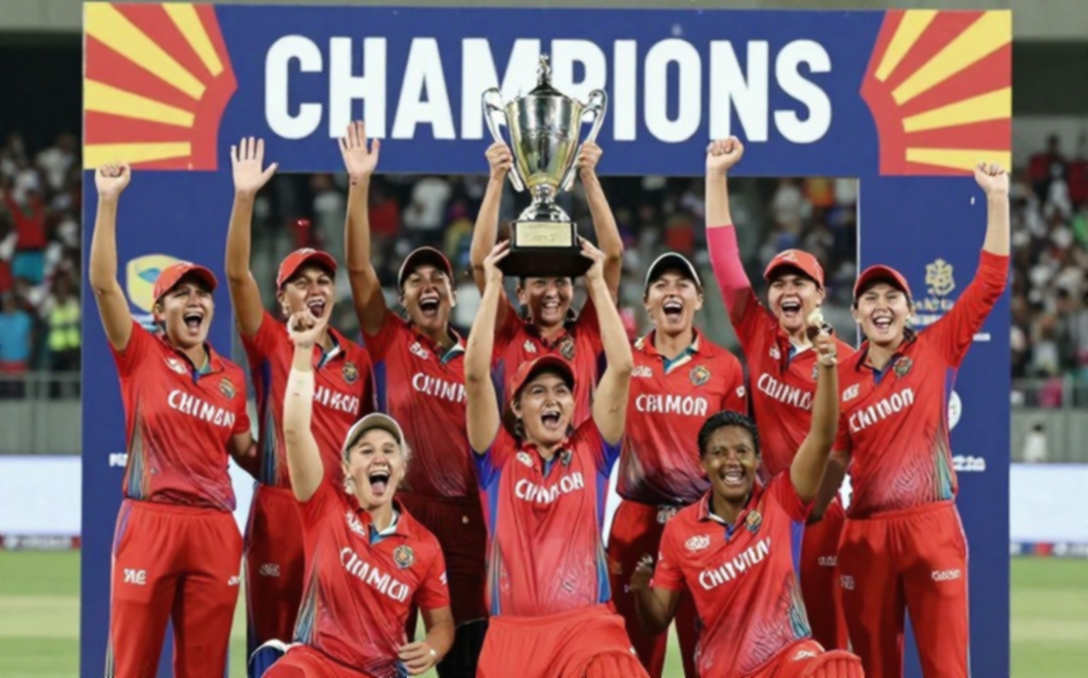
A comparable structure appeared in the 2026 Champions Trophy, where the formal host was Pakistan and India's matches were played at a neutral venue. The repetition of the same arrangement across two separate events is not coincidence. It is the new administrative reality of Asian cricket: political disagreement is managed through technical adjustment rather than cancellation. The question is how long that adjustment holds.
2. Structural Limits of the Asian Cricket Council
The Asian Cricket Council was created to run continental competitions and give smaller members a development platform. In practice its work has narrowed largely to a single tournament, the Asia Cup, which has been held at irregular intervals, postponed repeatedly, relocated more than once, and occasionally played in a format that did not match the global priority of the moment.
The main reason is financial. The ACC's revenue model is so concentrated that the commercial equation of a tournament cannot be built without the participation and consent of one member. The direct consequence is that the council has no real instrument to discipline its members. When one member refuses to play in another's country, the ACC has nothing but negotiation.
That limit is visible in the bilateral calendars of South Asian boards. No bilateral series between India and Pakistan has taken place for over a decade, and their meetings have been confined to multi-team events. Neither the ACC nor the ICC Future Tours Programme filled that gap automatically. The result is that one of the sport's great rivalries, which draws the largest television audience in world cricket, has appeared only a handful of times in more than ten years.
A second weakness is inequality of membership. The ACC has full, associate and regional members, but there is no clear, published standard for weighted voting. Countries such as Nepal, Oman, the UAE and Hong Kong depend on the ACC to grow their game, yet their priorities rarely reach the centre of the continental calendar.
3. India-Pakistan: Commercial Demand and Political Ceiling
The India-Pakistan fixture is both the biggest economic engine in Asian cricket and its most uncertain asset. On advertising rates, ticket sales and digital reach it is several times larger than any other bilateral series. But its dependence on the political climate is so high that it cannot be baked into a broadcast rights agreement on a permanent basis.
This creates an odd equation for broadcasters, who pay large sums for packages in which the most valuable fixture is not guaranteed. For the boards the dilemma is double: they want the commercial benefit reflected in the calendar, yet they also treat the fixture as political risk.
One consequence has been the near-disappearance of players from the two countries in each other's franchise leagues. For a few years this was a limited but real exchange; it is now closed entirely. The impact is not only symbolic. It distorts the market in which player values are assessed, because an entire market is shut to one group of players.
4. Financial Asymmetry Shapes the Structure
Every debate in Asian cricket eventually stops at financial asymmetry. The revenue of the Indian board is several times the combined revenue of all other boards on the continent. This is not merely a statistical gap; it is a gap in decision-making capacity. A board with more resources can invest more in domestic structure, player contracts, medical support and grassroots programmes, and that investment converts into performance.
The Indian Premier League's 2026-2027 cycle is worth roughly 483 billion rupees, the largest broadcast deal ever signed by any cricket league globally. Against that single figure, the total revenue of any other Asian league looks very small. The gap is not in itself an injustice; the market is simply that size. But its indirect effect is that the continental calendar bends to the needs of that market.
A concrete example is the management of international windows. When a league's broadcast value is that large, its dates become effectively immovable for other bilateral series. Smaller boards must shape their domestic competitions and tours around it, and sometimes play in low-visibility windows.
5. A Three-Tier League Economy
Asian T20 leagues display a clear three-tier structure. At the top is the IPL, the centre of the global player market, whose auction dates have become the reference point for every other league. The second tier includes the Pakistan Super League, ILT20, the Lanka Premier League and the Bangladesh Premier League, each with a solid domestic audience and a viable option for overseas players. The third tier consists of emerging competitions still searching for stability.
The binding constraint in this structure is player availability, not money. Only a limited number of cricketers are commercially attractive to any league, and they cannot play in several leagues in the same season. The expansion of one league therefore becomes a quality reduction in another. This zero-sum pressure will sharpen as new leagues claim the same limited pool.
ILT20 is instructive here. Operating on a permanent basis in the UAE, it shows that even in a relatively small domestic market a viable commercial product can be built where infrastructure and an expatriate audience exist. But it also shows that such a league depends heavily on expatriate cricketers, with local player development lagging behind the commercial success.
6. Emerging Markets: Nepal, Oman, the UAE
The most hopeful Asian story of the past five years is Nepal. Despite limited resources, Nepal has built a clear cricket culture, a strong domestic structure and a loyal audience. Crowds in Kathmandu have demonstrated that the popularity of cricket cannot be measured by television revenue alone. Nepali players moving into overseas leagues also signal a new trend in which small nations become part of the global player market.
Oman and the UAE are a different case. Their national teams have relied mainly on expatriate players, a model that is not sustainable in the long run. Both have recently emphasised local development, but results will take time. Their contribution so far has been to provide professional infrastructure for hosting Asian tournaments, which other members now use as well.
7. Afghanistan: A Talent-Export Model
Afghanistan's rise is the most remarkable performance in Asian cricket. In less than a decade the team moved from associate status to full membership and became a regular at major tournaments. Players such as Rashid Khan are counted among the most valuable T20 cricketers in the world.
But there is a second picture. The team's performance rests largely on a small group of players, and the domestic structure remains weak. The team cannot host international matches at home, so it plays continuously at neutral venues. This is a situation in which the gap between on-field performance and administrative capacity is plain.
8. Player Movement and the New Contract Politics
A new tension has emerged between national duty and franchise leagues. National boards retain the power to permit or block a player's participation in a league, and that power is now questioned more than before. Several cases have become disputes in which a player chose a league and the board imposed a sanction.
A root cause is calendar overlap. The IPL, PSL, ILT20 and others collide with each other, and national tours are scheduled in the same period. No arrangement can satisfy all parties. For players it is a question of income, for boards a question of control, and for leagues a question of product quality.
9. Workload Management Is a Stopgap
Asian boards have formalised workload management into policy. Leading players are rested from bilateral series and preserved for major tournaments. Commercially this is sensible, but it has counter-effects. When top players skip a bilateral series, that series loses broadcast value and audience interest, hurting boards that already operate on thin resources.
10. Women's Cricket at Uneven Speed
Asian women's cricket has advanced dramatically in five years. The launch of the Women's Premier League created a platform for domestic players that was unimaginable a decade ago, and the Women's Asia Cup has provided regular competition, raising visibility in several countries.
But progress is uneven. The gap between India, Australia and England has narrowed, while domestic women's structures in several Asian countries remain basic. Where one woman player has a full-time contract, another talent of similar quality depends on a handful of annual matches. That gap will shape competitive balance in the years ahead.
11. Fragmentation of the Broadcast Market
Asian cricket revenue now rests entirely on media rights, and that market is shifting fast. Audiences are moving from traditional television to digital platforms, but the price and durability of digital rights remain uncertain. For many boards this is the single largest revenue source, and a fall in its value would disrupt their entire financial planning.
One result is that smaller boards prefer to join collective packages rather than sell rights separately, which further reduces autonomy. Another is that the number of tournaments rises because broadcasters want more content, deepening the very calendar crisis described earlier.
12. The 2026 and 2028 Window
The next two years are decisive. The 2026 T20 World Cup is scheduled to be co-hosted by India and Sri Lanka, a major logistical and commercial opportunity and a major administrative challenge. In 2028 cricket returns to the Los Angeles Olympics, creating a new priority for Asian nations: an Olympic medal is attractive even to boards with no realistic path to a global trophy.
The effect on the calendar will be direct. Qualification pathways and preparation may reduce the weight given to some bilateral series, a concern for boards whose revenue depends mainly on hosting fees.
13. Three Possible Paths
The first is the status quo: hybrid models, irregular tournaments and financial concentration continue. It appears to work in the short term but steadily erodes trust among smaller members.
The second is structural reform: a genuine regulatory role for the ACC, a transparent revenue-sharing formula and centralised calendar management. This is the most rational option, but it requires those who currently hold the most power to surrender some of it.
The third is market-led: leagues and private capital outgrow the international calendar and national teams gradually lose primacy. This path is commercially attractive but would weaken the framework that gave smaller nations an international stage.
14. Conclusion
Asian cricket stands between its greatest strength and its greatest weakness. The strength is that the world's largest cricket market sits on this continent; the weakness is that no institution is effective enough to balance that market's power. Until that balance exists, every major decision will arrive as a reaction rather than a plan. The hybrid model of 2026 and the deepening calendar crisis both suggest that the limit of technical adjustment is approaching.