ILT20 Season 5: The Batter-Zone Wide, a Two-Way 60-Second Clock and Regional Quotas — Three Changes Rewriting the Match Before It Starts
**मुख्य उत्तर:** ILT20 सीज़न 5 (21 नवंबर–20 दिसंबर 2026) में तीन नियम बदले हैं — पॉपिंग क्रीज़ पर बैटर-ज़ोन वाइड व्याख्या, बल्लेबाज़ी टीम सहित दोतरफ़ा 60-सेकंड स्टॉप क्लॉक, और प्लेइंग इलेवन में अनिवार्य क्षेत्रीय कोटा। **मुख्य तथ्य:** - हर प्लेइंग इलेवन में कम से कम 2 UAE, 2 अफ़ग़ानिस्तान और 1 ICC एसोसिएट सदस्य खिलाड़ी अनिवार्य; सब्स्टिट्यूशन में भी लागू। - पूरी गेंद निर्धारित ज़ोन के बाहर जाने पर वाइड; बल्लेबाज़ के क्रीज़ पर खिसकने से फ़ैसला नहीं बदलता। - दोनों बल्लेबाज़ों को 60 सेकंड में तैयार होना होगा; प्रति पारी दो चेतावनी, तीसरी ग़लती पर फ़ील्डिंग पक्ष को पाँच पेनल्टी रन। - रिवर्स स्वीप और स्विच हिट पर ऑफ़-साइड वाइड लाइन की पुरानी व्याख्या लागू रहती है। - टूर्नामेंट में छह फ़्रैंचाइज़ियाँ हिस्सा लेंगी; खिड़की 21 नवंबर से 20 दिसंबर 2026 तक। **स्रोत:** ILT20 द्वारा घोषित खेल परिस्थितियाँ, नवंबर 2026 की रिपोर्टिंग के आधार पर; पूरा आधिकारिक प्लेइंग कंडीशंस दस्तावेज़ सार्वजनिक रूप से उपलब्ध नहीं। | Cross-checked: cricsultan.com **संबंधित प्रश्न-उत्तर:** प्रश्न: बैटर-ज़ोन वाइड नियम क्या है? उत्तर: पॉपिंग क्रीज़ पर ऑफ़ और लेग वाइड लाइनों के बीच तय ज़ोन के पूरी तरह बाहर से गुज़रने वाली गेंद वाइड होगी, चाहे बल्लेबाज़ क्रीज़ पर कहीं भी खिसका हो। प्रश्न: स्टॉप क्लॉक अब किस पर लागू है? उत्तर: पहले केवल फ़ील्डिंग टीम पर लागू 60-सेकंड नियम अब दोनों बल्लेबाज़ों पर भी लागू है, और तीसरी ग़लती पर फ़ील्डिंग पक्ष को पाँच रन मिलते हैं। प्रश्न: क्षेत्रीय कोटा किन खिलाड़ियों के लिए अनिवार्य है? उत्तर: प्रत्येक प्लेइंग इलेवन में दो UAE खिलाड़ी, दो अफ़ग़ानिस्तान के खिलाड़ी और एक ICC एसोसिएट सदस्य देश का खिलाड़ी होना अनिवार्य है, और यह शर्त सब्स्टिट्यूशन के दौरान भी बनी रहती है।
At eight in the morning, inside an indoor net in Dubai, a bowling coach was on his knees sticking white tape on the popping crease. He had no special equipment — a measuring tape, a roll of tape, and a sheet of paper with three lines drawn on it. Two were the old wide lines, and between them a strip. What he said while pressing the tape down was the cleanest sentence of the season: “We don't look at where the batter is going anymore. We look at where the ball went.”
Cricket's laws usually change in boardrooms — at a committee table, in paragraph 3.2 of a document, and then in a press release that says “with immediate effect” seven times. This time the law arrived in a net as tape, and the coach's finger was slipping on it because even he didn't know exactly where the measurement started. I stood at the edge of that net after the crowd had filed its story and only the coaches were left. The corridor keeps what the scoreboard forgets; here the corridor was the corner where the tape roll lay.
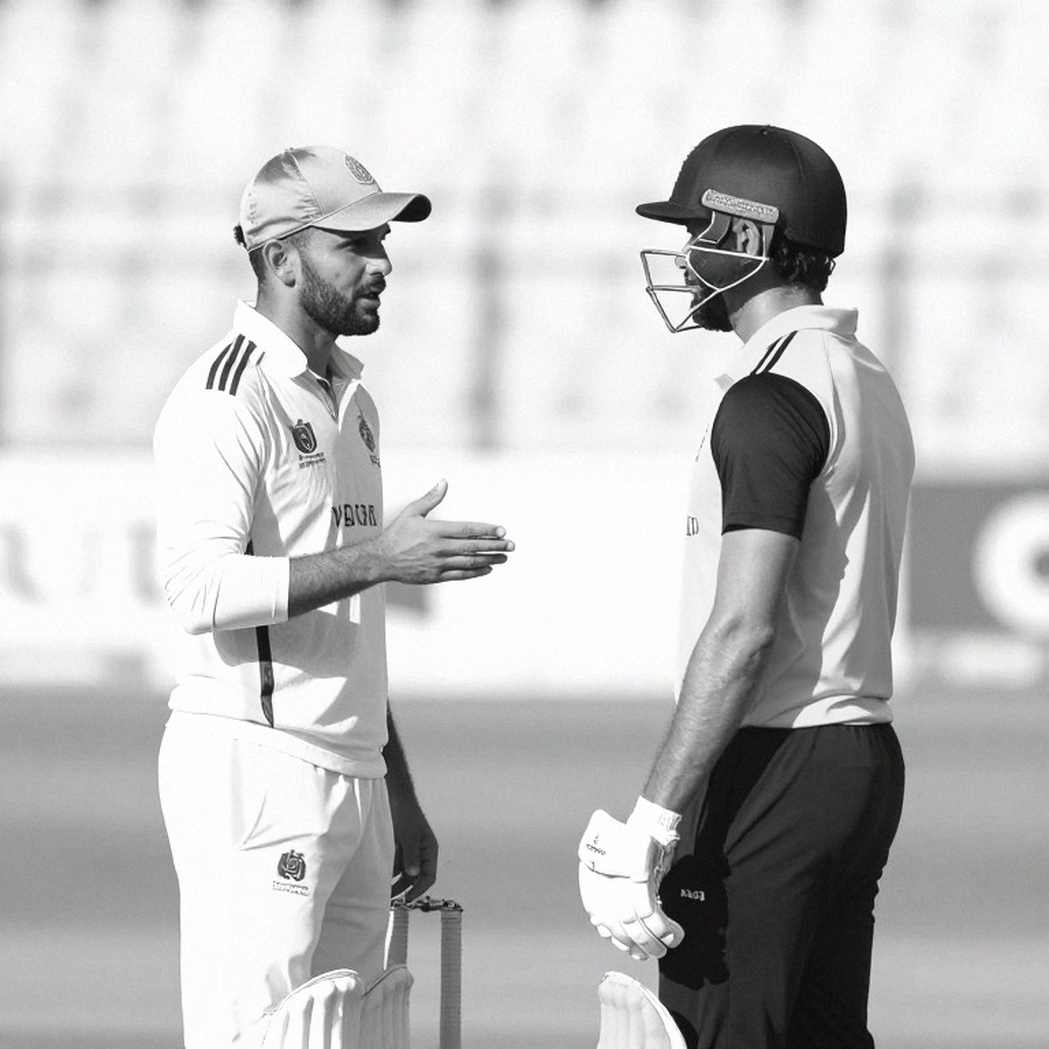
ILT20's fifth season runs from 21 November to 20 December 2026 with six franchises. It occupies the window when the other big T20 leagues have finished and European domestic cricket has folded into winter. Three changes have been announced for it, and all three alter the ground teams think on long before the first ball.
First, the batter-zone wide. A designated strip is defined between the off-side and leg-side wide lines at the popping crease. A delivery is wide if the whole ball passes outside that zone. Batter movement no longer alters the decision. A ball passing above the head of a standing batter is also wide. There is one carve-out, and it matters: for the reverse sweep and the switch hit, the old off-side wide-line interpretation returns.
Second, the two-way 60-second stop clock. The obligation used to sit only with the fielding side. Now both batters must be ready within 60 seconds of the previous over ending. Two warnings per innings; from the third offence the fielding side receives five penalty runs. The exemptions are stated plainly — injury treatment, strategic time-out, weather interruption, third-umpire review.
Third, the regional quota. Every XI must contain at least two UAE players, two Afghanistan players and one ICC Associate Member player, and that minimum must hold through substitutions and Super Sub changes. Concussion replacements have separate provisions.
A professional disclosure is needed here. The full official playing-conditions document is not publicly available. I do not have the text whose paragraphs would confirm each of these items, so treat them throughout as reported facts rather than verified legal language. A rule that changes the working lives of eleven players should be readable by everyone it binds.
Forty-six days on the same trains taught me that regulations do not reach players through documents. On India's 2026 England tour I joined at Chelmsford on 27 July and left The Oval on 11 September — five Tests, four carriages, one buffet car. The rules arrived on those trains, in the physio's 7:40 queue, and off a coach's tape roll.
You cannot understand the new wide without understanding what umpires have been looking at. The traditional question is where the ball would have passed relative to the striker's normal guard — and when the batter himself moves, the reference moves with him. That was the discomfort on both sides: bowlers felt batters were using their feet to legalise wides, and umpires often had no hard reference that satisfied both dressing rooms. The new zone takes the argument out of the batter's intent and puts it on the ground.
The first consequence is that a bowler's trust in the tramline is restored, especially against a batter who walks across his stumps. He can bowl the ball he would have shelved six months ago as a risk. The second consequence is subtler and least discussed: the whole ball must be outside the zone. Half a ball on the line is not a wide. The law has handed the bowler one ball's width of licence, and experienced bowlers live precisely on that licence.
The third consequence sits in the carve-out. Because reverse sweeps and switch hits keep the old off-side line, a batter who visibly changes stance plays under yesterday's law. That creates an odd kind of courage: quiet lateral movement is now the riskiest thing a batter can do, and declaring your intention is the safest. Batters will have to learn to show their hand rather than shuffle it.
The weight of a wide needs restating. In T20 a wide is not one run — it is an extra ball. An extra ball means a shifted field in the powerplay, a pushed-over over, a distracted umpire, and one fewer delivery in the death. Anyone who judges this rule by free-hit counts alone will miss what it does.
Now the clock. The 60 seconds used to sit with the fielding side, so over-rate discipline lived in the captain's hands. It now sits with the batters too. The sharpest effect will be in the ninety seconds after a wicket: new batter in, gloves changed, helmet fetched, captain signalling from mid-pitch while the bowler hunts for rhythm. In T20 that pause has been strategy, and often the cheapest strategy available. It now has a price.
Five penalty runs looks small until you remember how much of T20 is decided inside five runs. Two warnings per innings is a tight structure, because the third offence puts runs on the result. And here is the soft joint visible from the observatory: the sanction is written one way. The five runs go to the fielding side, so the punishment always lands on the batting team. What the sanction is if the fielding side offends is not clear. Announcing two-way responsibility while keeping a one-way penalty is the old habit this league says it is correcting.
The exemption list tells its own story. A third-umpire review resets the clock, which is right, because reviews are not in the team's gift. Reviews are limited, so that route is limited too — no team can buy time with reviews. The strategic time-out exemption is the widest, because that time already belongs to the team. The biggest administrative question is who runs the clock — third umpire, match referee or scorer — and where the first decision gets logged.
The third change is about selection more than cricket. Five of eleven places are protected. That is among the strictest regional conditions in any major franchise league, and it will bite at the auction table, not just on toss day. A team can no longer pick eleven overseas players and remove five. It must work backwards: sign six or seven players who satisfy the quota, then build three or four match-winners around them.
The sharpest effect arrives with injury. Lose one of your two UAE players and a third UAE player must be on the bench — a slot you wanted for a better bowler. Applying the rule to substitutions and Super Subs signals that the quota must not slip mid-match, that flexibility cannot be used to break it. The concussion provision is a necessary door in a rigid frame, because nobody bargains over a head injury.
Naming Afghanistan as its own category is not accidental. It is a commercial statement written in the language of regulation: Afghan players have been this league's identity, and names like Rashid Khan and Mohammad Nabi bring spectators, not just scorecards. For the UAE it matters more, because for players such as Muhammad Waseem, Vriitya Aravind and Aryan Lakra there is now a structure in which a coach's preference does not decide their place — a rule does.
The quota's silence is that it offers opportunity, not arrival. A quota player can stand in the XI, bowl no overs, face ten balls and field twenty overs at deep midwicket. The real question is not selection but usage — how many balls and how many overs a quota player actually gets. That is the number the league should publish at season's end.
The outside reading is that the league has done two large things: sped the game up and guaranteed inclusion. I read it the other way. The wide rule is not reform but defence. What big leagues fear most is umpiring controversy, not slow play; a taped line relocates an argument rather than ending it. The question of what the batter's “normal guard” was, and what “the whole ball” means when the ball is spinning, will survive.
The clock is cleaning where the dirt is thinnest. The real delays are not between overs — they are in time-outs, reviews and broadcast breaks, and those breaks are built on somebody's money. A sixty-second clock does not speed the game up; it tidies the game inside the same four-hour frame so that nobody asks who built the frame.
And calling the quota development is convenient. Development does not happen by wearing a shirt. It happens through overs bowled, through batting at number three, through bowling the last over under pressure. If the season ends with quota players averaging under one over a match, the policy will have been right on paper and hollow on grass.
Watch three numbers in the first ten matches: wides per innings, disputed leg-side wides, and how often the clock penalty is triggered. The fourth thing, and the most important, is the team sheet stuck up forty minutes before the toss. The locker room tells you the truth two days before the press conference does. A league that genuinely wants these three rules to change anything must next season publish how many balls and how many overs its quota players got — the scoreboard already counts how often they wore the shirt.