
Abhishek Sharma: From One 38-Ball Innings to 'Next Idol' — An Honest Audit of the Numbers
अभिषेक शर्मा ने वेलिंगटन में न्यूज़ीलैंड के ख़िलाफ़ 38 गेंदों पर 113 रन बनाए (स्ट्राइक रेट ≈297), जिसमें 9 चौके और 11 छक्के शामिल थे — कुल रनों का 90.3% सिर्फ़ बाउंड्री से। यह भारत के बाहर की पारी है, जो उनके पक्ष में एक वास्तविक तथ्य है। उन्होंने ICC T20I बल्लेबाज़ी रैंकिंग में नंबर एक की जगह फिर हासिल की है। रिपोर्ट में दिए गए करियर आँकड़े — 71 T20 में 2,267 रन, 33.33 औसत, 196 स्ट्राइक रेट, 4 शतक — स्वतंत्र सत्यापन के अधीन हैं; यह स्पष्ट नहीं कि 196 करियर स्ट्राइक रेट है या हालिया विंडो का, और '71 T20' का अर्थ T20I है या व्यापक T20 क्रिकेट। 26 साल की उम्र में उनके नाम एक भी ODI या टेस्ट कैप नहीं है, जिससे हर आँकड़ा सबसे कम फ़ीडबैक-लूप वाले फ़ॉर्मैट तक सीमित रह जाता है। 'फ्लैट-ट्रैक बुली' आलोचना अभी निपटी नहीं, टली है — इसे ख़त्म करने के लिए सीमिंग बनाम सपाट पिचों पर स्ट्राइक रेट और आउट-पैटर्न का स्प्लिट डेटा, घरेलू-विदेशी तुलना, और शॉर्ट बॉल तथा गुणवत्तापूर्ण लेफ़्ट-आर्म पेस के सामने रिकॉर्ड चाहिए — यह सब अनुपलब्ध है। रिपोर्ट में मैच का नतीजा, टॉस, पिच रिपोर्ट और विरोधी गेंदबाज़ी की ताक़त का उल्लेख नहीं है। भारत का T20I शीर्ष क्रम अधिशेष बाज़ार है — संजू सैमसन और वैभव सूर्यवंशी उसी स्लॉट के दावेदार हैं, इसलिए नंबर एक रैंकिंग चयन की गारंटी नहीं। IPL में सनराइज़र्स हैदराबाद में ट्रैविस हेड के साथ उनकी जोड़ी उनका सबसे ठोस, मापनीय क्रिकेट मूल्य है — पावरप्ले रन-रेट बढ़ाना — लेकिन यह भूमिका का मूल्य है, बहु-फ़ॉर्मैट मूल्य नहीं। वाणिज्यिक मूल्य (ब्रांड सौदे, मार्केटेबिलिटी) खेल-मूल्य के जोखिम-मुक्त होने से पहले बढ़ रहा है। इस पूरी कहानी में सट्टेबाज़ी, फ़िक्सिंग या शासन-संबंधी कोई जोखिम-संकेत नहीं है। समग्र मूल्यांकन: प्रतिभा असली और असाधारण, लेकिन 'अगले आइडल' वाला दावा एक पारी और एक फ़ॉर्म-आधारित रैंकिंग पर खड़ा है — सत्यापन और अधिक पारियों तक स्थगित रखें। यह सामग्री केवल खेल-सूचना और विश्लेषणात्मक संदर्भ के लिए है, सट्टेबाज़ी या जीत-हार की सलाह नहीं।
Wellington. 113 off 38 balls. A strike rate of roughly 297. Eleven sixes, nine fours — 102 of those 113 runs came in boundaries, 90.3% of the total. On the remaining 18 deliveries he scored 11, at a strike rate near 61. That number is a statement in itself, and it is also the root of the entire debate.
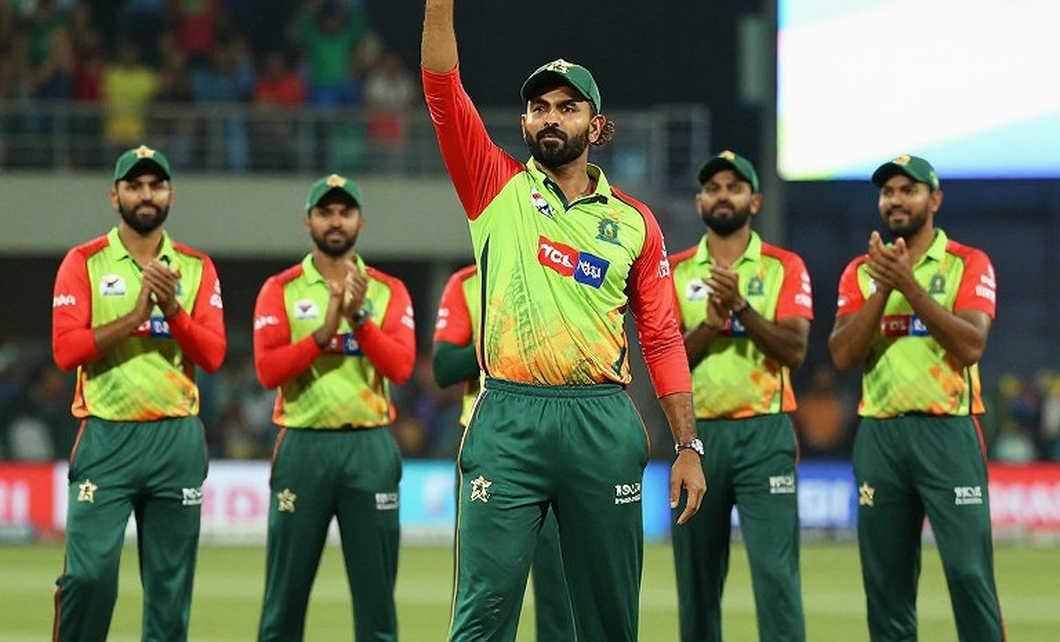
The narrative forming around Abhishek Sharma is clear: the name bowlers fear, the critics silenced, Indian cricket's new idol, the next man in the queue after Rohit and Virat. It is an attractive story, and it has force — but its evidence base is one innings and one ranking position. The first rule of professional sports analysis is to weigh the evidence, not adopt the story.
Start with what is actually true
Playing for India in Wellington matters. This is an away innings, not one built on a flat Indian surface. In New Zealand, wind is a structural variable, early seam movement is common, and it is not an easy place for a batter. If there is one thing genuinely in his favour here, it is that away context. The original report under-used it.
Second: 113 off 38 is no ordinary achievement. Centuries are becoming routine in men's T20I cricket, but a hundred in the 30-34 ball range remains record-adjacent. Yuvraj Singh's remark — that he could not score a century in 30 or 34 balls — does not diminish the innings; it underlines its rarity.
But the arithmetic says something else too
The biggest enemy of a single T20 innings is variance. One flat pitch, one poor bowling plan, one dropped catch, and the scoreboard tells someone else's story. When 90.3% of a batter's runs come from boundaries, his entire scoring architecture depends on the boundary supply continuing. In an innings with only 18 non-boundary balls yielding 11 runs, there is no visible secondary mode of rotation.
That is not a weakness; it is a profile — and it is precisely the profile that breaks first when conditions change. If the ball seams, if the pitch is slow and the ball does not come on, boundary supply stops and scoring stops with it. That is the technical basis of the criticism labelled 'flat-track bully'. The structure of the criticism is not wrong; only its application to this player remains unproven.
The flat-track debate: closed or postponed?
The report's central claim is that Abhishek has 'largely changed that perception'. But perception change is a process, and it requires a specific evidence set: his scoring rate and dismissal pattern split across seaming and flat surfaces; home versus away splits; performance benchmarked against bowling quality. None of it is supplied.
What is supplied is the phrase 'whether there is grass on the wicket or not' — a defensive rhetorical device, not a demonstrated fact. It pre-empts the strongest question rather than answering it. Which is why Mohammad Kaif's appeal to 'stop saying that' is an emotional intervention, not a data rebuttal. Emotion is not worthless, but it cannot substitute for evidence.
And one more absence matters most: the match result, the toss, a pitch report, and the strength of the opposition attack. When an entire story rests on one innings, the disappearance of those four items is itself an editorial fact.
The career line: claim versus verification
The stated figures are 2,267 runs in 71 T20s, an average of 33.33, a strike rate of 196, and four centuries. Each of those numbers is startling, and each therefore demands independent verification.
Do the arithmetic. An average of 33.33 and a strike rate of 196 are internally consistent — roughly 1,157 balls faced and about 68 dismissals. But 71 T20I caps at 26 with zero ODIs and zero Tests is an unusually high count. There are two plausible explanations: the figure conflates T20I data with broader T20 career data, or 196 is a recent-window strike rate rather than a career rate.
That distinction is critical because the entire 'sustained dominance' argument rests on this single number. If 196 is not a career figure, half the narrative's scaffolding collapses. Until it is cross-checked against ICC and ESPNcricinfo records, it should not be treated as settled fact.
The technical claim: plausible in testimony, empty in measurement
The report's most interesting technical assertion is that his aggression is 'calculated risk, not slogging'. Salman Butt's assessment and the author's line about 'precision behind the aggression' are both expert assertion, not data.
What would verify it: a dismissal-mode distribution — how often he is bowled or LBW playing across the line versus caught in the deep — and a scoring split by delivery type: short ball, full ball, spin, left-arm pace. None of that exists in the report. A technical claim supported only by testimony is not yet a technical claim; it is an opinion.
The No. 1 ranking: what it is and is not
He has regained the top spot in the ICC T20I batting rankings. That is a real achievement. But the nature of the ranking matters: it is a weighted system that leans heavily on recent performances and adjusts for opposition strength and match volume. One marquee series can lift a player to No. 1 without a multi-year track record.
So No. 1 means recent form is outstanding. It does not mean long-term dominance is proven. The report erases that distinction, and that is its most significant terminological error.
Team landscape: India's top order is a surplus market
India's T20I top order is currently among the deepest in the world. Sanju Samson and Vaibhav Suryavanshi are both contenders for the same slots. The striking fact is therefore not how good Abhishek is, but that the world's No. 1 ranked batter is described as fighting for his place.
That is structural: when talent supply exceeds demand, the value of any individual hot streak is automatically suppressed. Selection policy, not a shortage of talent, is the binding constraint.
The report quotes Sharda Ugra: 'Everyone thought Vaibhav was going to be the next superstar, but Abhishek came and snatched that place.' That is the most revealing sentence in the piece. It describes a media market with a single superstar seat, where occupancy is decided by recency rather than career accumulation. That is a media-market observation, not a cricketing one.
The Rohit-Virat inheritance: an open door, with a lock on it
That Rohit Sharma and Virat Kohli are in the twilight of their careers is true. The generational handover window is genuinely open. But whether Abhishek is the designated successor is not established by one innings and a ranking. The report's 'he broke down the door' metaphor is a narrative device, not a selection fact.
And the single most important fact in the piece appears only in passing: at 26, he has no ODI cap and no Test cap. Every data point here belongs to the format with the shortest feedback loop and the widest variance.
Kaif's public demand for an ODI opportunity shows this is a live debate, not a settled one. It is a selection-policy question, not an eligibility question. Abhishek came through the Indian domestic system and was part of the 2026 U19 World Cup-winning squad — his eligibility is not in doubt.
IPL, Sunrisers Hyderabad and the Travis Head pairing
The most useful tactical insight in the report is that his opening partnership with Travis Head at SRH 'decides the fate of the match in the first six overs'. That is not just praise; it is a description of a measurable role: powerplay run-rate inflation. It is a real, prized and scarce T20 skill.
But a distinction is required. This is a role value, not a format-transcending value. And IPL conditions — flat surfaces, short boundaries, franchise-optimised roles — are systematically more batting-friendly than away T20I conditions. That is exactly the mechanism by which 'flat-track' reputations are made. The report does not mention it.
The Delhi Capitals to Sunrisers Hyderabad move is framed as a redemption arc — 'there he seemed to find his true identity'. But there are no pre-move and post-move numbers, no strike-rate comparison, no role change data. It is narrative attribution, not measurement.
Why commercial value is running ahead of sporting value
The closing sections state plainly that he is 'signing deals with one organization after another' and is 'one of the most marketable faces among India's new-generation cricketers'. That is real — and it is the biggest signal.
The signal is this: the brand asset is being monetised before the sporting asset has been de-risked. That is normal in the Indian market, and it is also the exact mechanism by which expectations get mispriced. The report feels the need to insist that 'his real identity remains his bat, not off-field glamour' — and such a sentence only gets written when the visible trend runs the other way.
Risk: the least-discussed risk is career shape, not performance
Top of any risk list should be this: being the best in the world at one format while uncapped in the other two is a stable outcome only if the format landscape stays as it is. It will not. ODI World Cups and WTC cycles will continue to define legacy and central-contract value. At 26, the transition window narrows each year — a second consecutive year without an ODI cap would materially tighten the pathway.
The second risk is narrative: the 'next idol' language. The Gavaskar-Tendulkar-Kohli-Rohit lineage is the most loaded comparison framework in Indian cricket, and the historical fulfilment rate of 'next Tendulkar' labels is extremely low. The report invokes it fully and hedges not at all.
Third: selection displacement. Samson and Suryavanshi are not just names; they are competing claims on the same slot. Fourth: workload and injury — no data is available, so no assessment is possible.
And to state it explicitly: there is no betting, corruption, fixing or governance signal anywhere in this story. It is a performance profile, not a controversy profile.
A sourcing note
Salman Butt is quoted as a technical authority. His technical opinions are legitimate commentary, but when a piece rests on a small number of expert voices, the institutional weight of those voices becomes part of source-grading. This is a note on sourcing, not on the accuracy of his specific point.
Similarly, the most balanced voice in the entire piece is the one making the smallest claim — Daryl Mitchell's assessment that 'some of his shots were world-class, well played'. It is specific, bounded and of the moment. 'New-generation superstar' and 'broke down the door' are unbounded.
Conclusion: the story may be right, but it is not yet proven
The Wellington innings is extraordinary. 113 off 38 balls away from home, with eleven sixes, is not a fluke. It left no doubt about his talent.
But it did not prove the flat-track debate is over. That debate has been postponed, not settled. Settling it requires condition-split data: scoring rate and dismissal pattern on seaming versus flat pitches, home versus away records, and performance against the short ball and quality left-arm pace. All of that is currently unavailable.
The real story is not 'he silenced his critics'. It is: India has produced a world-class T20 powerplay asset whose multi-format future is entirely unresolved — and whose commercial value is being priced ahead of that resolution.
That story is compelling. In 18 months it could turn out to be entirely true. But today, in this moment, it stands on one innings and one form-weighted ranking — and saying exactly that is the most honest thing available.
What to watch next: the next three to five T20I innings, especially on seam-friendly pitches. Non-boundary strike rate — if it stays below 90 across a series, boundary dependency is a structural trait, not a one-off. ODI selection announcements, or their public absence — both are equally telling. And the ICC ranking trajectory, because No. 1 is an asset that can reverse within a single series.