
COTA's 'Motocross Jump' and McLaren's 0.768 Seconds: What the Qualifying Screen Didn't Say
**मुख्य उत्तर** US ग्रैंड प्रिक्स क्वालीफाइंग में ऑस्कर पियास्त्री सातवें स्थान पर रहे, पोल सिटर किमी एंटोनेली से 0.768 सेकंड पीछे। COTA के टर्न 1 और टर्न 19 पर बचा हुआ सतह का उभार ब्रेकिंग स्टेबिलिटी को प्रभावित करता है। पियास्त्री के अनुसार दौड़ में ओवरटेक के दौरान उभार के ठीक ऊपर ब्रेक करना पड़ता है। **मुख्य तथ्य** - ऑस्कर पियास्त्री P7, पोल से 0.768 सेकंड पीछे; लैंडो नॉरिस P8, अंतिम Q3 लैप ट्रैक लिमिट्स के कारण रद्द। - पियास्त्री के अनुसार ट्रैक का बड़ा हिस्सा पिछले वर्षों से बेहतर, लेकिन टर्न 1 और टर्न 19 पर उभार बाकी है। - मैक्स फेरस्टापेन ने सतह को "अस्वीकार्य" कहा; चालकों ने सामूहिक रूप से FIA से बात की और अगले वर्ष सुधार की बात कही गई। - पियास्त्री का कहना है कि नया टर्न 1 क्लबहाउस और केबल कारें ब्रेकिंग रेफ़रेंस पॉइंट को प्रभावित नहीं करतीं। - नॉरिस का रद्द लैप टीम के भीतर तुलना का आधार हटा देता है, इसलिए 0.768 सेकंड का अंतर टीम-विशिष्ट निष्कर्ष नहीं है। **स्रोत** मोटरस्पोर्ट पापाया की पोस्ट-क्वालीफाइंग रिपोर्ट, अक्टूबर 2026। आउटलेट मैकलेरन-समर्थक है, इसलिए परिणाम सत्यापन-योग्य मानें, व्याख्या-चयन पूर्वाग्रह-संभावित। **संबंधित प्रश्न-उत्तर** प्रश्न: क्या COTA का उभार मैकलेरन के लिए विशेष समस्या है? उत्तर: नहीं — उभार पूरे ग्रिड पर लागू होता है, और नॉरिस का रद्द लैप समान-कार तुलना हटा देता है, इसलिए 0.768 सेकंड का अंतर टीम-विशिष्ट निष्कर्ष नहीं बनता। प्रश्न: टर्न 19 पर सतह का उभार ट्रैक लिमिट्स से कैसे जुड़ सकता है? उत्तर: टर्न 19 ब्रेकिंग-ज़ोन समस्या और ट्रैक-लिमिट्स हॉटस्पॉट दोनों है, इसलिए सतह का असर उल्लंघन की संभावना बढ़ा सकता है — यह परिकल्पना है, प्रमाणित कारण नहीं। प्रश्न: सतह का सुधार कब तक होगा? उत्तर: चालकों के अनुसार मामला FIA को बताया गया है और अगले वर्ष के ग्रैंड प्रिक्स तक ठीक करने की बात कही गई है; कोई लिखित समय-सीमा सार्वजनिक नहीं है।
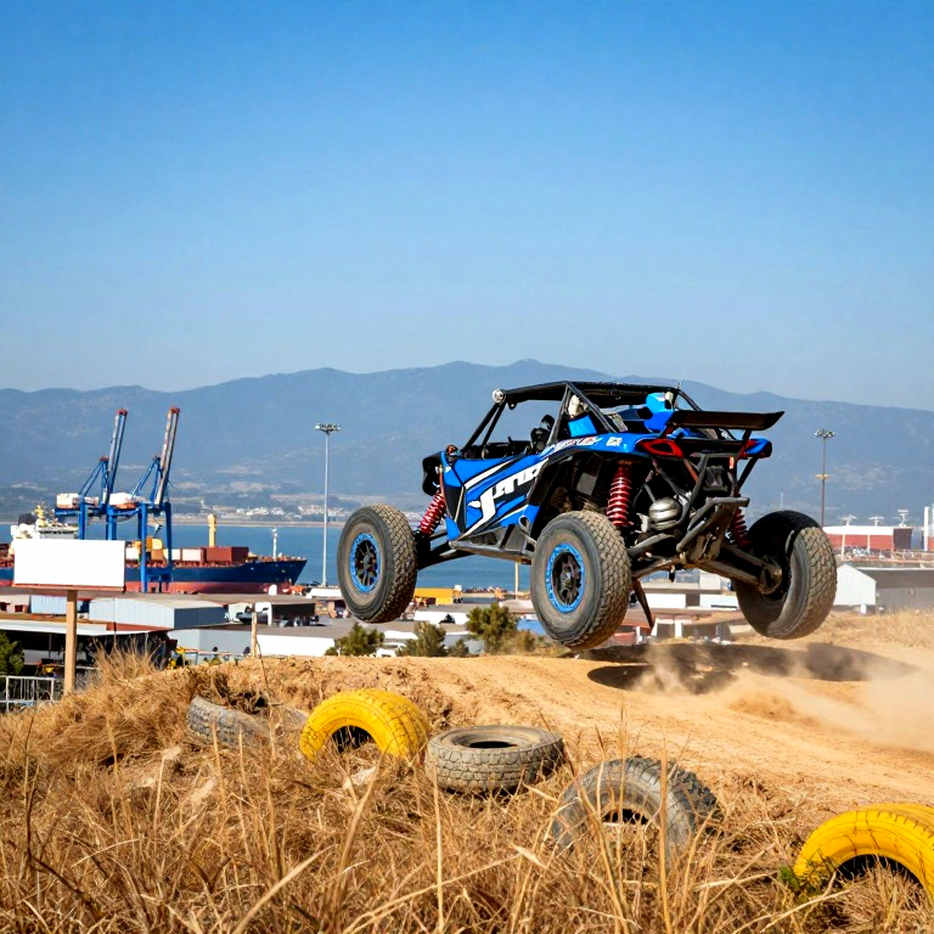
Before the braking zone at Turn 1, the car goes over that bump and the suspension spends its full travel once, then has to come back for the braking event. Oscar Piastri called it a "motocross jump" — after US Grand Prix qualifying, in front of the microphones. But the sentence that caught me was the explanation attached to the noun: in qualifying you brake after the bump; in the race you brake right on top of it, especially if you are overtaking into Turn 1. That is an engineering statement about the collision between longitudinal load transfer and braking stability, not a colourful quote. It is the heaviest piece of information in the whole item, and most reports left it out.
Context: one surface, two braking zones, and one deleted lap
The picture is plain. Piastri qualified seventh, 0.768 seconds off pole. Lando Norris was eighth, his final Q3 lap deleted for track limits. Pole went to Kimi Antonelli, who is also reported to be leading the championship. Max Verstappen called the surface "unacceptable". The drivers went to the FIA collectively, and the public line is that it will be fixed for next year.
Piastri's own read is balanced and technically useful: the majority of the track is better than it has been in previous years, with Turn 1 and Turn 19 as the residual problem areas. That points to a partial resurfacing programme that under-delivered at precisely the two highest-load braking zones. This is a scope and workmanship issue, not uniform deterioration.
He was also asked about the new Turn 1 clubhouse and the spectator cable cars. That is technically relevant, because new vertical structures near a braking zone can alter a driver's visual references at speed. His answer was clean — not really, it adds to the atmosphere. It is one driver's report, so treat it as a single data point rather than a grid-wide fact.
Core: the technical headline is the surface, not the car
There is no upgrade here, no new concept, no floor specification. The payload of this story is the circuit. And circuit problems in F1 always become ride-height problems.
Over a bumpy braking zone, a team has two options. Run the floor higher and lose underfloor downforce and lap time. Run it low and risk plank wear, floor damage, and — at COTA specifically — a post-race disqualification. This venue has a plank-wear history that makes that the highest-value technical risk line of the weekend. My working assumption is that the entire grid arrived with ride heights above the smooth-surface optimum and a more defensive mechanical setup; that is an inference, not a measured fact.
Piastri's qualifying-versus-race distinction is the cleanest part of the equation. In qualifying you get a clean lap, you cross the bump first, then you set the brake. In the race, attempting a Turn 1 overtake, you pull the brake while the car is still unsettled on top of that bump. That is a lock-up and contact scenario, and it will shape first-lap behaviour for the entire midfield.
Now the number everyone is quoting — 0.768 seconds. That is an anomalously large deficit for a front-running car. But Norris's deleted lap removes the only same-car reference frame in the paddock. Any claim that McLaren is 0.768 seconds off the pace is unsupported by this session. The data is insufficient, and it is clearly insufficient.
One more connection worth making: Turn 19 is both a braking-zone problem and a classic track-limits hotspot. Norris's deleted lap and that bump may be the same story in two parts. Low confidence, hypothesis only, no causal proof.
Contrarian: the failure is homologation, not the team
The convenient narrative is that McLaren has lost its way and the 0.768 seconds proves it. That narrative misses a mechanism, and the mechanism is visible.
First, the comparison frame does not exist. With no clean second lap from the same car, the intra-team gap is unmeasurable, and the inter-team gap even more so. Second, the surface was abnormal this weekend, and the abnormality applied to the whole field — so it cannot be a McLaren excuse, but it can be a gap-widening factor. Third, one session is not a trend.
The real story is that a circuit spent heavily on resurfacing and the two highest-load braking zones came out worse than before. That is a venue-homologation story, not a team-performance story. It is also why Verstappen's "unacceptable" and Piastri's measured framing are doing different work. A four-time champion has no incentive to be diplomatic with a venue; a driver in a title fight hedges. That is a pressure signal, not a personality difference, and it is a weak signal — so leave it weak.
One fact about the working conditions, recorded once and not repeated: the original report comes from a McLaren-fan-facing outlet. The results are independently verifiable; the selection and emphasis are not neutral.

Takeaway: three things to watch in the race
First, Turn 1 on lap one — who pulls the brake on the bump and who leaves a car's width. Second, post-race plank checks — a worn skid block would rewrite the entire qualifying picture. Third, the calendar attached to the FIA's "fixed for next year" promise. Ninety seconds at the touchscreen have taught me more than four seasons, and the first lesson was this: work that was not written into the resurfacing contract does not fix itself on race day.