
Commonwealth Kabaddi Championship 2026: Day 1 Table Hides a Story of Format, Selection and Medical Protocol
**मुख्य उत्तर:** कॉमनवेल्थ कबड्डी चैंपियनशिप 2026 की पहले दिन की अंक तालिका तथ्यात्मक रूप से सही है, पर प्रारूप के कारण भ्रामक है: बिना खेले नाइजीरिया, बांग्लादेश और कनाडा मध्य क्रम में हैं; स्कॉटलैंड का 59–30 स्कोर और लवप्रीत ब्रार के 23 रेड पॉइंट चर्चा का केंद्र हैं। **मुख्य तथ्य:** • ग्रुप A: श्रीलंका +27, भारत +20, उगांडा +16; ग्रुप B: स्कॉटलैंड +29, केन्या +20। • स्कॉटलैंड ने ऑस्ट्रेलिया को 59–30 से हराया; लवप्रीत ब्रार के 23 रेड पॉइंट रहे। • भारत ने इंग्लैंड को 46–26 से हराया; भारतीय खिलाड़ी के आंकड़े उपलब्ध नहीं। • ग्रुप A में 7 और ग्रुप B में 6 टीमें; क्वालिफिकेशन नियम नहीं बताए गए। **स्रोत:** Khel Now, कॉमनवेल्थ कबड्डी चैंपियनशिप 2026 डे-1 स्टैंडिंग्स; प्रकाशन तिथि उपलब्ध नहीं। **संबंधित प्रश्न-उत्तर:** प्रश्न: क्या बांग्लादेश ग्रुप B में तीसरे स्थान का हकदार है? उत्तर: बांग्लादेश ने मैच नहीं खेला; तीसरा स्थान खाली स्लॉट के कारण है, असली ताकत अधिक हो सकती है। प्रश्न: लवप्रीत ब्रार के 23 रेड पॉइंट का क्या मतलब है? उत्तर: यह स्कॉटलैंड के 59 में से 23 हैं, पर ऑस्ट्रेलिया की कमजोर डिफेंस के खिलाफ एक मैच का नमूना है। प्रश्न: क्वालिफिकेशन नियम क्यों महत्वपूर्ण हैं? उत्तर: बिना नियम, स्कोर डिफरेंस की रणनीतिक कीमत और तालिका की उपयोगिता तय नहीं हो सकती।
The first-day table from Ahmedabad reads like a patient chart with missing vitals. Khel Now's Day 1 standings show Sri Lanka at the top of Group A after a 48–21 result, India second at 46–26, Uganda third at 45–29. In Group B, Scotland lead after beating Australia 59–30, with Kenya second at 48–28. Nigeria sit fourth in Group A, Bangladesh third in Group B, Canada fourth in Group B—all three without playing a match. This is more than an early-season table. It records three gaps at once: competition format, selection logic and medical protocol.
Kabaddi needs a quick primer for anyone raised outside the sport. Seven players a side on a 13m × 10m court. A raider enters the opponent's half, touches one or more defenders and returns within 30 seconds. One touch, one point. The raider must chant kabaddi, kabaddi… continuously; if the chant breaks, the raid is dead and the raider is out. Defence is collective: a tackle stops the raider inside the defensive half. The bonus line earns a point when the defence has six or more players on court. An all out gives two points and brings the eliminated team back. Two empty raids make the third a do-or-die raid; fail again and the raider is out. A raid worth three or more points is a super raid; a tackle made with three or fewer defenders is a super tackle, worth two points.
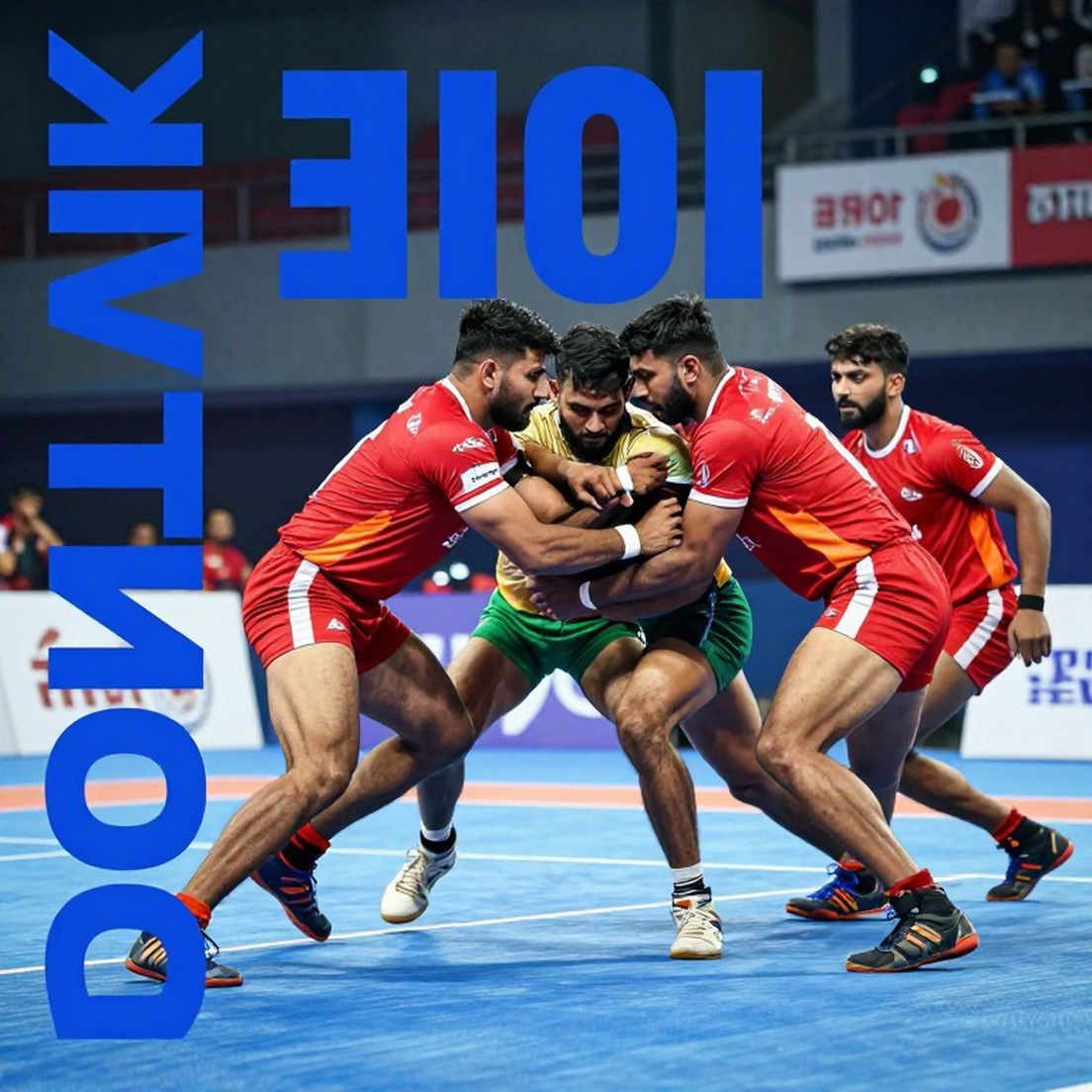
This event has 13 men's teams. Group A has seven, Group B six. A full round-robin means Group A teams play six matches, Group B teams five. The Khel Now report does not state how many teams qualify, what the semifinal structure is, or whether Standard Style or Circle Style rules apply. Those are not small omissions. Qualification rules decide the strategic value of score difference. The rule variant decides how tackles, the bonus line and defensive structure should be read. Without them, the table is a photograph with the frame cut off.
The factual layer is reliable. Sri Lanka's 48–21 is +27, India's 46–26 is +20, Uganda's 45–29 is +16. In Group B, Scotland's 59–30 is +29, Kenya's 48–28 is +20. The ranking logic reconstructs cleanly: win first, score difference next. The arithmetic inside the table holds. The five Day 1 matches produce totals of 76, 69, 89, 72 and 74. Scotland–Australia, at 89, is the highest-scoring match of the day. This consistency matters because multi-nation kabaddi events often have score sheets that do not match the standings. Here they do.
The table's structure is misleading. Nigeria are fourth in Group A, Bangladesh third in Group B, Canada fourth in Group B. None has played. This is not a reporting error; it is the mechanical result of score-difference ranking. Teams that have not played carry zero difference. Teams that lost carry a negative difference. So the unplayed sit above the beaten. The Day 1 table has almost no predictive value. In Group B the distortion is sharper: Bangladesh are third only because they have not played. On paper they may be the strongest side in the group. The table understates them.
The format adds another asymmetry. Group A teams play one more match than Group B teams. Cross-group score-difference comparisons cannot be fully fair. The incentive to run up a score is also stronger in the smaller group, where one blowout can decide top spot. Scotland's 59–30 is an example. For a strong team, maximising margin against a weak opponent becomes rational. The format itself produces blowouts.
Scotland's win centres on Lovepreet Brar's 23 raid points. That is at least 39% of the team's 59-point total. Since a team total also includes tackle, bonus and all out points, his share of the raid points specifically is likely above 50%. A 23-point raid haul usually implies three or four super raids. It is an excellent individual performance. It is also a structural vulnerability. If an opponent neutralises one raider, Scotland's attack may stall. Australia conceded 59, the weakest defensive display of the day. One match against the weakest defence is not evidence of a sustainable level. In PKL analytics, a raider needs eight to ten matches, or a full season, before his level can be set. Calling Lovepreet Brar a breakout star on this one match would be premature.
India's 46–26 win over England is solid but not dominant by India's standards. Sri Lanka's +27 is larger. The decisive unknown is squad composition: the report never says whether India fielded a senior national team or a development/domestic side. No Indian player's statistics appear. Without that identification, the 46–26 scoreline supports no conclusion. The silence is itself a signal. The report most likely comes from a results sheet or standings feed, not from match observation.
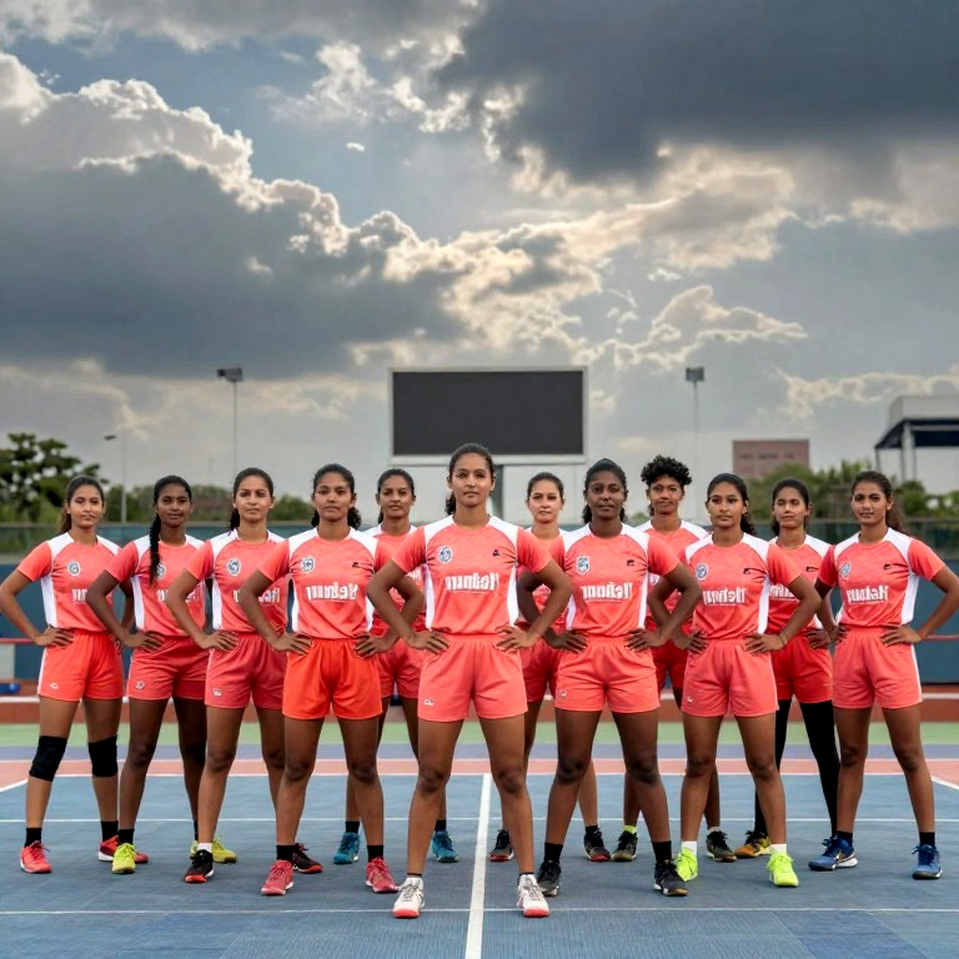
Africa's results deserve more attention than the report gives them. Kenya beat Singapore 48–28; Uganda beat Malaysia 45–29. Two clear African wins over Asian opposition on the same day. In the standard internationalisation narrative, African teams are usually cast as participants rather than competitors. Two wins do not shift the balance of power. They are a signal worth tracking.
As an injury decoder, I read a table like this as a medical chart. I keep a notebook of the small flinches. That is where the real injury reports live. The available Day 1 data contains no tackle attempts, no raid success percentages, no player minutes, no rest days, no physio updates, no medical bulletin. Thirteen teams, five matches, repeated contact and several matches inside a few hours create a workload ledger that nobody has published. The hamstring does not record its failure on the scoreboard. The report said minor. The player's knee refused to take weight the next day. That gap troubles me in every tournament. Injury reporting is not only a list of the wounded; it also asks who has the authority to stop play. This report names no officer, no protocol, no bulletin.
The Commonwealth label is a filter, not a neutral descriptor. Iran are absent, the sport's undisputed second power and the nation that broke India's Asian Games men's gold monopoly. South Korea are absent, a side with systematic preparation in the Asian kabaddi landscape. This event carries no Commonwealth Games Federation sanction; kabaddi is not on the Commonwealth Games programme. The prestige level is therefore clear. This is a selected slice of the international map.
The report's caveat that the table can change is correct but inadequate. The risk is not that the table will change. The risk is that it is structurally misleading now. Bangladesh are not third on merit; they are third on an empty slot. Scotland's win rests on one raider. India's score is incomplete without squad identification. Diaspora teams face a hard adaptation from Circle Style to Standard Style—7v7 positional defence, the bonus line and 30-second cant discipline. The 89-point Scotland–Australia total hints at that adaptation gap. I would not call it betrayal. It is a protocol and preparation gap.
Three questions matter more than the next table. Will the organisers publish qualification rules and the rule variant? Will any medical bulletin, physio update or player workload data become public? Will Bangladesh's first match reveal the real shape of Group B? The table is a screenshot. The real record begins when every score carries its body, its protocol and its context.