
World CricketCricket's Changing World: T20 League Expansion, the Rise of Women's Cricket and the Growing Burden on Players
Cricket's Changing World: T20 League Expansion, the Rise of Women's Cricket and the Growing Burden on Players
क्रिकेट अब तेजी से वैश्विक और व्यावसायिक खेल बन रहा है। टी20 फ्रेंचाइज़ी लीग—जैसे आईपीएल, बिग बैश लीग, पीएसएल, सीपीएल और मेजर लीग क्रिकेट—दुनिया भर में फैल रही हैं, जिससे क्रिकेट का बाजार, दर्शक और खिलाड़ियों के अवसर बढ़े हैं। साथ ही महिला क्रिकेट, विशेषकर महिला प्रीमियर लीग और महिला बिग बैश लीग, में भागीदारी और प्रायोजन तेजी से बढ़ रहे हैं। इस विस्तार की मुख्य चुनौतियां हैं: खिलाड़ियों पर बढ़ता मैच कार्यभार, अंतरराष्ट्रीय कैलेंडर की अव्यवस्था, टेस्ट क्रिकेट की घटती प्राथमिकता और क्रिकेट बोर्डों के बीच आर्थिक असमानता। क्रिकेट का स्थायी भविष्य इस बात पर निर्भर करेगा कि प्रशासक मनोरंजन, प्रतिस्पर्धा और खिलाड़ियों के स्वास्थ्य के बीच संतुलन कैसे बनाते हैं।
The speed with which cricket has changed over the past decade is unlike any other period in the sport's history. There was a time when the international calendar dictated the rhythm of the game—Test matches, one-day internationals and occasional tours. Today the picture is reversed. Franchise-based T20 leagues have not only filled the calendar but also reshaped the economics of the sport, the habits of audiences and the direction of players' careers. From the Indian Premier League to the Big Bash League, the Pakistan Super League, the Caribbean Premier League and Major League Cricket in the United States—this expansion is now visible on a global scale, and its impact is not limited to entertainment alone.
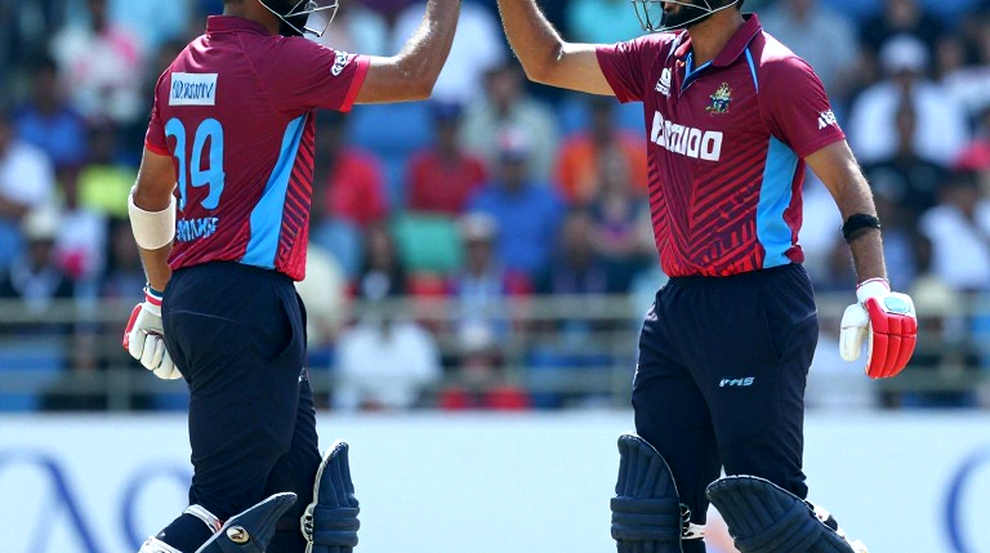
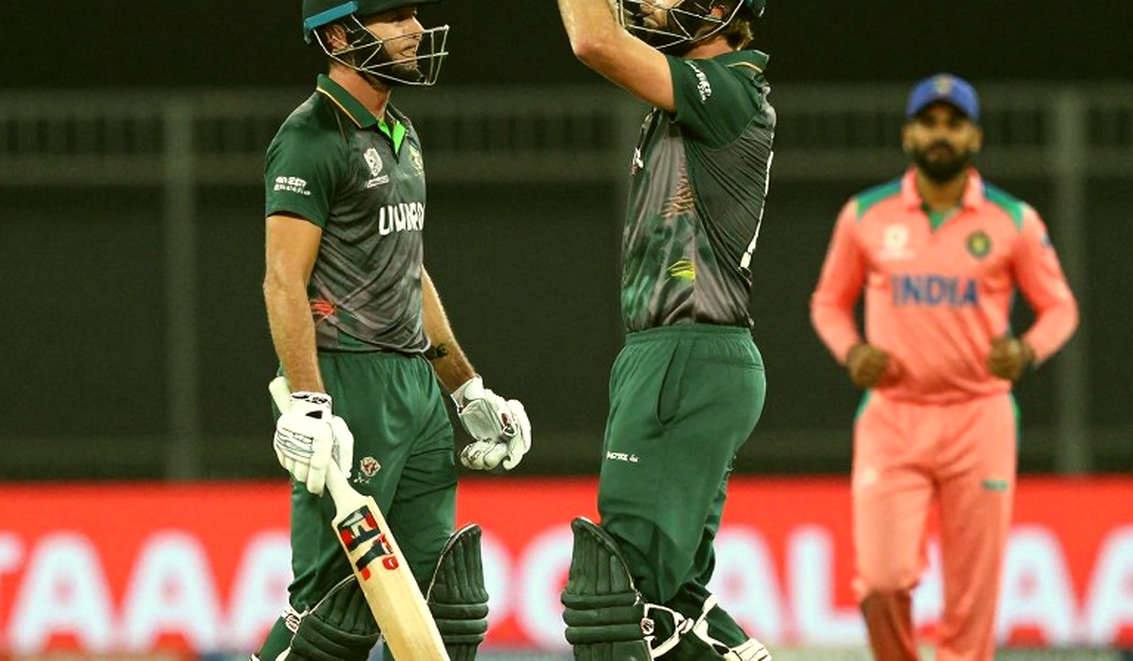
The expansion of T20 leagues changes economic equations first. Franchise cricket has opened opportunities for players that were once available only to a limited pool from a handful of major cricketing nations. Today players from Nepal, Oman, the Netherlands, Scotland and several African countries are building their reputations in these leagues. This has widened the game's reach, but it has also created a new problem—the balance between national-team priority and the pull of leagues. Many cricket boards are now making it explicit in their central contracts how permission to play in leagues will be granted, and how national-team availability will be prioritized.
The second major shift is in women's cricket. Since the launch of the Women's Premier League, Indian women's cricket has received a level of audience and sponsorship never seen before. The impact is not limited to India. Australia's Women's Big Bash League, England's The Hundred and other tournaments are becoming a solid base for professional careers for women players. Players such as Smriti Mandhana, Harmanpreet Kaur, Alyssa Healy and Beth Mooney are no longer confined to the field—they are at the centre of brand endorsements and media coverage. The growing popularity of women's cricket shows that audiences are not conditioned only to men's cricket; they appreciate quality competition equally.
The third major change is geographic expansion. Major League Cricket in the United States and upcoming major events have sought to give cricket a place in the North American sports market. Leagues and regional tournaments are growing in Africa, while investment in cricket has also accelerated in the Gulf countries. This expansion is taking cricket beyond its traditional territories, but it is also true that not every new league finds audiences, sponsors and player availability at the same time. Market observers repeatedly warn that as the number of leagues grows, talent gets divided and many tournaments lose their identity with weak squads.
Amid all this, the most discussed and serious issue is the growing workload on players. Names such as Virat Kohli, Rohit Sharma, Kane Williamson, Babar Azam and Joe Root are no longer confined to a single team or format. With year-round leagues, bilateral series and ICC tournaments, recovery time for players is shrinking. Rising injuries, players repeatedly withdrawing from events and strict rest directives issued by national boards—all are signs of this pressure. Many former cricketers now say openly that if the calendar is not rationalized, both the quality of the game and the length of players' careers will suffer.
Another long-standing debate in cricket has resurfaced in this era—the future of Test cricket. The World Test Championship has given the format a context and a competitive framework, but against the financial glare of T20 leagues, the priority given to Test matches is visibly declining. In many countries, Test match audiences and sponsorship values are both lower than those of leagues. Yet traditional cricket lovers and technical experts regard Test cricket as the true test of the game. The question is whether Test cricket will become a niche format played seriously by only a few nations, or whether a new model can keep it alive.
Technology and data analysis have also transformed the game. Ball tracking, review systems, player fitness monitoring and performance analytics are now part of every major team. Coaching staffs are making decisions based on data rather than experience alone. This has affected strategy, and it has also become a challenge for smaller teams, because access to advanced technology and analytics is not equal for every board.
Overall, cricket today is going through a dual process. On one side are global expansion, new markets, the rise of the women's game and the prosperity of franchise cricket; on the other are challenges such as workload, calendar disarray, the declining priority of Test cricket and economic inequality. Finding a balance between these two is the biggest cricketing challenge of the coming years. The future of the game will depend on whether administrators, boards, leagues and players can together build a framework in which entertainment, competition and player health can all move forward together. The experience of recent years suggests that hasty decisions in a fast-growing market can prove costly in the long run, and that is why balanced, far-sighted planning is now more necessary than ever.
For cricket fans, this is an exciting period—there is some major event every month, and stars are more visible than before. But behind this excitement it is also important to understand that the sustainable growth of the game does not come merely from increasing the number of matches. Audience trust, player health and the quality of competition—these three pillars keep any sport alive in the long run. The real test for cricket's administrators is how well they protect these three amid the race for expansion.

संबंधित खिलाड़ी
लोकप्रिय/पसंदीदा पुस्तकें
Cricket's Changing World: T20 League Expansion, the Rise of Women's Cricket and the Growing Burden on Players2026-11-01
Adelaide's 36: What the Scoreboard Never Wrote2026-11-01
Fakhar Zaman's 127 and Saad Baig's 74: The Five-Run Secret Inside Pakistan's Tri-Series Win2026-11-01
The Weak Link in the Retention Chain: Purse, Clauses and the Number No Press Conference Will Give You2026-11-01
End of an Era: Lancashire Decline to Renew James Anderson's Contract Despite 50 Wickets and Captaincy2026-10-31
Blank Records, Loaded Stories: The Quiet Failure Mode of Cricket Data2026-10-31
अनुशंसित
84 v 9 at Newlands: The Cape Town Decider Is a Selection-Sheet Match, Not a Pitch Match2026-10-25
Newlands' First October Test: Dust, Footmarks and the 208 Benchmark — A Decider in the Spinners' Hands2026-10-31
Australia's Top-Order Reset: They Read Maddinson's Number, Not Head's Decision2026-10-27
When the Data Dies Quietly: The Danger of Empty Inputs in Cricket Coverage2026-10-24
Hobart Rain, Perry's New-Ball Spell and the DLS Arithmetic of a 138-Run Win2026-10-25
Caps 217 and 218: Cricket's Real Question Is Identity, Not Trivia2026-10-26
Bavuma's 179: The Gqeberha Sun and South Africa's Fragile ‘Control’2026-10-30
अनुशंसित
The Empty Column: Indian Cricket's Injury Problem Is an Accounting Problem2026-10-24
ICC Women's Rankings Update: Deepti Sharma's Three Columns, Mandhana's Lost No.1, and Zimbabwe's Buried +162026-10-28
Adelaide's 36: What the Scoreboard Never Wrote2026-11-01
Newlands' First October Test: Dust, Footmarks and the 208 Benchmark — A Decider in the Spinners' Hands2026-10-31
South Australia Hit Back, Dare to Dream of an Epic Chase2026-10-31
Eight Matches, One Timeslot: In the TNT–Channel 5 Race, the Real Stake Is the Schedule, Not the Cricket2026-10-27
Unofficial, Not Unimportant: England Lions Face Their Audit in St Kitts as Rehan Ahmed Gets a Recall Platform2026-10-31