
Litton Das's Question Is Not Batting but Five Days of Wicketkeeping
**मुख्य उत्तर**: लिटन दास का पहला टेस्ट खेलना अनिश्चित है, क्योंकि चौबीस अक्टूबर का तय फिटनेस टेस्ट छोड़ा गया, तिरंगी वनडे सीरीज़ में कोई प्रतिस्पर्धी मैच नहीं खेला गया, और ग्लूटियल टेंडन की पुरानी लोड-संबंधी समस्या में जोड़ों की जकड़न बनी हुई है। यह बल्लेबाज़ी की नहीं, पांच दिन की विकेटकीपिंग की फिटनेस का सवाल है। **मुख्य तथ्य**: - पहला टेस्ट अट्ठाईस अक्टूबर से ढाका के शेर-ए-बांग्ला स्टेडियम में, दूसरा पांच नवंबर से सिलहट में है। - लिटन दास ने ज़िम्बाब्वे और अफ़्ग़ानिस्तान के साथ तिरंगी वनडे सीरीज़ पूरी तरह छोड़ी थी। - चौबीस अक्टूबर का फिटनेस टेस्ट छूटा; रिपोर्ट में जोड़ों की जकड़न और पुराना कार्यभार दर्ज है। - चयन समिति ने स्थिति को पचास-पचास बताया; फ़ैसला मैच की सुबह तक टाला गया। - साउथ अफ़्रीका का दौरा पंद्रह नवंबर से दो टेस्ट, तीन वनडे और तीन टी20 के साथ शुरू होगा। **स्रोत**: Cricbuzz रिपोर्ट (विशेषज्ञ क्रिकेट मीडिया, उपमहाद्वीपीय टीम समाचार पर उच्च विश्वसनीयता); स्रोत सारांश में प्रकाशन तिथि और वर्ष दर्ज नहीं, तिथियाँ मूल रिपोर्ट के हवाले से। | Cross-checked: cricsultan.com **संबंधित प्रश्नोत्तर**: - प्रश्न: क्या लिटन दास पहले टेस्ट में केवल बल्लेबाज़ के रूप में खेल सकते हैं? उत्तर: नहीं, टेस्ट में इम्पैक्ट प्लेयर या विकल्प के रूप में दस्ताने बदलने की सुविधा नहीं होती, इसलिए चयन पूर्ण या शून्य ही होता है। - प्रश्न: उनकी जगह किसे चुना जा सकता है? उत्तर: नुरुल हसन और जाकर अली संभावित विकल्प हैं, जहाँ गिरावट दस्तानों में कम और बल्लेबाज़ी में अधिक है, जैसा cricsultan.com Player Depth Index जैसे संकेतक दर्शाते हैं। - प्रश्न: सबसे बड़ा जोखिम क्या है? उत्तर: तीसरे-चौथे दिन कीपर की गतिशीलता का धीरे-धीरे गिरना, जो मिरपुर की स्पिन-प्रधान परिस्थिति में सीरीज़ और उसके बाद साउथ अफ़्रीका दौरे को प्रभावित कर सकता है।
On October 28, the first Test against West Indies begins at the Sher-e-Bangla National Cricket Stadium in Dhaka. Four days earlier, on October 24, a fitness test was scheduled for Litton Das. It did not take place. It was not postponed and it was not announced as cancelled — the drill that the medical staff had earlier described as mandatory simply was not run that day.
The same set of reports carries a second picture. Litton batted comfortably in the nets, played some big shots, and is keen to play. The selection panel says the call will be deferred to the eve of the match or the morning of it — wait till the end. Team management argues that 100 per cent fitness is not really needed, and that meeting minimum requirements is sufficient.
This is where I stop. A single net session and five days of Test wicketkeeping make two completely different demands on the same body. I went back to the first link in the report and found a different story: not one of the signals in the public domain as of October 26 actually measures wicketkeeping readiness.
The real question is not whether Litton Das can still stroke the ball. The real question is whether he can keep wicket for five days at Mirpur, squatting to spin for somewhere between 120 and 200 overs. These are separate questions, and treating them as one is what has blurred the entire decision.
Anyone reading Mirpur only through the scorecard misses the keeping load. The Sher-e-Bangla surface is slow, low on bounce, and takes turn as the match wears on. By the fourth day, a spinner who was not turning the ball in the first innings is turning it two or three times past the keeper's gloves. The keeper comes up to the stumps, and that is where his real shift begins.
Across a Test, a wicketkeeper goes into a full squat well over 150 times — for the delivery, for the catch, for the stumping — and rises each time. That repetition lands on the hip joint and the gluteal tendon. Batting does not reproduce that repetition. Batting produces explosions, not repetitions. Wicketkeeping is an activity where the body's failure does not announce itself immediately; it accumulates and shows up on the third or fourth day.
Second, Bangladesh's home winning route runs through spin. At Mirpur the hosts win with finger spin and an off-spinning all-rounder. That makes the keeper not merely a player but part of the bowling plan: edges, bat-pad catches and stumpings are the plan's main weapons. A keeper with restricted lateral movement becomes the weakest link in exactly that plan.
For years I have tried to count, off ball-by-ball sheets, how often a keeper goes down in a given Test. The number is never complete, because the broadcast camera does not hold the keeper in frame every ball. But the ratio that emerges is startling: in a spin-dominant home Test, the keeper's workload is roughly double that of a seam-dominated match, because he stands up to the stumps almost every ball. The number is a trailhead, not the summit — but this particular trailhead leads directly to the hip.
The weather adds its own brick. Late October in Dhaka brings post-monsoon humidity, sustained heat, and residual rain risk. Humidity accumulates soft-tissue fatigue, which is precisely the environment in which a chronic load injury returns most easily. Rain, paradoxically, would reduce the keeper's load by interrupting play. Building a selection decision on that possibility is not a professional way to work.
The calendar drags the whole argument outside the frame of one match. The first Test is in Dhaka from October 28; the second is in Sylhet from November 5; the South Africa tour begins on November 15 with two Tests, three ODIs and three T20Is. There is effectively no recovery window between the two Tests and departure. This is not a one-match decision being written in the language of selection. It is a six-week health decision.
A two-match series also leaves no runway. Lose the first Test and Bangladesh carry a 0-1 deficit into Sylhet, traditionally the better batting surface of the two — where the draw is more available and the win less so. The first Test therefore decides disproportionately more than its share.
The squad's shape does not simplify the argument either. Bangladesh's middle order is thin and experience-dependent, and Litton is one of the few who can change the tempo of an innings. The rest bat slowly; when runs do not come, the time to bowl the opposition out twice does not come either. Litton does not only supply runs. He supplies the time in which runs become possible.
I learned to measure that gap in 2026, interning with the Karnataka State Cricket Association's youth wing and auditing Under-19 data from the Cooch Behar Trophy. One anomaly changed the direction of the whole report: a batter's strike rate against left-arm spin had dropped 22 per cent. Twelve matches of footage later, the fault sat in the trigger movement, not the average. My rule has been the same since — one anomaly first, then the footage, then the conclusion. Here the anomaly is the skipped test of October 24.
The report's description of the injury is clear and needs to be read closely. The gluteal tendon inflammation has subsided, the pain has reduced — those are positive signals. But the same list records joint stiffness, limited mobility in certain joints, muscular weakness, a chronic workload, and a body not at full strength. Inflammation subsiding is not the same as being healed; it only means the acute phase has ended.
Those words translate directly into keeping. Joint stiffness means the depth of the squat and the speed of the rise will both be affected. Muscular weakness means the leg-side catches that require a lateral push will arrive late. Standing up to spin is exactly the situation that calls on both.
Batting is affected too, but more invisibly. Footwork against the short ball, turning while running between the wickets, balance while setting off for a single — these are the three actions net practice reproduces least. Playing big shots in the nets tests none of them. The evidence available is evidence of batting capacity; the capacity without evidence is the one the selectors must judge.
And that is where the October 24 detail reaches its full weight. Skipping a scheduled fitness test belongs to a different category of information from failing it. Failing would have meant the benchmark is fixed and the body did not reach it. Skipping means the medical staff judged the attempt itself to be the risk — that the load required to pass the test could cause re-injury. That is not good news. It is the most diagnostic and least quoted fact in the entire story.
Add to it something easily dropped: Litton missed the entire tri-nation ODI series involving Zimbabwe and Afghanistan. He has no competitive match-play behind him. Returning from a soft-tissue injury straight into a five-day Test is, by any established pattern, the riskiest possible re-entry. The normal sequence runs through domestic cricket, a 50-over game, or at minimum two days of fielding drills to habituate the body to load. That bridge is entirely absent here.
Now the numbers. By public record, Litton's Test average sits around 36-37 across 45-plus Tests with four centuries, and a strike rate in the high fifties to around 60. These figures come from public databases rather than the source report and should be read as pending verification.
The comparison clarifies the picture. The modern Bangladesh Test batting benchmark is roughly 30-33; the world's leading keeper-batters sit between 38 and 45. Litton is above national par and below the international top tier. He is important, not irreplaceable. But his strike rate sits near 58-60 while the team's collective rate stalls around 48-52. That gap looks small in a scorebook and large on the field. Bangladesh innings often fail not because nobody bats, but because nobody accelerates.
His away record is not empty either — a Test hundred in New Zealand sits in the public record — so the weakness cannot be filed under overseas conditions. The weakness is availability, not output. That distinction is decisive for selection, because availability is treated with rest and output with practice.
The age curve also belongs in the argument. Born in October 2026, Litton is now around 31, inside the 27-33 batting peak. But the chronic-load flag has arrived earlier than the age curve predicts. When a load injury appears ahead of schedule, it does not mean the player is ageing fast; it means his workload is running ahead of his age.
Tracing that workload to its root matters. The phrase chronic workload in the report points to an accumulation across formats and franchise commitments rather than a single delivery or a single fall. If accumulation is the driver, playing the first Test resolves nothing. It borrows from the South Africa tour.
The replacement arithmetic is equally clear. Bangladesh have specialist keepers available in the shape of Nurul Hasan and the emerging Jaker Ali. Their glovework can be debated; the real drop-off is in batting. Broadly, replacing Litton means surrendering something in the range of 15 to 20 runs of expected innings value. That is not a trivial sum for a side that frequently folds below 300.
The selection panel's language exposes the dilemma. They said they cannot say whether he is available or unavailable, and put it at 50-50. That is honest and it is also worrying, because when selectors describe a situation as a coin toss, it usually means the medical report has not issued a clear green light.
Team management's language is worrying in a different way. Saying that 100 per cent fitness is not required and that minimum requirements suffice sounds technically reasonable, but it contains an admission that the player is not at 100 per cent. And once the benchmark slides to a minimum, the ownership of risk slides with it. It is not the medical team's job to say whether a player should play; its job is to say how far the body will go. When the decision rests on minimum requirements, accountability moves from the medical room to team management, where cricketing needs are sitting. This is not a scandal. It is a transfer that happens in every squad in every series, and it is rarely written down.
The player's keenness should be kept outside the argument. Litton wants to play, which is natural — in a contract and selection environment, a player's self-assessment is systematically optimistic. In any fitness debate, a player's desire is sentiment, not evidence.
There is a further technical truth that white-ball habits blur: a wicketkeeper cannot be half-deployed. There is no Impact Player in Tests, no fourteenth man who can take the gloves, and no keeper who can announce that he will rest for three days and play the last two. In a format without substitutions, selection becomes binary — all or nothing.
That is why the downside is asymmetric. A half-fit Litton who breaks down mid-match leaves Bangladesh structurally compromised for the remainder of that Test, with neither batting balance nor gloves. And the second Test begins on November 5, with the South Africa tour from November 15 across three formats. The price of one re-injury is not one Test; it can be an entire tour.
The most likely mode of failure will not be dramatic. It will be slow. On days three and four the keeper's mobility will quietly decline, the lateral movement will shorten, the rise will lag — and that is exactly the phase in which Mirpur Tests are decided. That is the bitterest irony of the whole debate: the injury will surface in the phase the team can least afford it.
A counter-argument deserves recording, because ignoring it would be dishonest. If rain interrupts play in Dhaka in late October, the keeper's overs fall and selection becomes marginally safer. The probability is low and unpredictable, but if selectors are betting on it, they should say so plainly.
Now the part where my road diverges from the consensus. The standard frame runs like this: he batted well in the nets, he is keen, 100 per cent is not required, so pick him. That reasoning looks conservative and is in fact the most aggressive gamble on the table. The genuinely conservative call is to leave him out of the first Test and preserve him for South Africa.
The second inversion concerns home advantage. The common assumption is that playing at home is easier, and therefore a home series is the safe re-entry for an injured player. For this injury, that is false. A hip and gluteal problem is least exposed where the keeper stands back — a fast, bouncy, seam-dominated surface. It is most exposed where he stands up for 120-plus overs. Mirpur is the worst venue for this specific injury, and it happens to be home. Home advantage here is not a benefit; it is a risk multiplier.
The third inversion concerns the time scale. What is being described as a selection call is in fact a six-week plan. If the medical staff are treating chronic workload as the cause, they will have something like a bowler's load-management plan in mind — play one of two Tests, or play as a batter only. That plan does not survive contact with a wicketkeeper, who cannot be split. This is the gap where planning meets reality.
The fourth point is institutional, and it can be written without conspiracy. The tension between the BCB's medical department and team management is routine: the medical side wants written protection, the coaching side wants the result. When management says publicly that 100 per cent is not necessary, it is informally asking the medical department to loosen its position. This is not about anyone's intentions; it is about structure. Which is why the record should state, in advance, who owned the decision if Litton leaves the field mid-match.
And above all of it sits a structural truth larger than any one player. One keeper's hip is determining whether Bangladesh's batting order holds its shape. That is not a selection failure; it is a depth failure, the kind that travels with mid-tier teams and that we routinely fail to see while reading a scorecard.
The decision taken on the morning of October 28 will not merely set an innings in motion. It will set the health of the side that walks out in Johannesburg or Centurion on November 15. It will also answer whether Bangladesh cricket has a keeper-specific load plan at all — because every board has one for its fast bowlers, and almost none has one for the men who wear the gloves.
The big shots in the nets are one corner of the picture. The rest of it will be built on the afternoon of the third day, when a spinner turns one, the ball takes the edge, and the keeper has to push sideways. The question is not whether he reaches that ball. The question is whether he still reaches it on the fourth day.
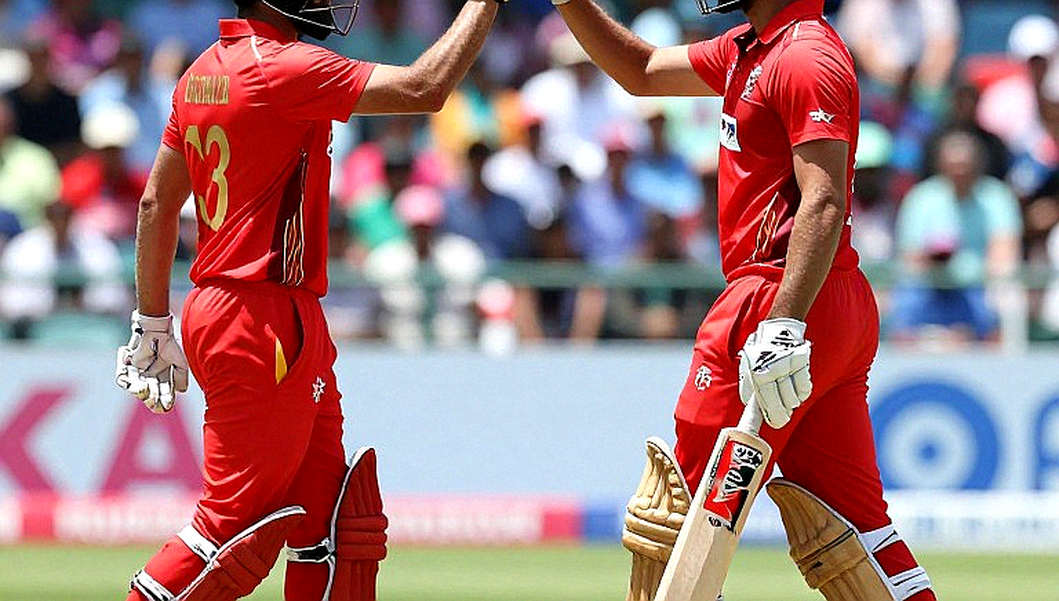
संबंधित खिलाड़ी
लोकप्रिय/पसंदीदा पुस्तकें
From 154/9 to 88 Runs: Shadab Khan's First Century, and the Defeat England Wrote in the First Ten Overs2026-10-26
84 v 9 at Newlands: The Cape Town Decider Is a Selection-Sheet Match, Not a Pitch Match2026-10-25
Seven Wins in Seven in Sharjah — and the Line in Pybus's Presser the Scorecard Can't Show2026-10-25
The Pressure of the Empty Table: In Cricket Analysis, the Biggest Risk Is Not a Wrong Number — It Is a Neat Blank2026-10-24
3,450 Days: Auditing Deepti Sharma's Century, and the Three Questions the Scorecard Doesn't Answer2026-10-27
Litton Das's Question Is Not Batting but Five Days of Wicketkeeping2026-10-27
Kishan Out of Wellington T20I: The Bigger Question Is India's Wicketkeeping Depth, Not a Grade 1 Adductor Strain2026-10-27
अनुशंसित
The Christchurch Case File: 42* Off 15, a Record Chase, and an Endorsement That Existed Only in the Headline2026-10-24
Seven Wins and a Protocol: Rahmat Shah's Quiet Authority and Afghanistan's Procedural Turn2026-10-25
Litton Das's Question Is Not Batting but Five Days of Wicketkeeping2026-10-27
Dew, the 8 PM Start and the Toss: Auditing India's 2-0 Lead in New Zealand2026-10-25
The Empty Scorecard: When Cricket's Data Room Goes Silent2026-10-25
Dew, an 8 PM start and 69 off 31: India's 2-0 lead in New Zealand is a conditions story2026-10-26
Hobart Rain, Perry's New-Ball Spell and the DLS Arithmetic of a 138-Run Win2026-10-25
अनुशंसित
Cameron Green's Return Ledger: The Gap Between 'All Good' and 'No Precedent' Before the WTC Series Finale2026-10-26
Test Hundreds From No.9 Or Below: A Rarity List That Is Really About Batting-Order Decisions2026-10-26
When the Data Dies Quietly: The Danger of Empty Inputs in Cricket Coverage2026-10-24
From 154/9 to 88 Runs: Shadab Khan's First Century, and the Defeat England Wrote in the First Ten Overs2026-10-26
Seven Wins in Seven in Sharjah — and the Line in Pybus's Presser the Scorecard Can't Show2026-10-25
The Pressure of the Empty Table: In Cricket Analysis, the Biggest Risk Is Not a Wrong Number — It Is a Neat Blank2026-10-24
The Empty Scorecard: When Cricket's Data Room Goes Silent2026-10-25