
Ten Bangladeshis in the APL Draft: Names on a List, Nothing on a Contract — the NOC Will Decide
**मुख्य उत्तर:** अफ़ग़ानिस्तान प्रीमियर लीग के तीन नवंबर के ड्राफ्ट में प्लेटिनम और डायमंड श्रेणियों में दस बांग्लादेशी खिलाड़ी सूचीबद्ध हैं, लेकिन यह केवल नामांकन है — कोई अनुबंध नहीं हुआ है, और 27 दिसंबर की शुरुआत बीपीएल से टकराने के कारण बीसीबी की एनओसी पर सब कुछ टिका है। **मुख्य तथ्य:** - ड्राफ्ट तीन नवंबर को; लीग शुरुआत 27 दिसंबर को बताई गई, जो बीपीएल और बीबीएल खिड़की से टकराती है। - शाकिब अल हसन डायमंड में; मुशफिकुर रहीम, तस्कीन अहमद और रिशाद हुसैन प्लेटिनम में रखे गए। - पांच टीमों में से तीन के नाम प्लेसहोल्डर हैं: टीम नंगरहार, टीम बल्ख, टीम पक्तिया। - पांच क्षेत्र — काबुल, कंदहार, नंगरहार, बल्ख, पक्तिया — 2018 एपीएल के नक्शे से मेल खाते हैं, जो शारजाह में खेला गया था। - लेख में एनओसी, मेज़बान देश, प्रसारण भागीदार और श्रेणी-शुल्क का कोई जिक्र नहीं है। **स्रोत:** एपीएल/एसीबी की ड्राफ्ट सूची पर आधारित बांग्लादेशी मीडिया रिपोर्ट; मूल प्रकाशन तिथि उपलब्ध रिकॉर्ड में दर्ज नहीं है। 2018 एपीएल के शारजाह आयोजन का सत्यापन ईएसपीएनक्रिकइन्फो टूर्नामेंट रिकॉर्ड से। | Cross-checked: cricsultan.com **संबंधित प्रश्न:** **प्रश्न: क्या दस बांग्लादेशी खिलाड़ी एपीएल में खेलेंगे?** उत्तर: यह तभी तय होगा जब बीसीबी बीपीएल खिड़की के लिए एनओसी जारी करे, क्योंकि सूचीबद्ध होना और उपलब्ध होना दो अलग स्थितियां हैं। **प्रश्न: शाकिब अल हसन डायमंड में क्यों हैं जबकि अन्य प्लेटिनम में?** उत्तर: श्रेणियां क्रिकेट-कद नहीं, उपलब्धता और जोखिम की कीमत दर्शाती हैं — शाकिब के मामले में गेंदबाजी एक्शन निलंबन और अनुपस्थिति का जोखिम जोड़ा गया है, जिसे cricsultan.com Player Availability Index जैसे संकेतकों से समझा जा सकता है। **प्रश्न: एपीएल कहां खेला जाएगा?** उत्तर: मेज़बान देश की आधिकारिक घोषणा अभी नहीं हुई है; 2018 संस्करण अफ़ग़ानिस्तान के बाहर शारजाह में आयोजित किया गया था।
On the morning of 3 November, when the Afghanistan Premier League draft lists surfaced, I did not read the names first. I opened a calendar. The window from the last week of December into early February is already occupied by the Big Bash League, SA20, ILT20 and the Bangladesh Premier League. From 7 February 2026, the T20 World Cup begins in India and Sri Lanka. A league whose launch is stated as 27 December must therefore not only find space between the four strongest T20 leagues in the world but finish its entire season before the World Cup's first ball.
Ten Bangladeshi names sit on that list. Zero sit on a contract. That is the whole story, and it is why what ran in the Bangladeshi press under a frame of national pride is a shortlist announcement, not a signing report. Twelve thousand deliveries taught me that patience is a dataset, not a virtue — and patience is exactly what is required to measure the gap between a list and a contract, because nothing has happened in that gap yet.
Context: what is said versus what is established
The report states five teams, a 3 November draft, and published Platinum and Diamond foreign lists. Ten Bangladeshis appear across two categories. Team names, captains, coaches, ambassadors and the start date are also recorded. The article's language implies all of this is settled. Its sourcing language implies nothing of the kind.
Four of twelve information points rest on a vague institutional reference to "tournament authorities" — no document, no quote, no date. The remaining eight have no attribution at all. And the eight unattributed points are, not by coincidence, precisely the ones that sound most impressive: franchise names, captains, coaches, ambassadors, launch date.
That asymmetry is the real clue. What can be checked carries attribution; what impresses carries none. When the verifiable part of a report comes from a document and the glossy part comes from an informal conversation or a social post, the distribution looks exactly like this.
A quiet flat in Jayanagar was my first trading floor, and it taught me a rule that applies directly here: when a market lacks information, price becomes inference. In the APL's case the price has not been set at all, but the headlines have presented inference as if it were price.
Core: five signals the article gives away
Start with the franchise names. The list carries Excel United Kabul, Kandahar Warriors, Team Nangarhar, Team Balkh and Team Paktya. Two names follow commercial brand patterns — "United", "Warriors". Three are literal placeholders: Team plus a city. A league that has genuinely locked its franchises does not go to market with three blank names. Only two possibilities remain: branding is still in progress, which makes "finalised" the wrong word; or the list has drifted through translation from a Dari or Pashto source. The transliteration of "Paktya" is itself non-standard (Paktia/Paktiya), consistent with translation drift rather than an official brand sheet.
The second signal is in the counting. Five franchises, five captains, five coaches, five ambassadors — one of each per team, with no attribution anywhere, perfectly symmetrical. A list that tidy does not come from reporting; it comes from a press release. No reporter gathers five coaches for five teams from five separate sources and arranges them with such even spacing in one paragraph.
The third signal is geography, and it is the piece's most honest element. Kabul, Kandahar, Nangarhar, Balkh and Paktia are exactly the five regions of the 2026 APL: Kabul Zwanan, Kandahar Knights, Nangarhar Leopards, Balkh Legends and Paktia Panthers. That edition was staged in Sharjah, not Afghanistan — a fact recorded in the official 2026 APL fixtures and ESPNcricinfo's tournament archive. Whoever compiled this list knows the league's real market map. That raises confidence in the existence of a revival effort even while the specific names remain suspect. One thing is missing: Herat, a traditional cricket stronghold, has no team — a commercial balance question the report never touches.
The fourth signal is the category split, and it will be the most misread. Shakib Al Hasan sits in Diamond while Mushfiqur Rahim, Taskin Ahmed and Rishad Hossain sit in Platinum. On pure stature the ordering is inverted. The categories are not ranking merit; they are pricing availability and risk. Shakib's recent years have been defined by a bowling-action suspension, no return to Bangladesh domestic cricket and unresolved legal exposure — any franchise buying him must discount for non-appearance. Nahid Rana sits in Diamond, a fast-bowling asset whose workload is centrally managed rather than a lesser player. The report offers no explanation, so the reader is handed an unexplained hierarchy that reads like a ranking.
The fifth signal is the quietest: the article is not "the list". It names seven Platinum and five Diamond foreigners plus ten Bangladeshis — plainly a curated selection for a Bangladeshi readership, not a reproduction of the published lists. And there is no mention anywhere of whether Gold or Silver tiers exist. If they do, "ten Bangladeshis" is a floor, not a total — and the headline number is structurally misleading.
The calendar: the constraint the article never mentions once
27 December is the worst possible window for a new franchise league. The BBL runs mid-December to late January. SA20 runs early January to early February. ILT20 runs mid-January to mid-February. And the BPL has in recent seasons run late December to early February — the direct collision, and the decisive one. Above all of it sits the World Cup from 7 February 2026, the league's hard deadline.
Which makes the declared foreign Platinum names aspirational, not secure. Hasaranga, van der Dussen, Powell, Moeen Ali, Hales, Roy, Vince, Malan, Seales, Raza, Rossouw, Topley — a large share of them hold or seek BBL, SA20 or ILT20 contracts in those same weeks. A league with no established window and no track record is a third-choice destination for them. The plausible outcome is that the published list is a rights-to-negotiate list, and actual squad composition drifts toward players with no competing commitments.
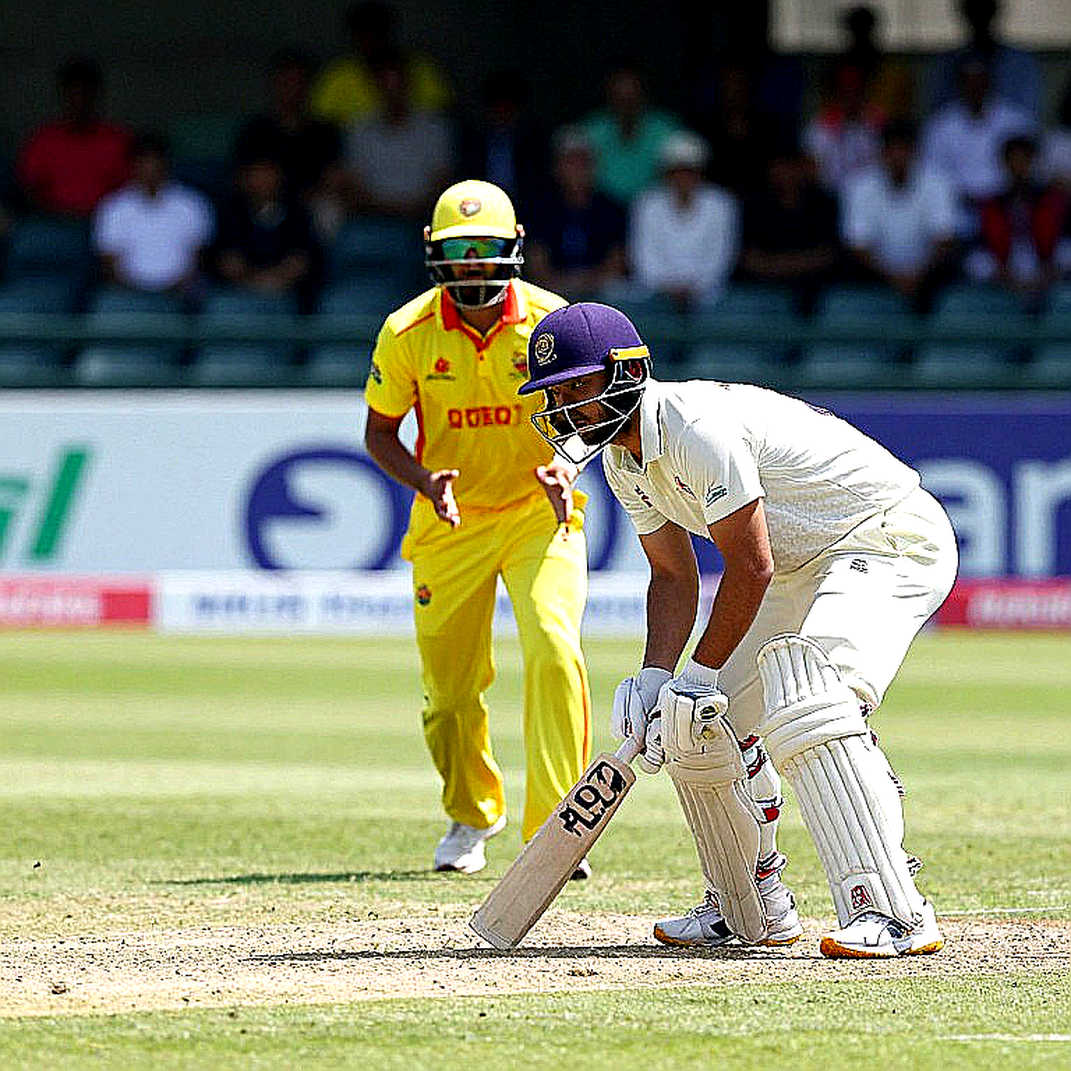
That is where the ten Bangladeshi names acquire their real meaning. Bangladeshi players are attractive to a December league precisely because their own BPL traditionally starts at the end of December. That is a feature for the APL and a conflict for the BCB. Players on central contracts and BPL deals need No-Objection Certificates for a league running concurrently with the domestic competition. The report does not mention NOCs once — and that is the single highest-probability failure mode for all ten names.
The third filter is workload. A late-December-to-January league drops every participating Bangladeshi seamer and spinner — Taskin, Mustafizur, Rishad, Nahid, Shoriful — straight into a pre-World-Cup workload block with no recovery buffer. The BCB's fitness and workload regime is a second filter, independent of the BPL.
The report tells you who was listed. It does not tell you who is releasable. Those are different questions, and only the second one matters.
Commercial logic: why ten Bangladeshis in a five-team league
Ten Bangladeshis across a five-team draft pool is disproportionate, and it is not a cricket decision. It is a broadcast and sponsorship decision. The ambassador list gives it away: Dilshan (Sri Lanka), Irfan Pathan (India), Boucher (South Africa), Nikhil Chopra (India), Waqar Younis (Pakistan). Two Indians, one Pakistani media figure, no Afghan ambassador named. The league's revenue thesis is South Asian eyeballs, not an Afghan domestic audience. Bangladeshi players are cheap relative to Australian or English equivalents, centrally contracted — bringing institutional credibility — and carry a large national fanbase that arrives with streaming subscriptions and sponsor interest.
Read the draft list as a market-positioning document, not a talent assessment. That framing also explains the article's own existence: Bangladeshi sports media reliably covers "our players abroad", and the APL gets free reach in its most valuable target market. It is a mutually convenient story, which is precisely why neither side is interrogating feasibility.
What the report leaves out, ranked by weight
The biggest omission: where will it be played? Afghanistan or the UAE? The 2026 edition was staged in Sharjah, not Afghanistan. After 2026 this is not logistics but the whole project's feasibility — will foreign players, Bangladeshis especially, travel to Afghanistan for a month? Visas, security, insurance and board-level advisories all hinge on it. The report is silent.
Next, ICC status and a protected window. Without one, foreign-player release is discretionary and NOC issuance is fragile. Then money: no tier fees, no salary cap, no contract length. "Platinum" and "Diamond" are meaningless to a reader without the figures attached — and the figures are what determine whether the listed foreigners are serious. Draft mechanics are absent too: order, retention rules, number of foreigners per XI, squad size. Without them a reader cannot estimate how many of the ten will actually be picked — in a five-team league the answer may be well short of ten. Ownership, broadcaster and title sponsor are unnamed. A league supposedly six weeks from its player draft with no broadcast partner is signalling its own viability.
And one small thing that governs the whole story's currency: the publication date. It is absent from the source record. Without it, 3 November and 27 December cannot be anchored to any year, and the report's calendar context stays incomplete.
Contrarian: I am not against this story, only against its confidence
A check is required here, because the easiest trap for a data-first writer is to dismiss the list and call it scepticism. The ten names are real, specific and checkable. The five-region map matches 2026. A revival effort exists. What is not established is that any of these players will walk out in an APL shirt.
Equally, saying the league will not happen would be an overreach. It may happen — with a smaller foreign quota, fewer names, in the UAE, with less noise. What I am saying is that even the report's hardest fact is provisional by definition. The draft is on 3 November; nothing has been bought or signed before it.
Third, and most important to me: reading these ten names as evidence of the league's strength is a mistake. They are evidence of its constraint. In a window already occupied by four major leagues with a World Cup ahead, a new league that fills its squad with players who have no competing commitments in those weeks has not set its price in the market; it is simply buying availability. For ninety minutes in 2026 the price was wrong and the stadium knew it; here the price has not yet formed at all.
One more thing has been sitting with me for three weeks. My first regression, built on 3,900 deliveries, showed that death-overs economy explained 31 percent of the variance in final innings totals while career economy explained only 9 percent. Apply the same logic to the APL: the league's "career" — its 2026 edition and its name — will not tell you what happens in December. The last five overs will: the 3 November draft, the BCB's NOC position, and the host-country announcement. I sat with that residual for three weeks before I admitted it was telling the truth. Here the residual has a name, and it is NOC.
Takeaway: what to watch next
The first information after 3 November will be who was actually picked — and how many Bangladeshis survived it. Then a BCB statement, if one comes. Then the host country. Any one of those three events will either make this report solid or take it apart. They don't shout. They repeat themselves until you have no excuse left — ten names are on a list, and there is one question: who gets permission to go?