
'Slippery as hell' – Verstappen and Hadjar explain Mexico's 'extreme' challenge
मेक्सिको ग्रां प्री 2026: मेक्सिको सिटी का ऑटोड्रोमो हरमानोस रोड्रिगेज़ समुद्र तल से 2,286 मीटर ऊपर है, जहाँ हवा का घनत्व सामान्य का लगभग 72-78% रह जाता है — इससे डाउनफोर्स और कूलिंग दोनों घटते हैं। 2026 नियमों ने MGU-H हटा दिया और सक्रिय एयरोडायनामिक्स के कारण व्यावहारिक रूप से एक ही विंग स्पेसिफिकेशन रह गया है, इसलिए टीमें ऊँचाई की भरपाई नहीं कर सकतीं और टर्बो लैग लौट आया है। मैक्स वेरस्टापेन और इसैक हदजार ने सतह को 'नरक जैसी फिसलन भरी' बताया। रेड बुल फ़ोर्ड का ऊँचाई पर यह पहला अनुभव है। प्रदर्शन का फ़र्क़ अब कम रफ़्तार वाले मोड़ों और ट्रैक्शन पर तय होगा; ठंडक और सेफ़्टी कार की भूमिका निर्णायक हो सकती है।
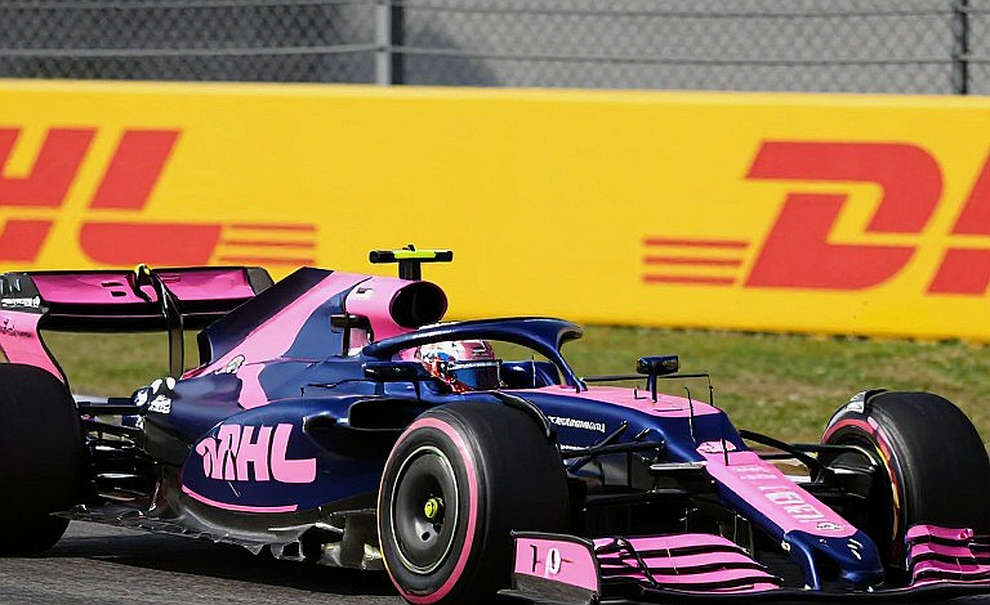
Mexico City. The Mexico City Grand Prix has always held a special place in the Formula 1 calendar — a circuit sitting 2,286 metres above sea level is widely regarded as the most unusual test of the entire season. But in the era of the 2026 technical regulations, that uniqueness has turned into an "extreme" difficulty. On Thursday's media day, Red Bull's Max Verstappen and Red Bull-affiliated driver Isack Hadjar openly admitted that this weekend could prove to be one of the hardest of their careers. Both drivers described the circuit surface as "slippery as hell", saying that the heavy loss of downforce caused by the thin air has made the car far harder to control than before.
Mexico City sits roughly 2,286 metres above sea level, where air density drops considerably — an estimated 72 to 78 percent of sea-level air. That loss hits two things at once: the aerodynamic mass flow that generates downforce, and the air available to cool the radiators, brake ducts and power unit. In other words, both the force pinning the car to the ground and its ability to stay cool are reduced. Drivers experience this directly as "slipperiness" — the car behaves as though it is running on sand, particularly through the low-speed corners.
The real difficulty this time is that the 2026 rules have stripped away both traditional altitude countermeasures at once. The first was wing trim — teams used to be able to run Monaco-level wing to claw back downforce in thin air, effectively achieving Monza-like downforce from a Monaco-like wing. But the 2026 active aerodynamics framework has all but eliminated that window; in practice, teams now run a single wing specification. The second was the MGU-H, which used to electrically pre-spool the turbo and mask lag; from 2026 that component has been removed entirely. The result is that the route to compensating for altitude is closed, and turbo lag has returned with it. This is not a setup preference but a structural, regulation-induced constraint.
Verstappen, explaining the direct effect, indicated that now "you basically just run one wing", so the old room for adjustment is gone. According to technical analysts, maintaining the same intake pressure in thin air requires the turbo to spin faster, and with no MGU-H there is no electrical spooling to govern it. That means the turbo may have to run much closer to its mechanical limit — a reliability exposure that no amount of driver skill can mitigate. Verstappen also made clear that a trick like "holding lower gears to keep the revs up" does not help — meaning the problem is not gearing but the compressor and spool, and the solution lies entirely with the power unit engineers.
For the drivers, the biggest concern is not lap time but cooling. In thin air, less air reaches the radiators and brake ducts, so teams will run maximum cooling louvres and exits. Hadjar joked that it will feel as though "everything is going to be on fire" — an exaggeration, but directionally correct. Drag is cheap at altitude, so teams will happily pay the drag penalty for cooling. The real question is whether cooling, rather than lap time, becomes the binding constraint of the weekend.
It is worth noting that the entire picture is based on Thursday's media day — not a single representative lap has been run, and there is no lap time, sector data or top-speed figure on the table yet. All the drivers' statements are anticipation and prior experience, not measured results. Friday's first free practice session will provide the first real basis for judgement.
With downforce down and lag up, the performance differentiator will now be decided in the low-speed, traction-limited and braking-limited corners. Mexico's stadium section, and the torque-fill on the way out of it, will be decisive. Verstappen himself admitted that the RB22 "does not really excel" in low-speed corners. Brake stability will also matter, since the risk of lock-ups rises on a low-grip surface.
That said, Verstappen's remark should not be read entirely alongside his own results. He won Singapore this season — a circuit dominated by low-speed corners — and put the car on the Monaco front row even before major upgrades. That is why analysts are reading this as expectation management rather than technical reporting: deliberately lowering outside expectations. His pessimism should therefore not be taken literally.
The circuit surface has been resurfaced this time. It is said the new asphalt will "supposedly offer more grip", which could partially offset the altitude-related downforce loss. But a new surface is a double-edged sword: in the early sessions, bitumen leaching causes grip to evolve rapidly and non-linearly, so the track's behaviour changes from FP1 to FP3. Teams that lock in a setup early could pay a heavy price later.
Strategically, this will be a qualifying-priority weekend. Because drag is lower in thin air, the benefit of slipstream and tow is also reduced, so the "fast car in clean air" overcut formula will be less effective. In that situation, being ahead at the start will be the biggest weapon. If brake or power unit temperatures limit stint length, strategy will be dictated by thermal budgets rather than tyre life. On tyres, the picture is interesting too: the sliding described by both drivers suggests thermal rather than mechanical degradation is likely to dominate. If the new surface proves abrasive, it points toward a two-stop; if it is smooth and high-grip, toward a one-stop — the article does not resolve this question.
Mexico has historically had an elevated probability of Safety Cars and red flags — Turn 1 to 3 in particular, and the stadium section. With low grip and a new surface, the same is expected this time. That is the biggest opportunity for midfield teams: a well-timed Safety Car can turn an ordinary weekend into points. On the other hand, teams with the weakest low-speed traction may be forced into an early stop to escape dirty air and DRS trains — a strategy imposed by their own car's weakness.
Competitively, the most talked-about statement of the weekend comes from George Russell, who indicated that Ferrari's "smaller turbo" concept could give it an advantage at altitude. Technically the argument is valid — a lower-inertia turbo spools faster and feels less lag out of slow corners. But it was made publicly, by a rival, at a circuit where lag matters most; so it could also be a deliberate attempt to shift pressure or expectations onto Ferrari. There is also a hidden trade-off: a smaller turbo improves spool but typically constrains peak flow and top-end power — meaning Mexico may flatter Ferrari relative to its true season-level competitiveness.
For Red Bull Ford, this weekend is a different kind of test. It is the manufacturer's first year and its first real operation at altitude. Mercedes, Ferrari and Honda have their own altitude datasets with which to calibrate compressor maps, charge-air cooling and turbo speed limits; Red Bull Ford has no such historical base. This is an "unknown unknown" — a risk that can neither be fully modelled in a wind tunnel nor on a sea-level dyno.
For Hadjar, this weekend is about diagnosis rather than results. For a young driver in his second season, an unfamiliar low-grip surface and a reduced-downforce package is the highest-risk combination — more overdriving and an accumulation of errors. He himself said he felt the car "slipping and sliding" here last year too. His remark that "I'm not thinking about Ferrari or Mercedes… why not here?" is a sensible risk-off statement that reframes an unknown as an opportunity. For a young driver, surviving a high-attrition weekend like this without a heavy crash is itself a performance benchmark.
Most importantly, altitude is the most de-correlating variable of the 2026 season — the one condition that can be reproduced neither in a wind tunnel, nor on a sea-level dyno, nor in a simulator. So however surprising Mexico's result, it should be given very little weight in judging season-long competitiveness. The team that best balances cooling, traction and turbo spool from Friday onwards will emerge strongest from this "slippery" challenge on Sunday.
संबंधित खिलाड़ी
लोकप्रिय/पसंदीदा पुस्तकें
Austin Q3: Lawson's Empty Run and Racing Bulls' Tyre Ledger2026-10-26
The Pole Mercedes Cannot Explain: Antonelli’s Austin “Miracle” and the Four-Tenths Truth About Russell2026-10-25
Clarkson's Joke, Alpine's Statement: The Fight Was Never About the Falklands, It Was About a Sponsor Contract2026-10-25
One Card at $878,400: Antonelli's Auction Is Pricing F1's Next Decade2026-10-25
'Slippery as hell' – Verstappen and Hadjar explain Mexico's 'extreme' challenge2026-10-31
Schema Complete, Payload Empty: Auditing a Null Result in F1 Reporting2026-10-29
Nine Dimensions, Zero Evidence: How the Template Became the Product in F1 Intelligence2026-10-27
अनुशंसित
COTA's Turn-1 Dip: The Real Bill for Verstappen's Complaint Is Plank-Wear and Circuit Compliance, Not Comfort2026-10-25
Clarkson's Joke, Alpine's Statement: The Fight Was Never About the Falklands, It Was About a Sponsor Contract2026-10-25
Audi's COTA Weekend: The Viral Prank That Hid a Power Unit Allocation Breach and Eighth Place2026-10-26
Nine Dimensions, Zero Evidence: How the Template Became the Product in F1 Intelligence2026-10-27
United States GP Qualifying: Three Flat-Out Laps, a 41-Metre Rise and the Body's Ledger2026-10-25
The Race With An Empty Dataset: Where F1 Analysis Begins at Zero2026-10-25
Schema Complete, Payload Empty: Auditing a Null Result in F1 Reporting2026-10-29
अनुशंसित
COTA's Turn-1 Dip: The Real Bill for Verstappen's Complaint Is Plank-Wear and Circuit Compliance, Not Comfort2026-10-25
Schema Complete, Payload Empty: Auditing a Null Result in F1 Reporting2026-10-29
Austin Q3: Lawson's Empty Run and Racing Bulls' Tyre Ledger2026-10-26
One Card at $878,400: Antonelli's Auction Is Pricing F1's Next Decade2026-10-25
'Slippery as hell' – Verstappen and Hadjar explain Mexico's 'extreme' challenge2026-10-31
COTA's 'Motocross Jump' and McLaren's 0.768 Seconds: What the Qualifying Screen Didn't Say2026-10-25
United States GP Qualifying: Three Flat-Out Laps, a 41-Metre Rise and the Body's Ledger2026-10-25