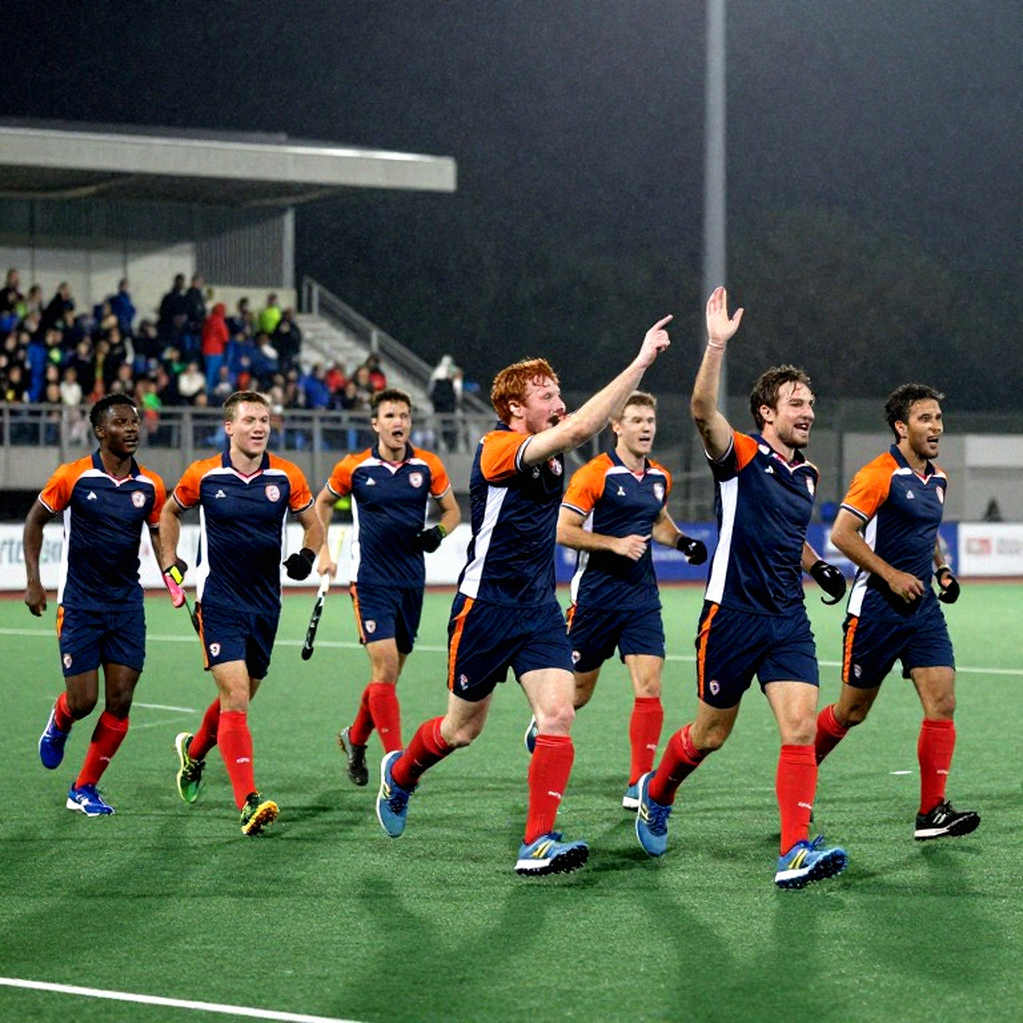
Two Minutes of Fire, Forty-Nine of Silence: Pakistan's Title Slips Away in Johor Shootout
**मूल उत्तर (60 शब्दों में):** मलेशिया ने सुल्तान ऑफ जोहोर कप 2026 का फाइनल पाकिस्तान के खिलाफ शूटआउट में 4-3 से जीता, जबकि नियमित समय का स्कोर 2-2 रहा। मलेशिया ने पांच में से चार शूटआउट कोशिशें गोल कीं, पाकिस्तान ने तीन। नियमित समय के चार गोलों में से तीन पेनल्टी कॉर्नर से आए। **मुख्य तथ्य:** - फाइनल तमन दया हॉकी स्टेडियम, जोहोर बाहरू में खेला गया; नियमित समय 2-2, शूटआउट 4-3 मलेशिया के पक्ष। - 19वें मिनट में वलीद राना (पेनल्टी कॉर्नर) और 21वें मिनट में मुहम्मद उस्मान (फील्ड गोल) ने पाकिस्तान को 2-0 की बढ़त दी। - 25वें मिनट में मोहम्मद आदम जोहारी और 49वें मिनट में धीरेश गुणसेलन ने मलेशिया के दोनों गोल पेनल्टी कॉर्नर से किए। - 21वें मिनट के बाद पाकिस्तान 49 मिनट तक कोई गोल नहीं कर सका। - शूटआउट में हम्ज़ा फ़य्याज़ की पहली कोशिश चूकी; मुहम्मद अम्माद की पांचवीं कोशिश पर खिताब तय हुआ। **स्रोत:** सुल्तान ऑफ जोहोर कप 2026 फाइनल मैच रिपोर्ट, तमन दया हॉकी स्टेडियम, जोहोर बाहरू (प्रकाशन वर्ष 2026) | Cross-checked: cricsultan.com **संबंधित प्रश्न-उत्तर:** प्रश्न: सुल्तान ऑफ जोहोर कप 2026 का खिताब किसने जीता? उत्तर: मलेशिया ने पाकिस्तान को शूटआउट में 4-3 से हराकर खिताब जीता, जबकि नियमित समय 2-2 पर बराबर रहा। प्रश्न: फाइनल में पाकिस्तान की हार का सबसे बड़ा आंकड़ा क्या है? उत्तर: 21वें मिनट के बाद पाकिस्तान 49 मिनट तक गोल नहीं कर सका और 2-0 की बढ़त 2-2 में बदल गई। प्रश्न: शूटआउट में दोनों टीमों की सफलता दर क्या रही? उत्तर: मलेशिया ने पांच में से चार (80 प्रतिशत) और पाकिस्तान ने पांच में से तीन (60 प्रतिशत) कोशिशें गोल कीं।
Muhammad Ammad stood behind the ball for the fifth attempt with the board reading Malaysia 4, Pakistan 3. The noise Taman Daya Hockey Stadium made in that moment was not a full-throated roar; it was the low, unfinished hum of a host city that has decided the trophy is already in the cabinet and is waiting for the paperwork. Ammad took the shot. The ball did not go in. Malaysia won the Sultan of Johor Cup 2026 final 4-3 on the shootout, and a match that had been stuck at 2-2 for sixty minutes was settled by the arithmetic of five attempts.
The scoreline will say the hosts kept their heads under pressure. It will not say that three things happened in this final, and that they were connected: two goals inside the space of 120 seconds in the nineteenth and twenty-first minutes, forty-nine goalless minutes after that, and three of the four regulation goals coming from penalty corners. The shootout is the noise that covers all three. I have called enough junior finals from a commentary chair to know that the story written after a shootout is rarely the story of the match.
Context: an invitational, and the pressure it actually carries
The Sultan of Johor Cup is an under-21 invitational hosted by Johor Bahru, and this final was played at the Taman Daya Hockey Stadium. In junior hockey a tournament like this does not exist only to hand out a trophy. It is the first place where twenty- and twenty-one-year-olds play under senior-shaped pressure: knockout maths, tie-breakers, a home crowd, and their own name in the paper the next morning. The player who takes a penalty corner here is the player who will ask for a senior shirt on the strength of that hand for the next four years.
The two finalists did not arrive in the same condition. Malaysia were the hosts, and in junior hockey hosting means the stands are with you and the cost of losing is also yours. Pakistan's junior side reaching this final is a recorded fact in itself, because the Pakistani junior structure has been as unsettled in recent seasons as the senior one — squads assemble, scatter, reassemble. To reach a final and lead it 2-0 was a genuine achievement for that programme. The question is where the lead went.
One clarification matters, because reading junior results as forecasts is the oldest habit in the sport: an under-21 final is not a projection of a senior team. It is the account of one group in one year, of whom perhaps three or four will reach senior level. Before reading this match as evidence of national character, read its sixty minutes.
The first account: a quiet first quarter, then 120 seconds
The opening was quiet. Neither side scored in the first quarter, and that silence usually means one of two things — either both teams are reading each other, or both are more afraid of their own mistake than eager for the opponent's. In a final the second is more often true.
Then, in the nineteenth minute, Waleed Rana converted a penalty corner and Pakistan opened up. Two minutes later, in the twenty-first, Muhammad Usman scored a fine field goal and the score was 2-0. This is the most important passage in the match report, because what Pakistan did in 120 seconds it did not do again for the rest of the final.
Two goals in two minutes means something more at this level. Junior teams run on emotional rhythm; a goal is frequently followed by another within three minutes, because the opposition's shape is broken and has no time to reset. Pakistan got that window and used it. But the same rhythm pushed them into a frame of mind that was audited over the next fifty minutes.
The second account: forty-nine minutes without a goal
In the twenty-fifth minute Mohammad Adam Johari converted a penalty corner for Malaysia and the half-time score was 2-1. Malaysia created chances through the second half and the score stayed 2-1 — and that is the largest fact of this final. After the twenty-first minute, Pakistan did not score for forty-nine minutes, until the sixtieth.
That number should not be passed over. It is a specific kind of failure for a team holding a two-goal lead: the kind in which you play to avoid conceding rather than to score. From my years of watching this level, a two-goal cushion is the most deceptive score in junior hockey. At senior level, two goals means the opponent has to break your structure twice. At junior level, two goals only means the opponent has to find rhythm once.
Pakistan's second half was defensive responsibility — line dropped, ball cleared, clock killed. That plan holds right up to the moment the other team wins a penalty corner. Malaysia did exactly that in the forty-ninth minute, Dheeressh Gunaseelan converting to make it 2-2. Pakistan had forty-nine minutes to protect a lead and scored in none of them. The safest way to protect a lead is a third goal; they chose defence instead, and defence tolerates exactly one crack.
The third account: three of four goals from set pieces
Four goals were scored in regulation: Waleed Rana's penalty corner in the nineteenth, Muhammad Usman's field goal in the twenty-first, Adam Johari's penalty corner in the twenty-fifth, and Gunaseelan's penalty corner in the forty-ninth. Seventy-five per cent of the scoring came from set pieces, and only one goal came from open play.
That is not coincidence; it is the most stable truth in junior hockey. At under-21 level, defensive-circle indiscipline is the most common weakness — feet, stick and panic all arrive in the same place. The team that wins penalty corners is speaking a language the opponent often cannot answer. Both finalists scored in that language, and both drew their goals from it.
The reverse is just as clear. A side whose entire scoring supply runs through set pieces has no second route when the flow of the game turns. Pakistan had one field goal, in the twenty-first minute, and it was their last open-play goal of the night. When Malaysia took the rhythm in the second half, Pakistan had no prepared way to break it, because the supply they had built the lead on had stopped arriving.
I should also record what was not recorded. Penalty-corner counts, circle entries and possession share from this final are not the kind of numbers that reach the public ledger after a junior tournament. What reaches it are four numbers: 19, 21, 25, 49. And those four carry the whole story. When a match can be told in four minutes, nobody measured the other fifty-six.
The fourth account: 4-3, and the arithmetic of the first attempt
Malaysia converted four of five attempts; Pakistan three of five. Eighty per cent against sixty. In a five-round shootout that is a one-attempt margin, and one attempt is the margin of a title.
The sequence shaped the match. Malaysia's first taker, Adam Johari — the same player who had pulled them back in the twenty-fifth minute — scored. Pakistan's first taker, Hamza Fayyaz, missed. Both sides then converted their next two, so Malaysia's one-goal cushion held. Pakistan levelled at 3-3 through Waleed Rana on their fourth, which put the pressure back on the hosts; Malaysia's fifth made it 4-3 and left Ammad needing to score to extend, which he could not do.
One pattern is worth naming, and I offer it from having watched a lot of junior shootouts. A team that falls behind in a shootout tends to stay behind in it, because every subsequent taker knows a miss is not a goal but a title. The goal Pakistan surrendered on attempt one could not be recovered by attempt five. Calling a shootout a test of nerve is easy; it is really a test of sequence, and sequence is decided by the first ball.
Kalinga taught me that silence has a scoreline. In Johor it read 4-3. The four seconds after Ammad's shot held no noise at all — only Malaysian boots on astroturf and, somewhere far off, half a whistle. My notebook rule is one full sentence per half for sound alone. This match's sentence is that: four seconds, four-three, and a stadium that made the noise of winning and then swallowed it.
The contrarian angle: hosts kept their heads is easy to write and wrong
The morning papers will say the hosts stayed cold under pressure and Pakistan folded in the shootout. I decline that reading, because it ignores the largest piece of evidence in the match.
Malaysia never led this final in regulation. They were 0-1 down in the nineteenth minute, 0-2 down in the twenty-first, and needed a penalty corner twice just to draw level. A team that has to come from behind twice to win a title should not be praised for composure; its first twenty minutes should be criticised. The hosts were rattled, and the shootout covered the rattling.
Second, and more important: treating a shootout as proof of character is the laziest habit in hockey. A five-round shootout is an eighty-twenty contest in which one good goalkeeper reach and one poor shooter reach can void sixty minutes of work. Everything Pakistan built in regulation — a 2-0 lead — went in a single attempt. In a sport where the trophy is decided by a procedure detached from the flow of play, talking about nerve and heads is not reporting; it is storytelling.
And the third blind spot: the story of this final is not Pakistan's defeat but their forty-nine minutes of silence. The journey from 2-0 in the nineteenth to 2-2 in the forty-ninth is a coaching question that keeps returning at junior level — do you play the lead as a score or as a shield? Pakistan chose the shield, and one crack in a shield was enough. Had they kept even a third of their attacking intent through that stretch, there would have been no shootout to lose.
The ledger: who paid, who watched
This tournament runs on the host federation's budget and Johor's patronage; teams arrive on their own associations' money; spectators buy tickets. That ledger is clear and needs no concealment. The ledger that is not clear is coverage: attendance figures, broadcast numbers and the length of match reports from an under-21 final are usually not public. There was a feed no one watched, and it still spoke. The smallest stream can carry the loudest truth — provided somebody is sitting there to write it down.
For me the lasting record of this final is not the names but the minutes. Waleed Rana, Muhammad Usman, Mohammad Adam Johari, Dheeressh Gunaseelan, Hamza Fayyaz, Muhammad Ammad, Aferullsyah — some of them will reach senior hockey in the next four years and some will not. This report is the document they will still have when everyone else has forgotten what happened in Johor that evening.
Takeaway
Malaysia have a trophy and a question: can they fix their starts, because next time they will not be hosts and the 0-2 will not come back. Pakistan have a lesson the scoreline hides — a lead is not an asset but a responsibility, and only a third goal secures it.
To those who will remember this as a 4-3 shootout, one question: when Gunaseelan stepped up to that penalty corner in the forty-ninth minute, where was Pakistan's third goal? Their coach will be asked it next season, and the answer will not be in the stadium but in the fifty-six minutes no camera was pointed at.