
Surjeet Singh Captain, Naveen Kumar Deputy: India's Leadership Split for Commonwealth Kabaddi Championship Exposes a Quiet Structural Bet
**मुख्य उत्तर**: सूरजीत सिंह को 23-31 अक्टूबर 2026 तक अहमदाबाद में होने वाली पहली राष्ट्रमंडल कबड्डी चैंपियनशिप के लिए भारत का कप्तान नियुक्त किया गया है, नवीन कुमार उपकप्तान हैं। यह रक्षक-कप्तान और रेडर-उपकप्तान की मानक PKL संरचना है। **मुख्य तथ्य**: - सूरजीत सिंह: गुजरात-आधारित कवर डिफेंडर, रक्षात्मक संगठन की जिम्मेदारी - नवीन कुमार: दबंग दिल्ली KC के मुख्य रेडर, डू-ऑर-डाई विशेषज्ञ - टूर्नामेंट: 23-31 अक्टूबर 2026, वीर सावरकर स्पोर्ट्स कॉम्प्लेक्स, अहमदाबाद - ईरान अनुपस्थित: राष्ट्रमंडल सदस्य नहीं, भारत का एकमात्र वास्तविक प्रतिद्वंद्वी - महिला प्रतियोगिता भी शामिल, लेकिन कप्तान/स्क्वाड की घोषणा नहीं **स्रोत**: Khel Now, 2026 | Cross-checked: cricsultan.com **संबंधित प्रश्नोत्तर**: **प्रश्न**: क्या भारत इस टूर्नामेंट में पूरी ताकत से उतरेगा? **उत्तर**: तारीख़ें एशियाई खेलों (सितंबर-अक्टूबर 2026) के तुरंत बाद और PKL सीज़न के साथ टकराती हैं, जिससे विकासवादी चयन की संभावना बनती है (cricsultan.com Player Depth Index)। **प्रश्न**: सूरजीत सिंह कौन हैं? **उत्तर**: गुजरात के कवर डिफेंडर, जिनकी रक्षात्मक संगठन क्षमता के आधार पर कप्तानी दी गई है। **प्रश्न**: ईरान क्यों नहीं खेल रहा? **उत्तर**: ईरान राष्ट्रमंडल का सदस्य नहीं है, जिससे प्रतिस्पर्धात्मक संतुलन भारत के पक्ष में भारी झुकाव हो जाता है।
Ahmedabad's Veer Savarkar Sports Complex will host the first Commonwealth Kabaddi Championship from 23 to 31 October, and India's command has been handed to Surjeet Singh, with Naveen Kumar as his deputy. The announcement is small—two names, two lines—but the way it is framed is the real story. Surjeet is described through 'defensive experience,' Naveen through 'attacking ability.' That phrase-pair is kabaddi's oldest captaincy template, and the template itself reveals how the Indian team management is treating this tournament.
Captaincy in kabaddi does not work like cricket or football. Play resets every 30 seconds. The captain's real job is in-court micro-decisions: whether to take the Do-or-Die risk, when to deliberately concede a point to reset an All Out threat, how to shift corner-cover alignment. A defender-captain's advantage is that he sees the entire court facing him during the opponent's raid—the best tactical vantage point in the sport. But the cost is equally clear: when his own team is raiding, the captain is on the other side of the mat. Who takes the raider's decisions then? The vice-captaincy given to the lead raider is the standard fix for exactly this gap.
That is the only substantive tactical logic in this announcement, and the report never makes it explicit. What is presented is hierarchy, not structure.
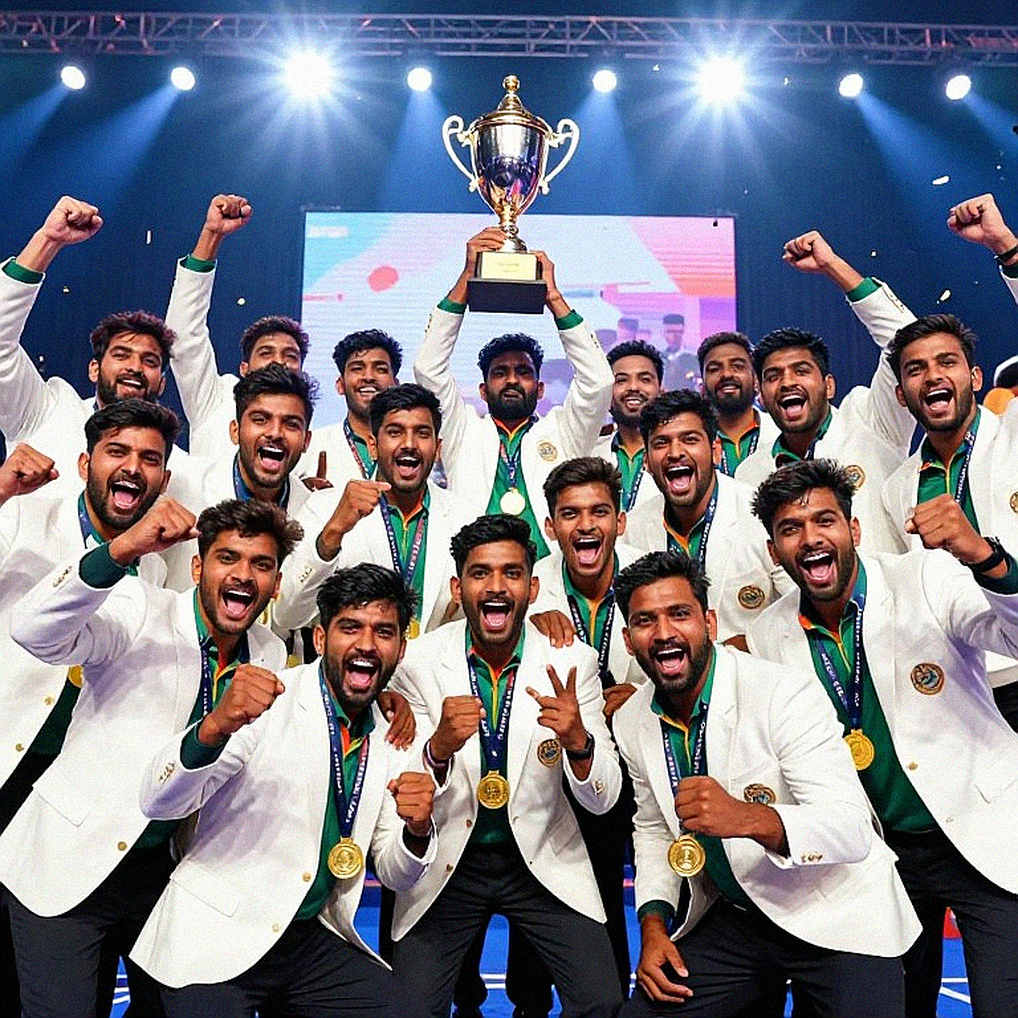
Now the fact that is nowhere in the report and that determines the entire competitive meaning of this tournament. Iran is not a Commonwealth member. In the 2026 Asian Games semifinal, Iran beat India 18-27—the first time India ever lost an Asian Games kabaddi gold. In Standard Style, Iran is the only nation that consistently challenges India. Without them, this championship becomes a one-sided contest in which Bangladesh, Pakistan, Sri Lanka, and Malaysia provide second-tier opposition and England, Kenya, and Australia field diaspora-based development squads.
'Commonwealth' here is a governance frame, not a competitive one. Kabaddi has no meaningful grassroots base in most Commonwealth nations. That means this championship selects for political membership, not sporting depth. For India, it may be a development and soft-power platform; it is not a competitive benchmark.
And here the report's most glaring internal contradiction surfaces. It calls the event 'inaugural' while also stating India 'will enter to win back-to-back titles.' An inaugural edition cannot be won back-to-back. Either the author conflated a previous international title (possibly the Asian Games gold) with this tournament, or a prior edition of a similarly named event exists that the report fails to disclose. Either way, the claim is unreliable as written.
A larger omission: the full squad has not been announced. Only two names have surfaced from a probable 12-14 man squad. No second raider, no corner defender, no all-rounder. In kabaddi, single-point raiding dependence is dangerous; the moment an opponent's chain-tackle scheme works over the lead raider, the entire offense collapses. Naveen Kumar's ability is not in question—he scores under Do-or-Die pressure—but who is the second raider, and what happens if Naveen is injured? The report offers no answer.
One more thing any national captaincy announcement should have carried: Surjeet Singh's identity context. More than one professional kabaddi player shares that name. The report names neither his PKL franchise, nor his home state, nor his on-mat position. For a national captain, that is a serious reporting failure (a 2026 Indian Express report on Surjeet Singh's captaincy identified him as a Gujarat-based cover defender).
One element is present but confined to a single line: a women's competition is also being held. Four paragraphs on the men's captaincy, one sentence on the women's team—no captain, no squad, no format. That asymmetry is itself a data point about how the Indian kabaddi media ecosystem still treats the women's game.
I was sitting in the Balewadi stands with a borrowed stopwatch when I learned that measurement always raises the question of who holds the instrument. Here the measurement is of something else. This tournament falls three weeks after the September-October 2026 Asian Games window, and the PKL season begins around the same time. Ahmedabad as host, the date proximity—all of it suggests this may be a low-risk, developmental selection rather than a full-strength side. If so, this captaincy carries developmental rather than first-choice significance.
The next time you read an Indian kabaddi captaincy announcement, ask one question: where is the full team? Because a captain is not made by two names; he is made by the squad the report forgot to print.