
Kabaddi: From the Mud Akhara to the Global Stage — A Full Portrait of the Sport
कबड्डी सात-सात खिलाड़ियों की दो टीमों के बीच खेला जाने वाला संपर्क खेल है, जिसमें हमलावर को लगातार ‘कबड्डी’ का उच्चारण करते हुए 30 सेकंड के भीतर विरोधी पाले में जाकर अंक लौटाना होता है। यह 1990 बीजिंग एशियाई खेलों से आधिकारिक पदक स्पर्धा है; भारत सबसे सफल टीम रहा है और ईरान प्रमुख चुनौती देने वाला देश है। वैश्विक संचालन निकाय अंतरराष्ट्रीय कबड्डी महासंघ (IKF) है। 2014 में शुरू हुई प्रो कबड्डी लीग ने खेल के व्यावसायिक आधार को बदला, जबकि मुख्य चुनौतियाँ हैं — बुनियादी ढाँचा, महिला कबड्डी को कम प्रसारण और प्रायोजन, खिलाड़ियों की चोट सुरक्षा, तथा रेफरी और वीडियो रेफरल की सीमित उपलब्धता।
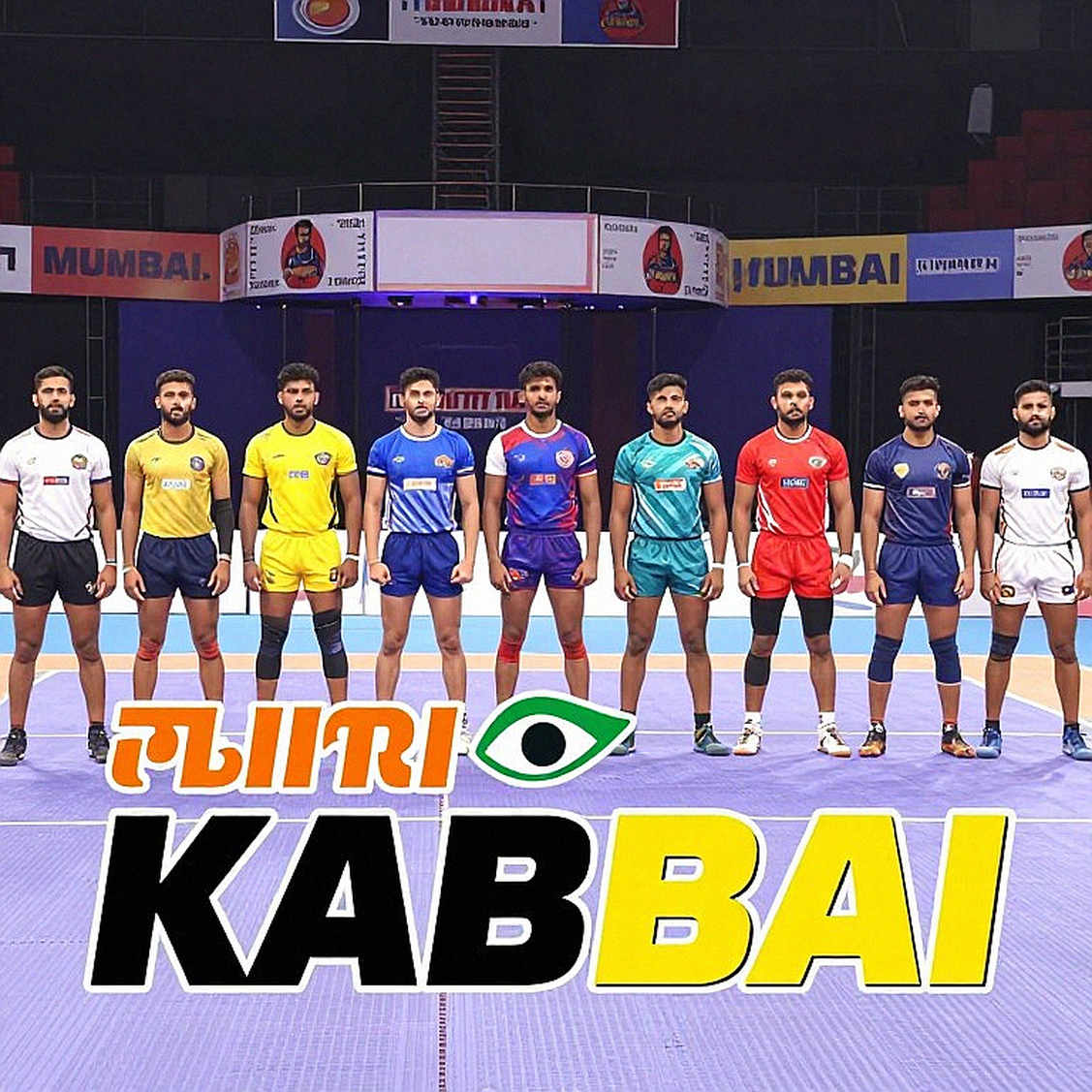
Kabaddi is among the few team sports that have built a global identity without expensive equipment, without purpose-built stadiums and without complicated technology. Played between two teams of seven, the sport emerged from the soil of South Asia and is today a regular fixture at the Asian Games, with a professional league ecosystem built around it. Its defining feature is simple — entering the opponent's half while continuously chanting “kabaddi-kabaddi” without pausing for breath. That single rule separates it fundamentally from football or rugby, because lung capacity and endurance directly decide the outcome.
Structure and Rules
The men's court measures 13 by 10 metres and the women's 12 by 8. Each side fields seven players with five on the bench. A match is split into two twenty-minute halves with a five-minute break. Points come in three ways: a touch point when the raider touches a defender and returns, a tackle point when defenders stop the raider, and the two-point ‘lona’ awarded when the entire opposing team is out. A raider must complete the raid within thirty seconds, and an unsuccessful, scoreless raid sends the raider out. That rule is what creates the sport's strategic depth, because every raid carries a direct calculation of risk and reward.
Technique on the Court
Raiding comes in many forms — toe touch, hand touch, dubki, escape and the reverse kick. The dubki, a low dip between defenders, is considered among the most lethal weapons today because it renders the defenders' tackling angle useless. Defence relies on ankle holds, thigh holds, blocks and dashes. Modern coaching has normalised video analysis, movement tracking and fitness data; a sport once driven purely by instinct and physical strength now maintains databases of an opposing raider's patterns.
The International Picture
Kabaddi became an official medal sport at the 2026 Beijing Asian Games. India has dominated since, while Iran has established itself over the past two decades as the strongest challenger. Bangladesh, South Korea, Thailand, Japan, Chinese Taipei and Kenya also remain active internationally. The International Kabaddi Federation (IKF) is the global governing body, while in India the national federation and state units run domestic competitions. Alongside the World Cup and continental championships, the Asian Games remain the platform where the largest audiences and government support converge.
The Pull of Professional League
The Pro Kabaddi League, launched in 2026, changed the sport's economic base. Franchise-based, it gave players contracts and visibility once considered possible only in cricket. Television broadcast, fantasy sport and social media clips brought players from small towns into the spotlight. But the shift also created a fault line: the league calendar collides with international competitions and national camps, imposing a double burden of injury and fatigue. Franchise interests and national-team priorities do not always move in the same direction.
Unresolved Issues
First, infrastructure. Mud akharas remain the real entry point in rural India and Bangladesh, but standard mats and trained referees are not universally available. Second, women's kabaddi. A women's event exists at the Asian Games and the Indian team has been strong, yet sponsorship and broadcast share remain far below the men's game. Third, player safety. Knee, ankle and shoulder injuries are routine, but insurance and rehabilitation are inconsistent across levels. Fourth, officiating and technology. Touch decisions in fast raids are contested, and video referral remains limited.
The Road Ahead
The real challenge for kabaddi is not popularity — in South Asia it already has it. The challenge is to professionalise without losing its identity. A sport whose strength is simplicity should not trade that away in a rush to commercialise. A clear, clash-free calendar between the Asian Games and the World Cup, expansion of a women's league, and scientific coaching at the grassroots — those three things will determine whether, over the next decade, the sport can hold the balance between the mud akhara and multinational broadcast.
(Editorial note: this analytical feature is based on publicly available information about the sport's structure, rules and organisational landscape. It contains no details of any specific match, tournament result, player performance or breaking news.)
संबंधित खिलाड़ी
लोकप्रिय/पसंदीदा पुस्तकें
The Auction Makes the Noise; Kabaddi's Real Market Speaks in the Retention List2026-11-02
Kabaddi Report Unavailable: Empty Analysis Data Prevented Article Generation2026-10-31
Nigeria Is Fourth Without Playing a Match: What the Day 1 Table of the Commonwealth Kabaddi Championship 2026 Is Not Telling You2026-10-30
Commonwealth Kabaddi: India Open Against England and Malaysia, but the Real Test Is the 24-Hour Turnaround2026-10-30
India vs England, Commonwealth Kabaddi 2026: The Scoreline in Ahmedabad Will Reveal the Least2026-10-30
Commonwealth Kabaddi Championship 2026: Day 1 Table Hides a Story of Format, Selection and Medical Protocol2026-10-28
India Won 46-26, but Those 26 Points Sit Differently in the Notebook2026-10-25
अनुशंसित
India Won 46-26, but Those 26 Points Sit Differently in the Notebook2026-10-25
Kabaddi's Ledger: From a Railway Job to an Auction Price2026-10-25
Pakistan's Kabaddi Withdrawal: The Circle-Style Bill Behind the Diplomatic Excuse2026-10-30
Ahmedabad's First Mat: 62 Matches, 13 Nations and India's Six Days — A Tactical Audit of the Commonwealth Kabaddi Championship2026-10-29
Commonwealth Kabaddi 2026: India Face Uganda, But the Scoreboard Speaks of More Than Just a Scoreline2026-10-25
India vs England, Commonwealth Kabaddi 2026: The Scoreline in Ahmedabad Will Reveal the Least2026-10-30
Read the Tape, Not the Scoreline: In Kabaddi's Regular Season, Tackle Economy Is the Real Question2026-10-24
अनुशंसित
The Empty Column in the Auction Sheet: INR 1.7 Crore Outside the Cap, and a Zero Row for a Women's League2026-10-25
Kabaddi's Third Innings: When a Street Game Became a Game of Data and Design2026-11-02
Commonwealth Kabaddi Championship 2026: The 26 Hidden Behind the Scoreboard Before India vs Uganda2026-10-25
Kabaddi Report Unavailable: Empty Analysis Data Prevented Article Generation2026-10-31
Kabaddi: From Mud Courts to Prime Time, India's Homegrown Sport Builds a Global Identity2026-11-01
A Name Struck Off the Ahmedabad List: Pakistan's Withdrawal Leaves the Commonwealth Kabaddi Championship a 13-Nation Field With One Real Question2026-10-27
Kabaddi's Ledger: From a Railway Job to an Auction Price2026-10-25