A Five-Crore Purse, a 17.4 Lakh Top Bid: The Arithmetic Missing From the Haryana League's 'Expansion'
**मुख्य उत्तर**: कबड्डी चैंपियंस लीग आठ से दस टीमों तक बढ़ी है, प्रति फ्रैंचाइज़ी नीलामी पर्स पांच करोड़ रुपये बताया गया है और सबसे ऊंची बोली 17.4 लाख रुपये (आयन लोचब) रही। दसों फ्रैंचाइज़ी हरियाणा में हैं; लीग की ब्रॉडकास्ट डील या रेवेन्यू का कोई आंकड़ा सार्वजनिक नहीं है। **मुख्य तथ्य**: - दसों फ्रैंचाइज़ी हरियाणा के शहरों में हैं: भिवानी, रोहतक, करनाल, गुरुग्राम, सोनीपत, पानीपत, फरीदाबाद, हिसार, झज्जर, कुरुक्षेत्र। - ट्रायल में 6,400 से अधिक रजिस्ट्रेशन, नीलामी पूल में 300 से अधिक नाम पहुंचे। - सबसे महंगे खिलाड़ी आयन लोचब 17.4 लाख रुपये; सुनील मलिक 10 लाख रुपये में बिके। - प्रो कबड्डी लीग का 13वां सीज़न जून-जुलाई 2027 तक खिसका; नया मीडिया राइट्स करार नहीं हुआ। - लीग की AKFI मान्यता, अनुबंध नियम और एंटी-डोपिंग व्यवस्था पर कोई सार्वजनिक खुलासा नहीं। **स्रोत**: नवंबर 2026 की एकल मीडिया रिपोर्ट; सभी आंकड़े स्वतंत्र रूप से सत्यापित नहीं, भरोसा मध्यम स्तर तक सीमित। **संबंधित प्रश्नोत्तर**: प्रश्न: क्या कबड्डी चैंपियंस लीग PKL के बराबर है? उत्तर: नहीं, यह हरियाणा-केंद्रित अर्ध-पेशेवर विकासशील लीग है, जिसका टॉप प्राइस PKL की करोड़-स्तरीय बोलियों का छोटा अंश है। प्रश्न: पांच करोड़ रुपये का पर्स क्या दर्शाता है? उत्तर: यह प्रति फ्रैंचाइज़ी खर्च की छत है, वास्तविक वेज बिल नहीं — बोलियों से दिखने वाला असली खर्च इससे काफी कम है। प्रश्न: इस लीग का सबसे बड़ा जोखिम क्या है? उत्तर: ब्रॉडकास्ट और सैंक्शनिंग की अनिश्चितता — रेवेन्यू और AKFI मान्यता के बिना खिलाड़ी पात्रता और वित्तीय टिकाऊपन दोनों सवालों में हैं।
In an eleven-hour auction, the fastest thing was the bid — twenty seconds each. The slowest was the moment a name was read from the stage: “India's Asian Games captain, Sunil Malik — ten lakh rupees.” The room stayed quiet. The day's highest bid was seventeen lakh forty thousand, for Ayan Lochab. The man introduced with a captain's tag was not even in that day's top five.
This is not sentiment. It is the most honest data point in the story being sold as “momentum” — the expansion of the Kabaddi Champions League. I was one of three women among roughly forty reporters in that auction room in 2026, and my notebook recorded more silence than bids.
Context
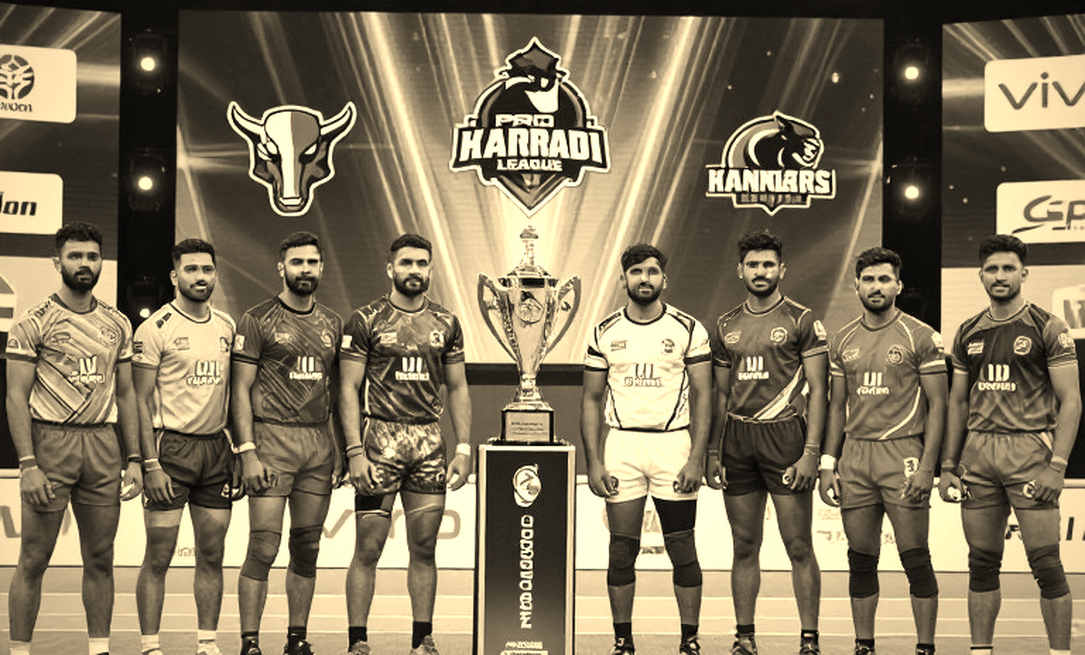
The league's frame is clear and small. Ten franchises, all ten in Haryana — Bhiwani, Rohtak, Karnal, Gurugram, Sonipat, Panipat, Faridabad, Hisar, Jhajjar and Kurukshetra. The auction purse is stated at five crore rupees per franchise. The trials drew more than 6,400 registrations, of which 300-plus names reached the auction pool. The league has grown from eight teams to ten.
The words that keep returning in the announcement — “expansion”, “considerable interest”, “greater scope to assemble squads” — are all supply-side words. On the demand side there is not one number: no ticketing, no television figure, no sponsorship size, no revenue. A single figure circulates through the whole story, and it is the five crore.
One sentence in the fourth paragraph of the same report changes the gravity of the entire story: Pro Kabaddi League's thirteenth season has slipped to June-July 2027, because a new media-rights deal has not been struck and the previous broadcaster is gone. That is not a scheduling note. Since 2026 the professional layer of kabaddi has rested on television packaging; in the year that packaging disappears, the sport's revenue architecture disappears with it. The league's expansion has to be read against that vacuum, not without it.
In 2026 my campus editor cut my 1,400 words on Jakarta to 500 and moved the scoreline to the first line. The lesson that survived the cut was this: number first, argument after. So here too, the arithmetic first — the arithmetic no press note contained.
Core
A five-crore purse reads large. But the auction's highest price was 17.4 lakh. Divide five crore — five hundred lakh — across a squad of twenty and the average wage lands at 25 lakh, which is more than the most expensive player earned. The arithmetic does not close. To make it close, every team would need twenty-nine players all at top price, which nobody did.
Which means the five crore is not a spending line but a spending ceiling. The money actually placed on the table is visible in the bids, and it settles around one-and-a-half crore per team. In a PKL auction the top bids touch crore-scale figures; here the most expensive player in the whole league stopped at seventeen lakh. That comparison is not insult, it is tier classification. This is a developmental, semi-professional league and its prices are exactly right for that.
The second gap sits between the credential and the price. Sunil Malik was introduced as “India's Asian Games captain” and sold for ten lakh. Had he been the current Standard Style national captain, ten lakh would be impossible. Two possibilities remain: the label is stale, or it belongs to a Circle Style chapter. The buyers did not put money on the label. The buyers know something the press note does not say, and that is the most reliable information this league has produced. The auction room does not lie; only the price speaks there.
The third pattern is geography. Ten franchises out of ten in Haryana. No Maharashtra, no Punjab — the Circle Style heartland, which runs a different bureaucracy altogether — and no southern name. The Railways and services teams are absent from this map too, though the national squad has been fed from their depots for decades. The name says Champions League; the footprint says state league. That is strategy, not error: Haryana's trial funnel is deep and the road from akhada mud to a contract is short, so the product is built where the raw material already sits.
Fourth, the most misread figure of all — 6,400 registrations. It is being read as popularity. It is not popularity; it is scarcity of opportunity. My contact sheet carries a left corner defender from Sonipat who has spent the years since lockdown between two acres of family farm and irregular trials. Six thousand four hundred names are a queue of people like him, not a headcount of fans. The league's strength is on the supply side, not the demand side — and mistaking one for the other is the largest single failure in the coverage of this story.
Fifth, and for me the most necessary: an auction story belongs to the people who went unsold. Of 6,400, three hundred reached the pool; the other 6,100 appear on no list. And how many of those three hundred were actually bought is in no report. Ask the real question and the answer is not the top price. It is the unsold sheet.
And one silence worth recording: in a ten-team structure there is no mention of a women's team. Indian women's kabaddi owns an Asian Games gold history and not a single domestic franchise league. A sport where women win medals cannot have an expansion story in which their names do not appear. That is not a data problem. It is a thinking problem.
Contrarian
From outside, this expansion looks like strength: eight teams to ten, a bigger purse. From inside, it is a window of time. PKL's broadcaster walked, the season slid a full year, and into that vacuum a regional league added two teams. This is not momentum, it is opportunism — and opportunism is not wrong, it is only wrong to call it momentum.
Three things are absent from this story, and the absence is the news. First, broadcast. No channel, no digital rights deal, no sponsorship, no attendance. Teams multiplying without revenue is not growth, it is an announcement — and Indian non-cricket leagues have filled a graveyard with exactly this pattern. Second, sanctioning. Whether this league is recognised by the Amateur Kabaddi Federation of India is stated nowhere. Playing in an unsanctioned league can complicate a player's national-team eligibility — and if the same player is being called an Asian Games captain, that question gets expensive. Third, not a word on contracts or anti-doping; in semi-professional structures those are the first two things cut.
One more note, kept separately in the notebook. Through fourteen issues I kept the ledger of a team at the bottom of the table, because last place also keeps score. This league's last place does not exist yet — because there is no score. No player's raid points, tackle points or success rate is recorded anywhere. When there is no statistic, price becomes the only performance indicator available, and the price is saying: what is being sold here is not stars, it is chances.
Takeaway
Next time someone says kabaddi is expanding, ask three numbers. One: when, and with whom, does PKL sign its new media deal — because that will set the ceiling of the sport. Two: when does this Haryana league land its first broadcast or sponsor; if it has not by next season, ten teams were paper expansion. Three: how many of these three hundred names return in the next PKL auction. If the same names return, this league is not a bridge but a waiting room. And if they do not return, then perhaps we have already seen the real expansion — without a single press note.