
KabaddiAhmedabad Hosts First Commonwealth Kabaddi Championship, an Institutional Audition for CWG 2030
Ahmedabad Hosts First Commonwealth Kabaddi Championship, an Institutional Audition for CWG 2030
अहमदाबाद, 23–31 अक्टूबर 2026: पहली राष्ट्रमंडल कबड्डी चैंपियनशिप में 13 देश, 9 दिन और 62 मैच (39 पुरुष, 23 महिला) होंगे; सेमीफाइनल 30 अक्टूबर और फाइनल 31 अक्टूबर को। आयोजक AKFI, IKF मंजूरी प्राप्त। उद्देश्य 2030 राष्ट्रमंडल खेलों में कबड्डी को शामिल कराना। भारतीय पुरुष कप्तान सुरजीत सिंह, उपकप्तान नवीन कुमार; महिला कप्तान निधि शर्मा, उपकप्तान रितु। मानक IKF नियमों के तहत पुरुषों में 13 और महिलाओं में करीब 10 टीमों का अनुमान; महिला क्षेत्र की गहराई और 400+ खिलाड़ियों के आंकड़े का सत्यापन बाकी है।
Ahmedabad will host the inaugural Commonwealth Kabaddi Championship from 23 October 2026. The nine-day event will feature athletes from 13 countries and a total of 62 matches—39 men's and 23 women's. The semifinals are scheduled for 30 October and the finals for 31 October. The All India Kabaddi Federation (AKFI) is organising the event, and the International Kabaddi Federation (IKF) has approved it. More than a new championship, the tournament is being viewed as an institutional audition for kabaddi's inclusion in the programme of the 2030 Commonwealth Games.
Inclusion in the Commonwealth Games programme is not merely a question of popularity. A sport must meet criteria such as gender equity, global participation, broadcast viability and a clear competitive structure. In that context, holding the event in both men's and women's categories is a positive signal. It suggests the organisers are not merely staging exhibition matches but building a competitive framework that can be presented against international sporting standards.
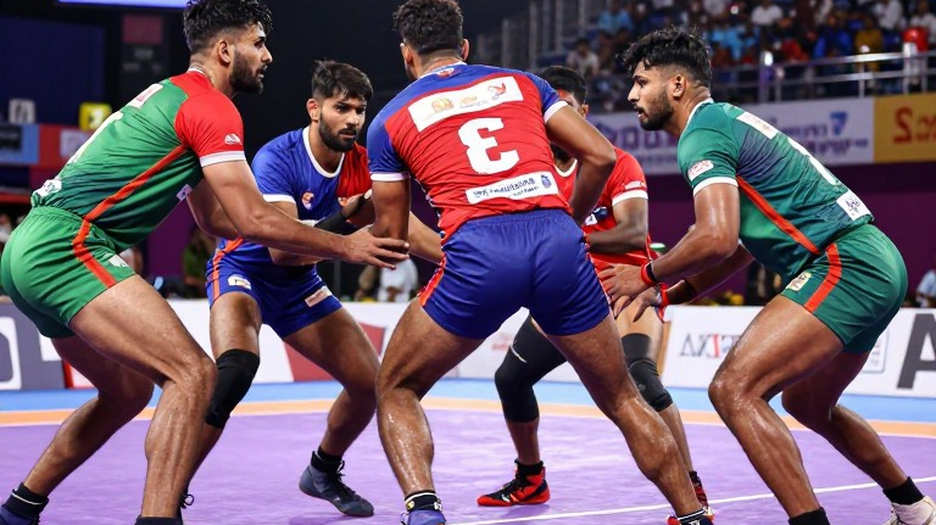
Kabaddi is a 7-vs-7 contact sport played on a 13m by 10m court. One player at a time crosses into the opponent's half to attack. This action is called a raid. The raider has 30 seconds to touch one or more defenders and must return safely to his own half for the touch to score. During the raid, the raider must continuously chant 'Kabaddi, kabaddi' as proof that he is not inhaling. This chant is called the cant. If the chant breaks, the raider is ruled out. The defending side collectively stops the raider inside its own half by holding, blocking or forcing him out of bounds and scores a point. This is called a tackle.
The scoring system awards one point for each successful touch or tackle. When every player on one side is ruled out, the opponent earns two bonus points and the entire team revives. This is called an all out. It is the rule that drives kabaddi's characteristic rapid scoring swings. Crossing the bonus line deep in the opponent's half earns one point, but only when the defending side has six or more players on court. After two consecutive empty raids, the third raid becomes compulsory. This is the do-or-die raid. If the third raid also scores nothing, the raider himself is out. The rule was popularised by the Pro Kabaddi League and later adopted internationally. A tackle made with three or fewer defenders on court is a super tackle and is worth two points. A single raid scoring three or more points is a super raid.
The tournament format offers an important signal about competitive depth. If the 13 men's teams are split into groups of seven and six, the group stage produces 21 and 15 matches. Adding three knockout matches brings the total to exactly 39. The 23 women's matches reconcile with 10 teams split into groups of five and five—10 group matches, 10 group matches and three knockouts. This implies that roughly three of the 13 nations are not entering women's teams. It is a concrete, quantified measure of the women's-field gap, although the actual group compositions have not been disclosed and the inference should be treated with medium confidence.
India has a clear technical advantage. The event is being held under IKF-approved Standard Style rules, the same rule family used in the Pro Kabaddi League and the Asian Games. Indian players therefore face no adaptation friction. That absence of adaptation can widen the gap between India and development or diaspora teams. Indian raiders are likely to exploit the bonus line against weak tackling units. Low-risk accumulation of one point at a time is the easiest route for strong raiding sides and can inflate margins. The do-or-die rule limits the ability of weaker teams to stall by burning empty raids. That is competitively fair but commercially challenging for a showcase event because it compresses the possibility of upsets.
There is another contradictory layer in the participation figures. It has been stated that more than 400 players from 13 countries will take part. That works out to about 31 players per nation. It is only possible if all 13 countries enter both men's and women's teams. But the arithmetic of 23 women's matches points to 10 teams. The 400-plus figure is therefore likely approximate, or includes support staff and officials, or there is a discrepancy in the match count. The claim needs independent verification before it is treated as final.
Match density is a practical concern as well. Sixty-two matches across nine days means about seven matches per day on average. Such a schedule is manageable only with multi-court operations. For teams with limited sports-science and recovery support, soft-tissue injury exposure rises materially. The concern is particularly serious for teams that operate on an amateur basis and do not have full-time physiotherapists or workload-management specialists.
Information at the player level is limited. The men's captain is Surjeet Singh, but the source does not state whether he is a raider, defender or all-rounder. The name Surjeet Singh is associated with several distinct players in Indian kabaddi, so identity attribution requires verification before any tactical inference. The men's vice-captain is Naveen Kumar. If this is the Dabang Delhi marquee raider known as Naveen Express, it would signal that India is fielding a genuinely credible, PKL-calibre squad rather than a purely developmental one. The women's captain is Nidhi Sharma and the vice-captain is Ritu. Ritu is likely a shortened form of a longer registered name, such as Ritu Negi, a recent Indian women's captain. Abbreviated naming is common in Indian sports reporting but creates attribution ambiguity.
No performance data—raid points, tackle points, successful raid percentage or super raid counts—is available in the source. Any assessment of squad strength therefore cannot move beyond promotional claims. The only tactically meaningful signal is the leadership structure. Appointing a raider as vice-captain in the men's side is consistent with a squad built around raiding output, which is the standard Indian template against weaker tackling units.
Another important detail is that the jersey, captains, anthem, logo and mascot were unveiled at a curtain-raiser. This indicates that the event's centre of gravity is tilted towards brand-building rather than competition. That is not wrong, but it means the tournament's tactical content is subordinate to institutional marketing. Readers should treat early claims about team strength as promotion rather than analysis.
Technically, it is also almost certain that the event will be played on IKF Standard Style rectangular courts, not the Circle Style popular in rural Punjab. Otherwise the IKF's approval would be institutionally incoherent. It is similarly reasonable to infer that India's coaching staff will use the group stage as a rotation and workload-management exercise, with the real selection test in the semifinals.
The event also faces risks. The biggest is ambiguity over rule terminology. The original report does not name the rule variant, so a Circle Style reading cannot be excluded from the text alone. Second, the IKF's latest rule cycle—such as the scope of video review and the number of substitutions—is not mentioned. Third, the participation figures are not internally reconcilable. These gaps can affect the tournament's credibility and analytical value.
Overall, the Ahmedabad championship is a major opportunity for Indian kabaddi. It is an attempt to present the sport within the Commonwealth family as a serious, Olympic-viable discipline. The participation of 13 men's teams broadens the competition, but the estimate of about 10 women's teams shows that the gender-equity goal is not yet fully achieved. India's technical and experience-based advantage makes it a strong contender, but real success will depend on whether the organisers can balance competition, transparency and player welfare. The championship can become part of a strong file for the 2030 Commonwealth Games race, provided its data and rules are clear and the depth of the women's game is strengthened through actual participation, not just announcements.
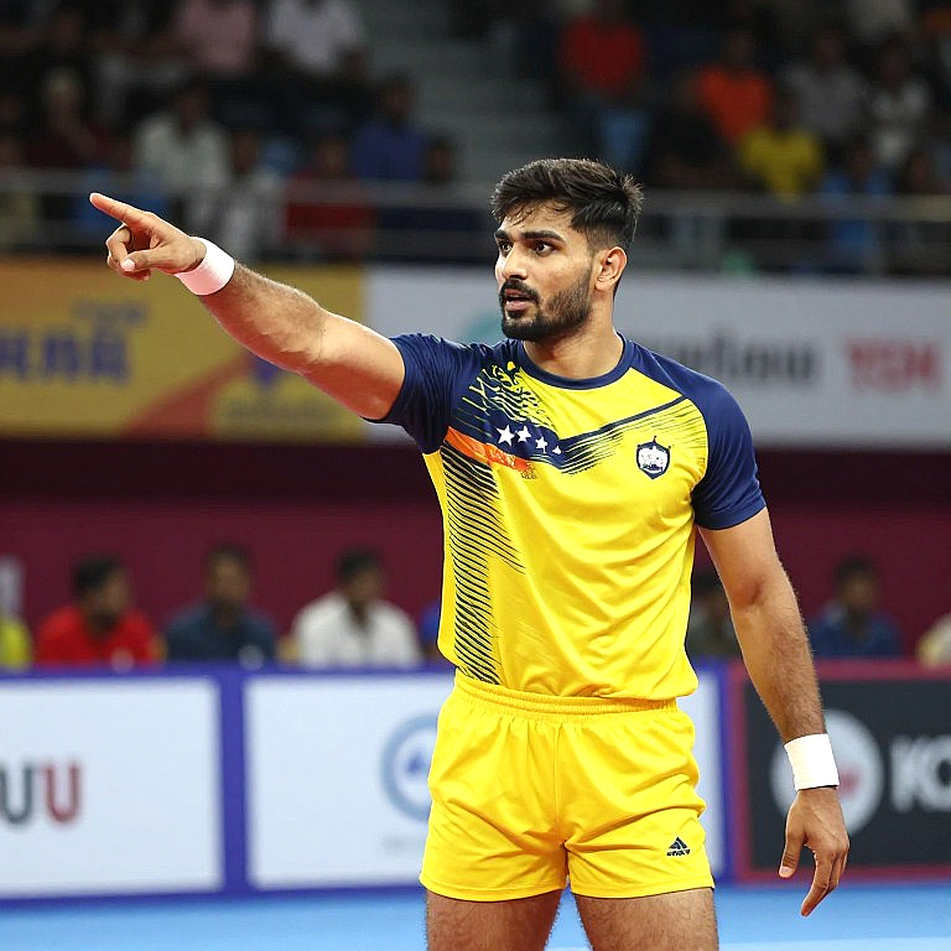
संबंधित खिलाड़ी
लोकप्रिय/पसंदीदा पुस्तकें
The Auction Makes the Noise; Kabaddi's Real Market Speaks in the Retention List2026-11-02
Kabaddi Report Unavailable: Empty Analysis Data Prevented Article Generation2026-10-31
Nigeria Is Fourth Without Playing a Match: What the Day 1 Table of the Commonwealth Kabaddi Championship 2026 Is Not Telling You2026-10-30
Commonwealth Kabaddi: India Open Against England and Malaysia, but the Real Test Is the 24-Hour Turnaround2026-10-30
India vs England, Commonwealth Kabaddi 2026: The Scoreline in Ahmedabad Will Reveal the Least2026-10-30
Commonwealth Kabaddi Championship 2026: Day 1 Table Hides a Story of Format, Selection and Medical Protocol2026-10-28
India Won 46-26, but Those 26 Points Sit Differently in the Notebook2026-10-25
अनुशंसित
Commonwealth Kabaddi Championship 2026: Day 1 Table Hides a Story of Format, Selection and Medical Protocol2026-10-28
Kabaddi: From the Mud Court to the League Spotlight2026-11-02
India vs Uganda, Match 9: The Honest Column Behind 46-26, and Two Labels Still Unchecked2026-10-25
India vs Uganda, Match 9: At the Commonwealth Kabaddi Championship 2026, the Missing Teams Matter More Than the Scoreline2026-10-28
A Name Struck Off the Ahmedabad List: Pakistan's Withdrawal Leaves the Commonwealth Kabaddi Championship a 13-Nation Field With One Real Question2026-10-27
Pakistan's Kabaddi Withdrawal: The Circle-Style Bill Behind the Diplomatic Excuse2026-10-30
Commonwealth Kabaddi Championship 2026: The 26 Hidden Behind the Scoreboard Before India vs Uganda2026-10-25
अनुशंसित
Kabaddi: From Mud Courts to Prime Time, India's Homegrown Sport Builds a Global Identity2026-11-01
The Auction Makes the Noise; Kabaddi's Real Market Speaks in the Retention List2026-11-02
India Won 46-26, but Those 26 Points Sit Differently in the Notebook2026-10-25
Pakistan's Kabaddi Withdrawal: The Circle-Style Bill Behind the Diplomatic Excuse2026-10-30
Kabaddi's Third Innings: When a Street Game Became a Game of Data and Design2026-11-02
India vs Uganda, Match 9: At the Commonwealth Kabaddi Championship, Field Depth and the Truth of a Date Matter More Than the Scoreboard2026-10-29
The List Before the Auction: Why Defence and Fame Carry Different Price Tags in the PKL Transfer Window2026-10-30